
Sugar is everywhere. Nearly every packet of food sitting on the supermarket shelves or in your home pantry contains processed sugar.
And for a lot of people, going a day without consuming sugar would be impossible.
Yet this form of sugar is a relatively new addition to our diet.Listen to the podcast
“It’s only in the 19th century that people discovered how to produce sugar on an … industrial scale, but before that it was really a very arduous and artisanal process,” Ulbe Bosma, professor of International Comparative Social History at the Vrije University of Amsterdam tells ABC RN’s Late Night Live.
However, like many of the world’s resources, the discovery and widespread uptake of sugar led to the exploitation of millions of people.
“Life was short and ugly for many of the African slaves [working on sugar plantations],” Bosma says.
Bosma’s book The World of Sugar explores the damaging legacy of sugar through a global epidemic of obesity and diabetes and as a threat to our environment.
And it confronts the reality of indulging our sweet tooth way too frequently.
A sweet sign of power and wealth
The first sugar cane stalks were grown in New Guinea 8,000 years ago.
Yet people started eating sugar more regularly when raw sugar was transformed into crystalline sugar in India about 2,000 years ago.
Professor Ulbe Bosma has explored the political history of sugar. (Supplied)
“Indians discovered that within a sugar mass, some started to crystallise, so this is the beginning of crystalline sugar,” Bosma explains.
While sugar is relatively easy to make, Bosma says it is far more difficult to refine.
“Before the industrialisation took place, it was a very long and arduous process because you needed to put stuff into the boiling sugar syrup to make it crystallise,” Bosma says.
Because early production of sugar was limited, it was considered an extreme luxury and “a sign of power and wealth”.
“Sugar became available not only for the princes, the aristocrats, the kings, but also for the … higher bourgeoisie in the city,” Bosma says.
And while initially sugar was predominantly used to preserve foods such as fruit, from the late Middle Ages, it started being added to pastries and even meats.
The one thing Europeans couldn’t do was grow sugar.
Sugar cane grows in warm climates, so the climate of most European countries was too cold to grow it.
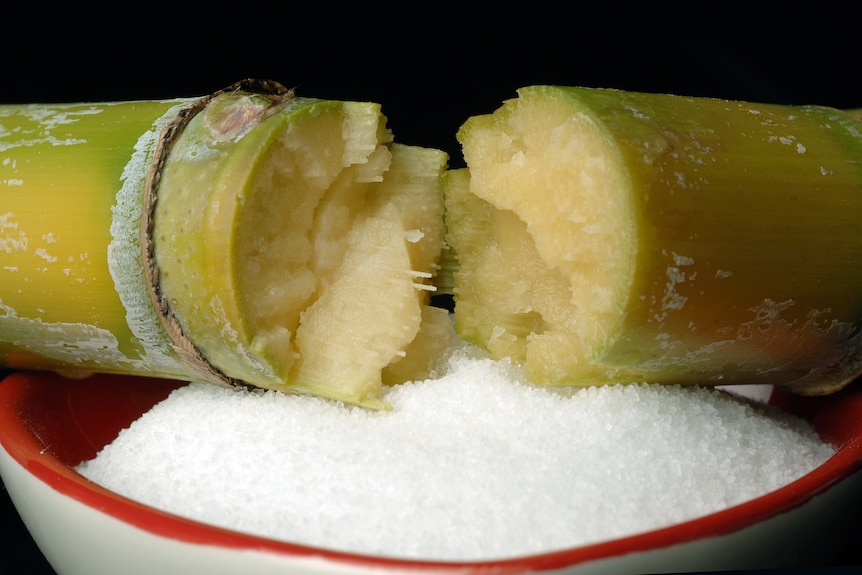
There was a gradual increase in the amount of sugar in European cooking from the late Middle Ages. (Supplied: CSIRO)
“So at the time that Europe learned to love sugar … Europe began to look for other venues to grow cane,” Bosma says.
Initially India and Southeast China had a “buoyant sugar belt production”, but in the 15th century larger quantities of sugar came from Egypt.
Then gradually the Canary Islands, Madeira, eastern Atlantic Islands, Haiti, Dominican Republic, Latin America and the Caribbean region all became sites to grow sugar for the European market.
And it was the need to grow more and more sugar cane that led to shocking cruelty.
Sugar and the slave trade
From the mid-15th century, more than 12 million men, women and children were captured in Africa and transported by European slave ships to the Americas. This dark 400-year period became known as the Atlantic Slave Trade.
According to Bosma, two thirds of those captured ended up at sugar plantations where “conditions were absolutely appalling”.Stream your favourite shows on the free ABC listen app
Bosma explains that cane cutting was a very arduous job. Workers were at risk of dehydration from toiling extremely long hours in tropical conditions, and were exposed to dangerous creatures like vermin, rats and snakes.
Additionally, during the slave trade period the Caribbean region was a conflict zone, with ongoing warring between European nations.
Britain abolished slavery in the 1830s, however, Bosma says the impact of that decision wasn’t as significant as anticipated.
In Cuba and Brazil, slavery continued, while the British, French and Dutch transitioned to contract labour, recruiting immigrants from China and India to work in the Caribbean.
Queensland’s sugar belt and slavery
A decade after Britain abolished slavery, Australia began its own slave trade, which became known as blackbirding.
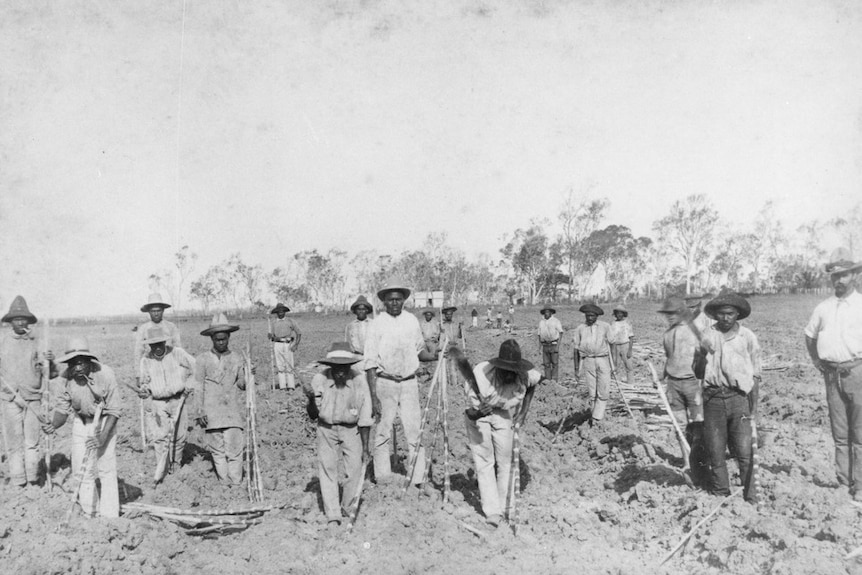
The Australian South Sea Islander community played a key role in the development of Australia’s sugar industry. (State Library of Queensland)
Between 1847 and 1901, more than 60,000 young boys and men from the Pacific islands were kidnapped or coerced into boats and brought to Queensland to work on sugar and cotton plantations.
“In the 1860s, Queensland emerged as a sugar belt with labour from the Pacific Islands … and the conditions of these workers were horrific,” Bosma says.
The blackbirding trade ended in 1901 — with introduction of the White Australia Policy.
Sugar dynasties
Bosma points out that the global sugar industry has been dominated by a handful of families.
Read more from Late Night Live
“[These families] were able to accumulate the knowledge, the capital and the networks, and also the political lobbying power with governments to protect their interests,” Bosma explains.
For example, the Lascelle family, who were born in England and owned plantations in Barbados, had their first sugar plantation in 1648 and only sold it in 1975.
“This is a family story of more than three centuries and their sales became very successful and very powerful because they were able to shift from the actual plantation economy … to financing the slave trade to financing other plantations. And eventually they ended up as a kind of aristocracy in Britain, ” Bosma says.
Bosma points to the popular Downton Abbey film that features the marriage between Princess Mary and Viscount Lascelles, the eventual Earl of Harewood.
“[The film] doesn’t mention at all that every stone of this beautiful castle [Harewood House] was built with money derived from slave labour,” he says.
“Sometimes there’s a kind of silence about the heritage and the legacies of slavery.”
The future of sugar
Brazil is the world’s largest sugar producer. And while Australia processes approximately 4 million tonnes of raw sugar each year, 80 per cent is exported to overseas markets.
But with four sugar mill closures in the past four years, the industry is facing major upheaval.
And there are likely to be more challenges ahead. Sugarcane is a land- and water-intensive crop.
“It’s exhaustive to the environment if you grow sugar at a very large scale,” Bosma says.
“In many parts of the world where climate change is leading to hotter climates, it might be easier to grow sugar but I think in some cases where it becomes really too hot and too dry, it will be impossible to grow sugar anymore,” he says.
Can we resist sugar?
The World Health Organization recommends that sugar should only make up 10 per cent or less of an adult’s daily energy intake, equating to 12 teaspoons of sugar per day.
Yet, on average, Australians consume 25 kilograms of sugar each year and Americans consume an average of 45 kilograms of sugar per year.
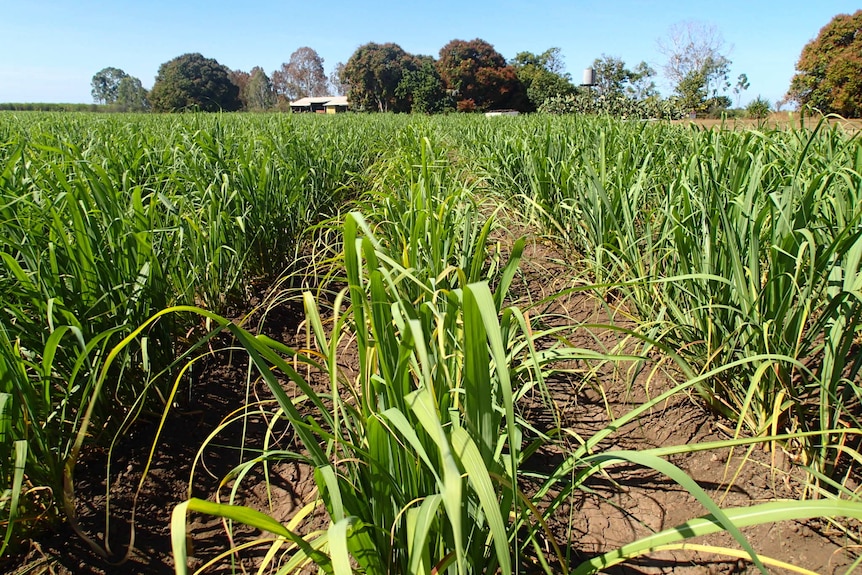
Bosma says if the world population consumed sugar at the same rate as the US, “it would simply be unsustainable [to grow]”. (Supplied: University of Queensland)
Bosma nods to the 2018 UK soft drink industry levy that led to a significant drop in the amount of soft drinks consumed by British children and adults.
“We have seen that in Britain when [chef] Jamie Oliver … started a campaign against the excessive application of sugar in our food, then it works,” Bosma says
Finland introduced a similar levy in the 1940s, while France implemented a levy in 2012 and Mexico in 2013.
Despite recommendations, Australia is yet to introduce a similar measure.
So even with greater awareness around the harmfulness of sugar, we are still consuming it in excess.
Bosma says this is partly down to the influence of sugar industry lobby groups.
“The sugar industry knows it is a harmful industry but it has a lot of budget and spends a lot of money on advertising, on lobbying — and that’s a lot more money than what the medical doctors and the dentists have at their disposal to make the public aware of the dangers of sugar,” Bosma says.
“This is a very uneven battle between the medical profession and the sugar industry.”
RN in your inbox
Get more stories that go beyond the news cycle with our weekly newsletter.
Source link : http://www.bing.com/news/apiclick.aspx?ref=FexRss&aid=&tid=66da1d6ef755408b83aa73f56789c1bd&url=https%3A%2F%2Fwww.abc.net.au%2Fnews%2F2024-09-06%2Fcruel-history-sugar-slavery-resource-sweetener-cake-tea-biscuits%2F104299378&c=13070378923940063724&mkt=en-us
Author :
Publish date : 2024-09-05 10:00:00
Copyright for syndicated content belongs to the linked Source.