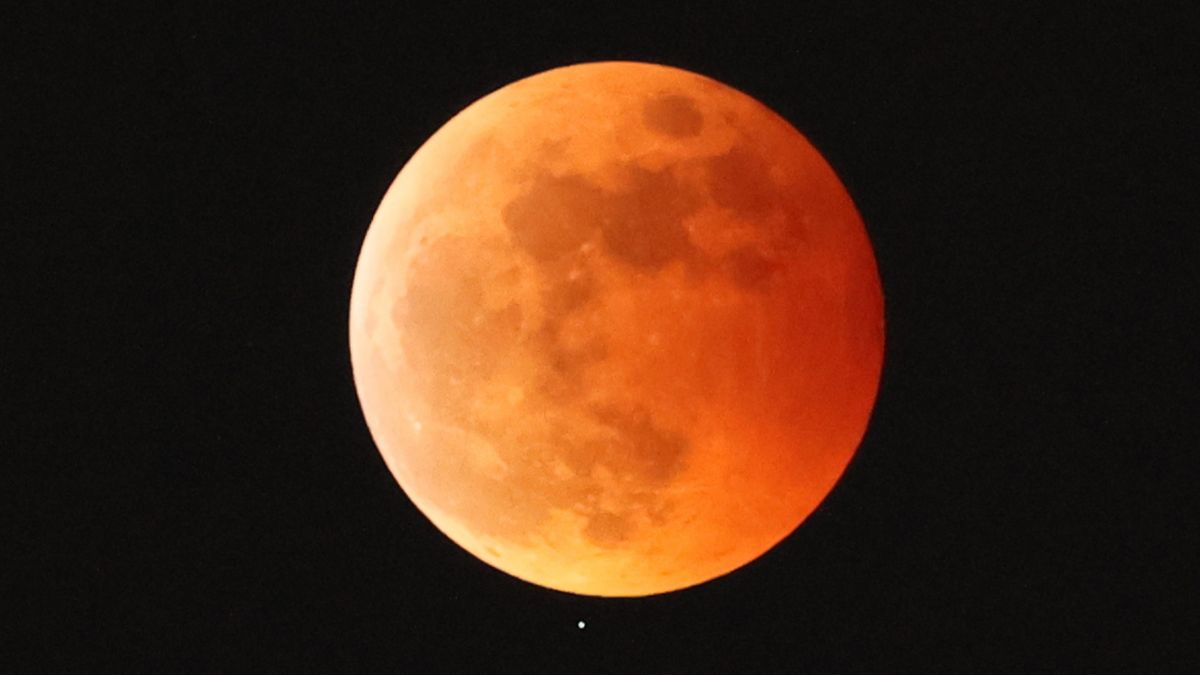
The first total lunar eclipse since 2022 will be seen across North and South America. (Image credit: Laurie LaPorte via Getty Images)
For those in eastern areas of North America, the initial partial phase of the eclipse will begin at 1:09 a.m. EDT on March 14, with totality lasting from 2:26 a.m. to 3:32 a.m. EDT. On the West Coast, the partial phase starts at 10:09 p.m. PDT on March 13, with totality occurring from 11:26 p.m. to 12:32 a.m. PDT on March 14. Because lunar eclipses are global events that occur at the same moment worldwide, these differences are merely due to time zones.
You can view the entire lunar eclipse with the naked eye, but a good backyard telescope or a nice pair of stargazing binoculars may help you better appreciate the movement of Earth’s shadow across the moon and can reveal the eclipse playing out across specific lunar structures, like large craters.
If you miss March’s total lunar eclipse, there is one more to look forward to in 2025, though North Americans will be largely left out. The following total lunar eclipse will occur overnight on Sept. 7-8 and will be best observed in Asia.
Moon quiz: What do you know about our nearest celestial neighbor?
Source link : https://www.livescience.com/space/the-moon/blood-moon-2025-how-to-see-the-moon-turn-red-over-north-america-during-marchs-total-lunar-eclipse
Author :
Publish date : 2025-02-18 08:47:00
Copyright for syndicated content belongs to the linked Source.