Revelers perform during Barranquilla Carnival in Barranquilla, Colombia, on Feb. 11, 2024.Charlie Cordero/AFP via Getty Images
Commentary at Carnival. This weekend formally kicks off annual Carnival festivities across Latin America, but some cities started celebrating early. Ayacucho, Peru, marks Carnival by holding a contest for best mask. The masks typically include Indigenous imagery as well as cultural and political references.
This year’s winning mask depicted an alliance between the local governor and Peruvian President Dina Boluarte. It shows Boluarte wearing a Rolex watch, a reference to allegations that she used undisclosed assets to buy luxury wear. (Boluarte has denied the accusations of wrongdoing.)
Polls in recent months have showed the president’s approval rating well below 20 percent and at times even under 10 percent. In Ayacucho, some other finalists in the mask contest also featured Boluarte.
One of the region’s biggest Carnival parades is in the city of Oruro, which lies in what country?
Ecuador
Bolivia
Peru
Brazil
Carnival celebrations there feature Indigenous iconography and customs.
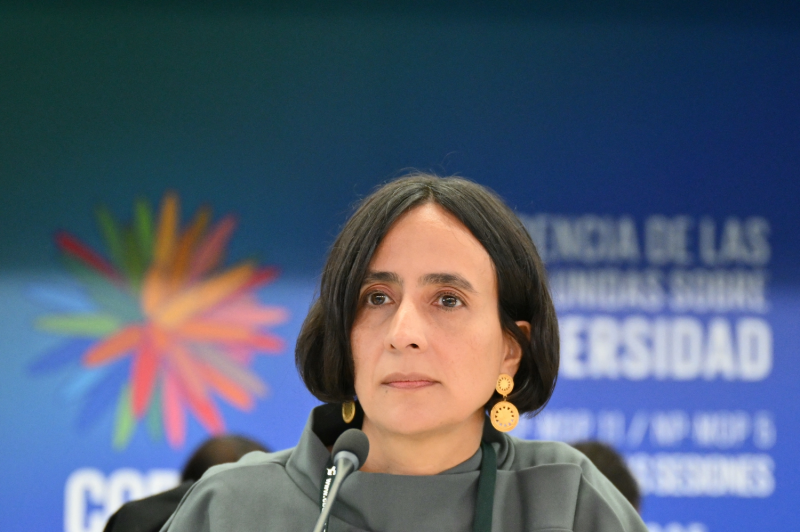
Colombian Environment Minister Susana Muhamad opens the COP16 biodiversity conference at the United Nations’ Food and Agriculture Organization headquarters in Rome on Feb. 25.
Colombian Environment Minister Susana Muhamad opens the COP16 biodiversity conference at the United Nations’ Food and Agriculture Organization headquarters in Rome on Feb. 25.Alberto Pizzoli/AFP via Getty Images
Although Susana Muhamad announced her resignation as Colombia’s environment minister earlier this month, she is seeing out one final task: chairing an overtime session of U.N. biodiversity talks after they hit an impasse last November in Cali, Colombia.
That Cali conference was a gathering of the 196 countries that are parties to a U.N. biodiversity treaty. The countries previously agreed to protect 30 percent of their land, waters, and seas by 2030. In Cali, they were supposed to decide how developing countries would receive funding support for those efforts.
But talks broke down. Rich countries wanted to keep channeling money through the existing Washington-based Global Biodiversity Framework Fund, while poorer ones criticized it as slow and hard to access, calling for a new financing method.
Negotiators reconvened this week in Rome. Late Thursday, they agreed on a five-year plan to boost financing in an “effective, timely and easily accessible manner,” including through domestic government spending, bilateral donations, and multilateral groups. While many full details remain to be ironed out, the commitment to move forward—and monitor next steps—was celebrated at the talks.
The talks yielded an additional innovative development: the creation of a separate conservation fund to be filled by businesses that profit from genetic information found in nature. Dubbed the Cali Fund, it is based on longtime critiques that sectors such as biotechnology, pharmaceuticals, and cosmetics benefit from genetic data in the natural world without giving back.
Still, though a top U.N. biodiversity official said that paying into the fund would “reap enormous reputational benefits” for companies, none immediately announced plans to do so at launch.
Above all, the Rome talks demonstrated the challenge of global environmental dealmaking in what Muhamad called “this very difficult geopolitical world.” Trump was elected in the period between the Cali and Rome conferences, and he has spurned environmental commitments, ordering the United States to withdraw from the Paris climate agreement on the first day of his presidency.
Source link : http://www.bing.com/news/apiclick.aspx?ref=FexRss&aid=&tid=67c1befa059b46dd9fecc9dc9af1a26f&url=https%3A%2F%2Fforeignpolicy.com%2F2025%2F02%2F28%2Ftrump-russia-latin-america-ukraine-talks-brazil-lula-un%2F&c=397775023191175797&mkt=en-us
Author :
Publish date : 2025-02-28 00:00:00
Copyright for syndicated content belongs to the linked Source.