Some folks believe the “holy dirt” at the famous Catholic shrine, the Sanctuario de Chimayo, makes for “holy chile.”
“A lot of people believe that the holy dirt…contains a lot of the same elements as the chile does,” says Jason Blum, co-owner of Chimayo Chile Brothers. “I mean, you drive around the Sanctuario up there, and there’s pictures saying ‘holy chile.’ ”
His company buys chile powder locally and ships it anywhere in the world for $68/pound. One of his online retailers sells the holy chile on its website for the unprecedented price of $100/pound.
All of this beg the question, if it’s so valuable, why is there so little of it? Locals estimate fewer than 500 acres are planted every year, compared to 50,000 acres of Hatch cultivated in New Mexico and surrounding states.
“Truth be told, there’s an epidemic going around. And it has a lot to do with the kids and the youth, and it’s drugs,” said Patricio Chavez, a fifth-generation farmer and artist in town. He sells the heritage pepper for $20 for 12 ounces in his family’s store, the Chimayo Chile Shop.
“We don’t have that generational grandfather, father, son. It’s all broken. Who’s gonna teach the farming if the grampas and dads don’t do it?”
Chavez buys his chile powder—the rich-red color of a New Mexico sunset—from a grower about 10 miles away, technically outside of the Santa Cruz River Valley where Chimayo is located.
“There’s gardens from here to Espanola that are growing the nativo seeds,” Chavez said. “So it’s not just Chimayo. And they’re all wonderful.”
If you Google “Chimayo chile for sale,” lots of online sellers pop up offering bags of ground chile for well under $15. Local retailers say those products are blatantly counterfeit, but there’s nothing they can do about it.
“It’s just the way businesses are,” said Patricio Chavez with a smile. “Anything you put ‘Chimayo’ on it’s going to sell.”
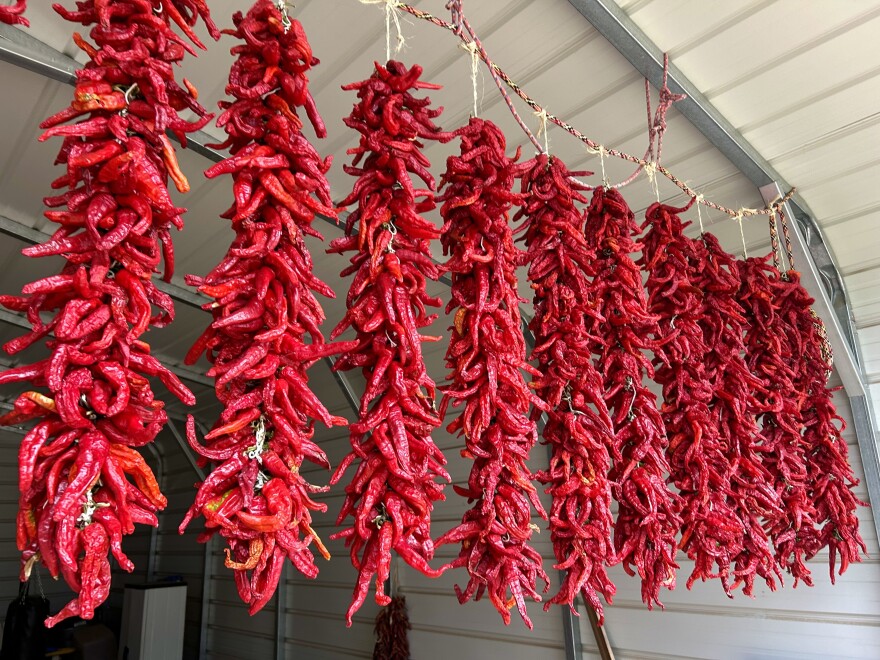
Ristras of freshly harvested Chimayo red chile are hanging to dry in Fidel Martinez’s shed.
Chimayo chile is such a hot commodity that when the biggest grower in the valley finally answered his phone, he evaded an interview and a visit to his fields. “People are already stealing my chiles, man!” he said, asking to remain unnamed.
Finally, a local pepper hobbyist said to come on over and help him harvest.
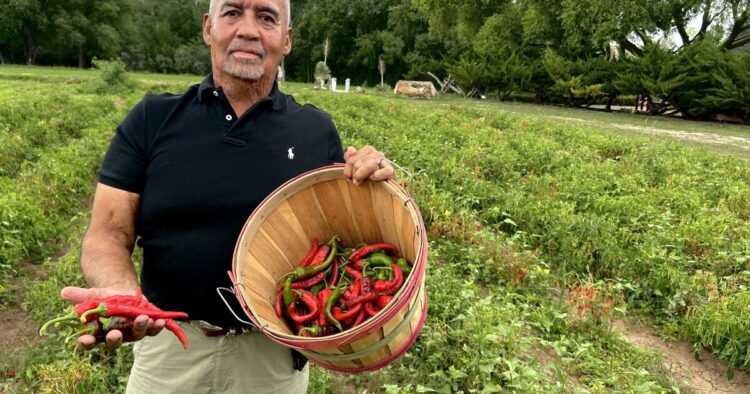
Fidel Martinez, retired from Los Alamos National Lab, stood in his quarter-acre of knee-high plants growing on his family’s ancestral land. He plucked a handful of the fire-engine-red peppers and tossed them into a basket.
“Look all over, down into the plants,” he called over his shoulder. “Look, they’re hiding down there. Once they’re red, they’re ready.”
FYI, chiles start out green; they turn red when they ripen. It’s all the same plant.
Fidel and Loyda Martinez don’t sell their crop.
“We plant for family and friends and we give it away,” he said.
Their chiles are so valued that a University of New Mexico plant scientist has sent their seeds to gardeners on all seven continents to test their success in different soils. But the couple said it’s just not the same.
“The sand is special,” Fidel said. “It’s the land that makes the chile taste really good.”
Loyda, also retired from Los Alamos, chimed in, “It has a sweet flavor. You can plant it all over the world but the taste is different all over the world. So it’s the dirt and the seed that mixed together that make it so unique, this Chimayo chile.”
Martinez chile powder is special. It’s burnt orange, lighter in color and sweeter than chiles for sale in the village. But all the chile powder tasted in Chimayo establishments was exotically delicious, and a powerful validation of the adage: buy local.
Copyright 2024 NPR
Source link : http://www.bing.com/news/apiclick.aspx?ref=FexRss&aid=&tid=66ef1b891dd74fb2bf68c47d7f94f1a4&url=https%3A%2F%2Fwww.wuft.org%2F2024-09-21%2Fa-rare-treat-getting-rarer-chimayo-red-new-mexicos-holy-chile&c=17188851223594130557&mkt=en-us
Author :
Publish date : 2024-09-20 22:00:00
Copyright for syndicated content belongs to the linked Source.