open image in gallery
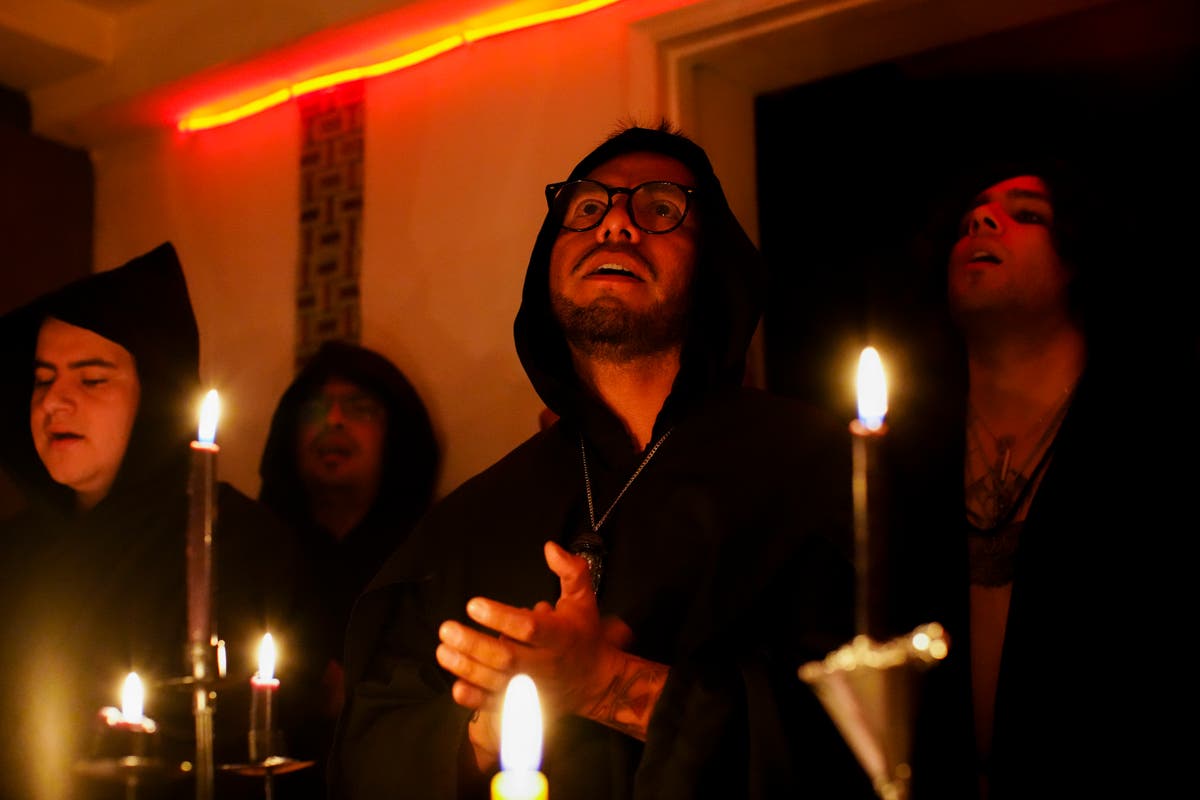
Members of The Temple of Satan: Satanists and Luciferians of Chile, drink wine at the start of a monthly ceremon (Copyright 2024 The Associated Press. All rights reserved)
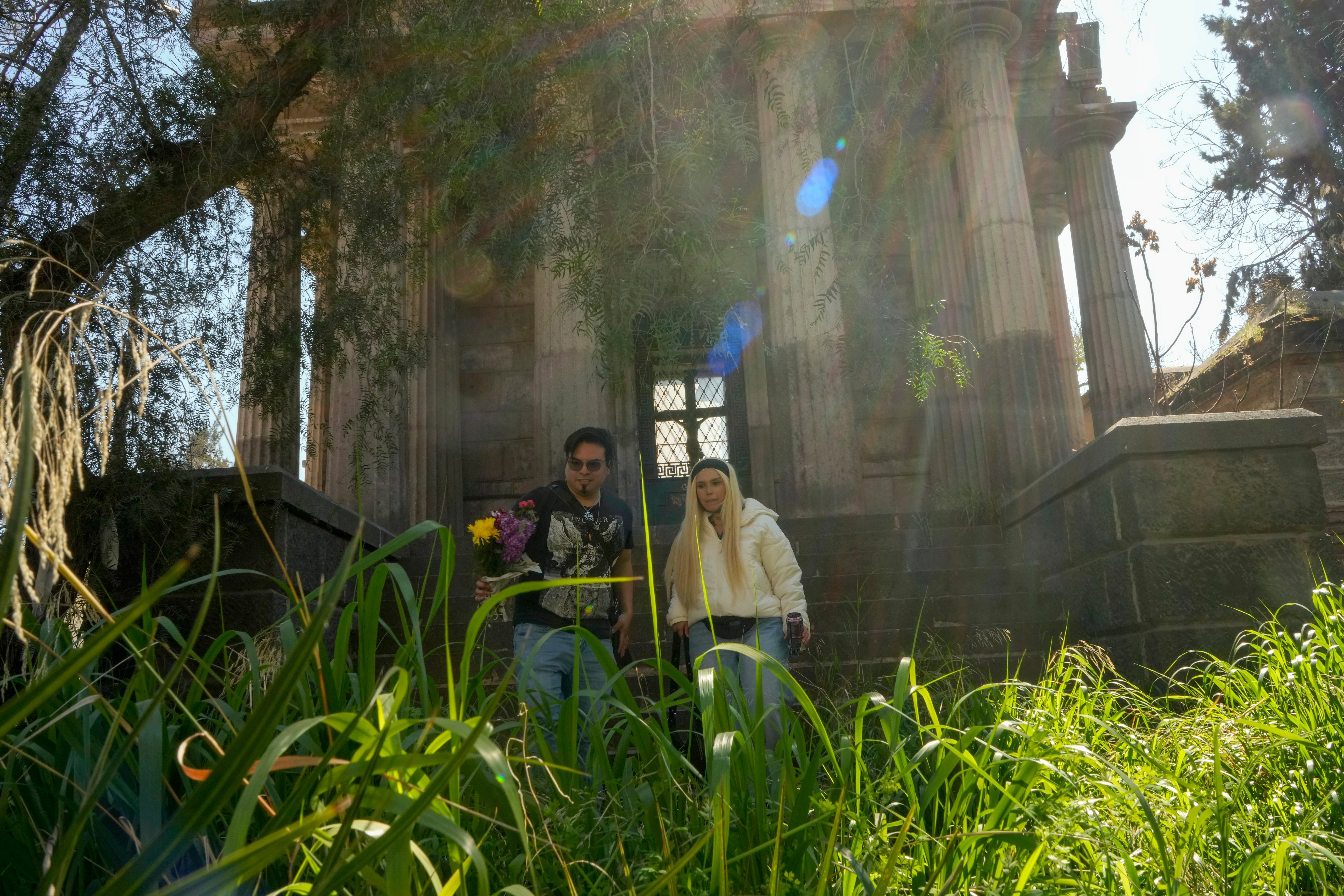
“You are the owner of your present and future, there is no God that makes decisions for you,” said Haborym, a spokesperson for the group, during a walk through tombs and mausoleums at the General Cemetery of Santiago. He notes that the figure of Satan is purely symbolic and their rituals are performed “to bring out the emotions and leave the intellect aside.”
Haborym and other members of the Temple of Satan in Chile spoke on condition their real names not be used, particularly with many hold public-facing jobs, citing growing threats.
While Hollywood movies like “Rosemary’s Baby” and TV series such as “True Detective” helped to portray the idea of Satanists as linked to sacrifice, evil, pain and death, modern groups like Chile’s Temple of Satan are strongly against animal abuse, prohibit the affiliation of people with criminal records, see pleasures as a delight rather than a sin, and do not express their opinions unless asked.
“We don’t want people killing in the name of Satan,” said Haborym.
In order to join Chile’s Temple of Satan, applicants are requested to go through a lengthy process that includes filling out a form, showing proof of not having a criminal record, being interviewed by a special commission and, finally, being evaluated by a psychologist.
open image in gallery
Members of The Temple of Satan: Satanists and Luciferians of Chile walk through the General Cemetery (Copyright 2024 The Associated Press. All rights reserved)
Once they are accepted, members can choose a new name — normally that of a demon or fallen angel — with which they will be identified inside the Temple and among other associates.
Founded in 2021, Chile’s Temple of Satan has 100 members, and more than 400 people applied to join in the past few weeks, said Haborym. The interest spiked at the end of July, when the group formally requested the country’s Ministry of Justice to legally recognize it as a religious association.
A media frenzy followed, unleashing a heated debate and causing a stir among Chile’s main religious denominations.
“The history of Satanism is well known (and) it has often been the cause of tragedies,” the leaders of several churches in Chile, including the Catholic, Anglican, Jewish and Evangelical, said in a joint statement.
Following the steps of the Church of Satan founded in 1966 by Anton Szandor LaVey, modern Satanists praise skepticism and logic over celestial or supernatural beings. Its followers are free to formulate their own beliefs, rites and spiritual practices.
Many self-described Satanists and Luciferians are atheists, others are witches or believe in the power of magic.
“We do accept that there are certain bases, both academic and esoteric, that give meaning to our existence and reality,” said Azazel, who quit Judaism four years ago and, one year later, founded the Temple of Satan of Chile.
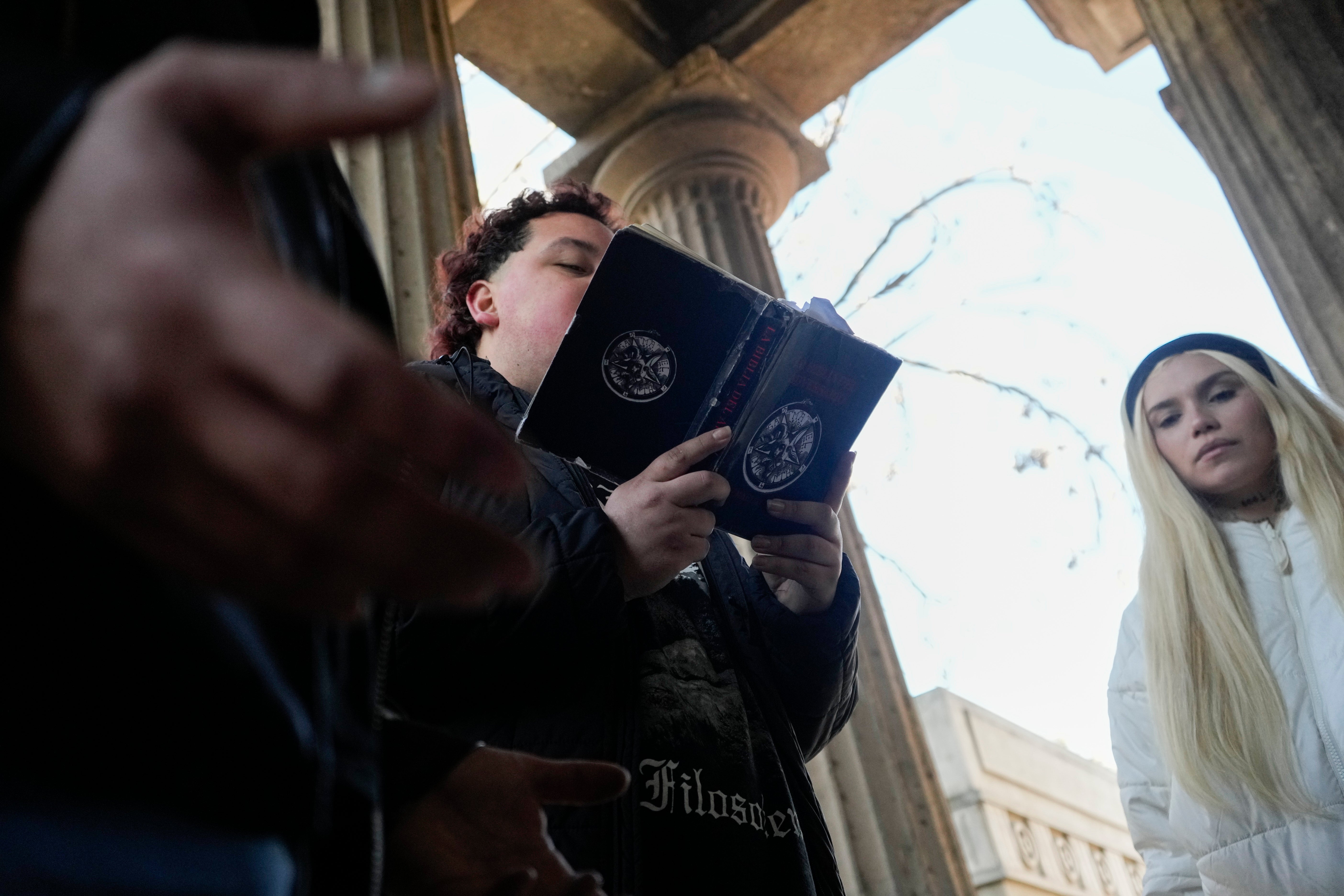
His words resonate in the darkness of the chamber and are interspersed with chants, clapping, mantras and readings of passages from the Satanic Bible and the Bible of the Adversary, the main guidelines of the group.
open image in gallery
A member of The Temple of Satan: Satanists and Luciferians of Chile reads from The Bible of the Adversary by Michael Ford, during a ceremony at the General Cemetery in Santiago (Copyright 2024 The Associated Press. All rights reserved)
Just like Azazel, others have turned to the Temple of Satan out of disappointment with traditional religions. The new congregants include not only occultists and esotericists, but also Catholics, Jews, Protestants and Evangelicals.
“In Satanism there are no solutions or absolute truths. You are your own god and you create your own reality,” said Kali Ma, a dentistry student who was born and raised in a Jehovah’s Witness family. “If we compare both, Jehovah’s Witnesses are the real sect,” she said. “They don’t let you do certain things, they tell you how to dress, what to do, how to behave, whether or not to grow a beard.”
Néstor da Costa, an expert in secularism and religion at the Catholic University of Uruguay, said the influx of people seeking answers through different perspectives might be linked to the search for less dogmatic approaches.
“It may be a readjustment of the religious side of people who leave Catholicism but continue to believe in something,” he said.
It is unclear if the Chilean government will legally recognize the Temple of Satan as a legitimate religious association, but its very existence has already helped to spark a discussion that until recently was unthinkable in this conservative society.
Demanding recognition is the ultimate expression of everything praised by Satanic aesthetics: the rebellion against the status quo and the breakup with deep-rooted traditions.
“We comply with everything that is requested of us as a religious entity,” says Haborym. “So there would be no reason to reject us beyond the fact that we’re a controversial figure.”
Source link : http://www.bing.com/news/apiclick.aspx?ref=FexRss&aid=&tid=6757b049c88548d1ae35faefee6c2052&url=https%3A%2F%2Fwww.independent.co.uk%2Fnews%2Fworld%2Famericas%2Ftemple-of-satan-chile-america-b2645514.html&c=17668047757712865479&mkt=en-us
Author :
Publish date : 2024-11-11 21:56:00
Copyright for syndicated content belongs to the linked Source.