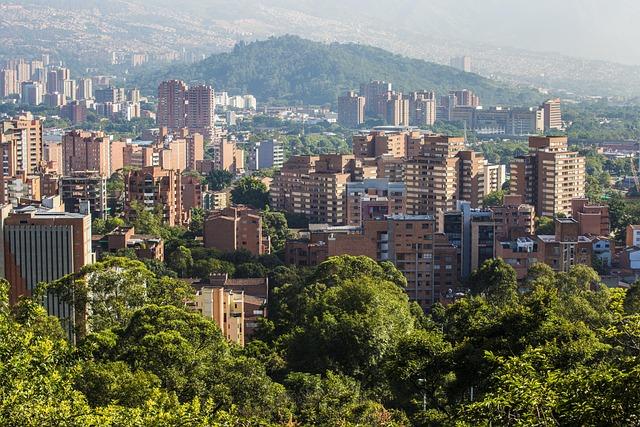
Colombia’s Dangerous Regress: A Nation at a Crossroads
As Colombia grapples with the remnants of decades-long conflict and the promise of peace, a troubling shift threatens to unravel years of progress. In a landscape already scarred by violence, recent socio-political developments have sparked alarm among citizens and analysts alike. While the 2016 peace agreement with FARC aimed to forge a new path towards stability, rising violence from dissident groups, a weakening judicial system, and entrenched political corruption signal a dangerous regression for the nation. This article delves into the factors contributing to Colombia’s precarious state, examines the implications for its democratic institutions, and highlights the urgent need for renewed efforts to safeguard the hard-won gains of the past. As Colombia stands at a critical juncture, the choices made today will determine the future of millions who hope for a brighter tomorrow.
Colombia’s Escalating Violence: Understanding the Rise of Armed Groups and Their Impact on Communities
In recent years, Colombia has witnessed a troubling resurgence of armed groups that are increasingly asserting their influence over various regions, leading to an alarming rise in violence. This escalation can be attributed to several interconnected factors, including the weakening of state presence in rural areas, the vacuum left by demobilized FARC militants, and the ongoing struggle for control over lucrative drug trafficking routes. Local communities find themselves caught in the crossfire of these power struggles, fostering an atmosphere of fear and instability. To better understand the dimensions of this crisis, it is essential to consider:
- The proliferation of illegal armed groups – New factions are emerging, including dissident FARC units and criminal organizations that exploit the chaos.
- Violence against social leaders – Activists and community leaders are frequently targeted, further exacerbating fears among residents.
- Displacement and migration – Rising violence has resulted in a significant increase in internal displacement and migration to urban areas.
This unsettling situation has significant repercussions for local populations, who often face a lack of basic services in conflict-affected areas. An analysis of civilian impacts reveals a grim picture of daily life under the shadow of armed conflict. The ongoing violence affects education, healthcare, and livelihoods, creating an environment where communities struggle to thrive. The following table outlines key statistics on the impact of violence on communities:
| Impact Area | Statistic |
|---|---|
| Internal Displacement (2022) | Over 160,000 people |
| Attacks on Social Leaders (2023) | At least 100 incidents |
| Educational Disruption | Over 400 schools closed |
Economic Challenges and Social Unrest: Addressing the Root Causes of Colombia’s Political Instability
Colombia is grappling with profound economic challenges that underpin its rising social unrest and political instability. Inflation rates have surged significantly, leading to a sharp decrease in purchasing power for ordinary citizens. Many Colombians struggle to meet basic needs, as unemployment remains stubbornly high and informal work dominates the labor market. Numerous factors contribute to this dire economic climate:
- Dependency on Commodity Exports: Fluctuations in global prices for oil and coffee have destabilized the economy.
- Weak Tax Base: A narrow tax base limits government capacity to invest in public services and social programs.
- Corruption: High levels of corruption siphon off resources that could be used to alleviate poverty and promote economic growth.
The socio-economic discontent has catalyzed protests, revealing deep-seated grievances amongst marginalized populations. Frustrations are exacerbated by the lack of effective dialogue between the government and civil society. Many citizens feel that their voices are not heard in the political arena, leading to a cycle of resentment and unrest. In this landscape, addressing the fundamental issues is crucial; without remedial measures, the prospect of enduring peace remains bleak. Key areas of focus must include:
- Inclusive Economic Policies: Developing frameworks that support small and medium enterprises.
- Investment in Education: Equipping the youth with skills to thrive in a changing job market.
- Strengthening Institutions: Enhancing transparency and accountability in governance to restore public trust.
Pathways to Recovery: Strategic Recommendations for Strengthening Rule of Law and Promoting Social Cohesion
In light of Colombia’s precarious situation, several strategic measures must be prioritized to reinforce the rule of law and foster social cohesion. Key recommendations include:
- Strengthening Judicial Independence: Legal frameworks must be adapted to ensure judicial independence, protecting judges and prosecutors from external pressures and corruption.
- Promoting Community Engagement: Initiatives that involve local communities in decision-making processes can enhance trust in institutions and deter violence.
- Enhancing Security Forces Training: The reformation and professionalization of security forces are essential to ensure that they operate within the bounds of the law and respect human rights.
- Fostering Economic Opportunities: Economic programs targeting vulnerable populations can reduce the allure of violence and contribute to long-term stability.
To track progress, the formulation of a comprehensive policy framework is imperative. A table outlining measurable outcomes can serve as a guide for stakeholders:
| Objective | Indicator of Success | Deadline |
|---|---|---|
| Judicial Reforms | Reduction in case backlog by 30% | 2025 |
| Community Programs | Increase in community participation by 50% | 2024 |
| Security Training | Certification of 80% of new recruits | 2023 |
| Economic Initiatives | Job creation for 100,000 individuals | 2025 |
In Summary
In conclusion, Colombia stands at a critical crossroads as it grapples with the implications of its recent political and social shifts. Amidst burgeoning concerns over security, human rights, and economic inequality, the nation’s progress appears to be stalling. The ramifications of this dangerous regress extend beyond borders, posing challenges not only for Colombian citizens but also for regional stability and international partnerships. Going forward, it is imperative for local leaders, civil society, and the international community to engage in constructive dialogue, ensuring that Colombia’s journey reflects the aspirations of all its people and lays the groundwork for a sustainable and inclusive future. Without concerted efforts to address these pressing issues, Colombia risks falling further into turmoil, undermining decades of hard-won gains and threatening the prosperity of the entire region. As the world watches, the choices made today will undoubtedly shape the narrative of Colombia’s tomorrow.