Omaira Bolaños, Latin America director, Rights and Resources Initiative
Women and girls are disproportionately affected by climate-driven extreme weather, environmental degradation and biodiversity loss, because as carers and mothers they are often responsible for putting food on the table and fetching water.
Valeria Paye from PODÁALI, said a permanent presence for Indigenous groups within the official United Nations Convention on Biological Diversity process could help to close an historic gap in access to nature finance.
Under the current UN structure, “resources are practically inaccessible,” she said, with most of the money going to “established mega funds” such as the World Bank.
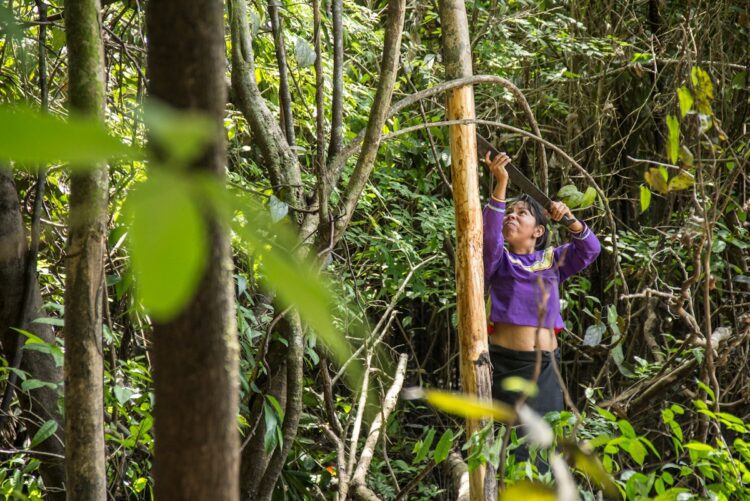
PODÁALI is part of a network of seven development funds managed by Indigenous, farming and Afro-descendant communities from Brazil’s Amazon, six of which are managed by women.
“Even though we have the structure (to manage that money), we are not able to access (it),” she said.
As the summit nears its end, the issue of nature conservation finance continues to be a stumbling block.
An additional US$163 million was pledged to the Global Biodiversity Framework Fund on Monday to implement a nature protection deal agreed between nations at COP15 in Montreal in December 2022, bringing the total raised to about US$400 million.
Advocacy groups have said the pledges fall far short of the billions of dollars envisioned for the fund which aims to stop biodiversity loss by 2030.
Fight for representation
Since 2001, there has been a push at United Nations environmental summits to consider the different needs, roles and responsibilities of women in climate and nature action.
The Global Biodiversity Framework agreed in Montreal includes a target to ensure a gender focus to boost women’s participation and equality.
But there is still no plan to track progress, said Alejandra Duarte, policy and research associate at global environmental network Women4Biodiversity.
“If I don’t have data in the right social context, how am I going to implement strategies, projects, programs that address the needs of each place?” she asked at a COP16 event.
Indigenous leader Ginny Alba, the first and only Indigenous woman representing Colombia at the negotiating table as part of the Colombian delegation at COP16, wants more government and donor funding to go directly to Indigenous communities.
Less than 1 per cent of overseas aid spent on climate action, including protecting biodiversity, goes directly to Indigenous Peoples, according to a 2021 report by non-profit Rainforest Foundation Norway.
“We are putting forward that Indigenous people, and women, have all the technical skills to directly manage our own resources in our territories that we govern,” said Alba, a member of the leading Organization of Indigenous Peoples of the Colombian Amazon.
“We need to make funding more accessible to Indigenous peoples, that’s why it is important to be present in these spaces,” she said.
This story was published with permission from Thomson Reuters Foundation, the charitable arm of Thomson Reuters, that covers humanitarian news, climate change, resilience, women’s rights, trafficking and property rights. Visit https://www.context.news/.
Source link : http://www.bing.com/news/apiclick.aspx?ref=FexRss&aid=&tid=67247c6cbad64aae88dabc71d4ef82e7&url=https%3A%2F%2Fwww.eco-business.com%2Fnews%2Findigenous-women-are-on-natures-front-lines-but-get-little-funding%2F&c=9978511308128745720&mkt=en-us
Author :
Publish date : 2024-10-31 19:58:00
Copyright for syndicated content belongs to the linked Source.