This information has been essential to design programs with a specific focus. Although UACFel carries out interventions at the national level, its main areas of work are the farms surrounding Tortuguero National Park, Caño Negro Wildlife Refuge and Mixto Maquenque Wildlife Refuge. The latter is of special importance for jaguars’ cross-border forays, as it’s adjacent to Indio Maíz Wildlife Reserve in Nicaragua.
These areas stand out due to the recurring reports of jaguar predation. According to Corrales, although pumas are responsible of a higher number of attacks nationwide, their map of their attacks is larger and more scattered. In other words, the data indicate that pumas attack less frequently but in more locations.
Corrales says Costa Rica is one of the few countries in Latin America with a national network of biological corridors. The predation map that UACFel developed suggests these corridors actually work as intended, he adds.
Before UACFel was created, there were scattered efforts to address the conflict between ranchers and felines. The new initiative had to start from scratch because there hadn’t been any others like it with the same scope. The UACFel model has now been replicated in Panama, Colombia and Mexico.
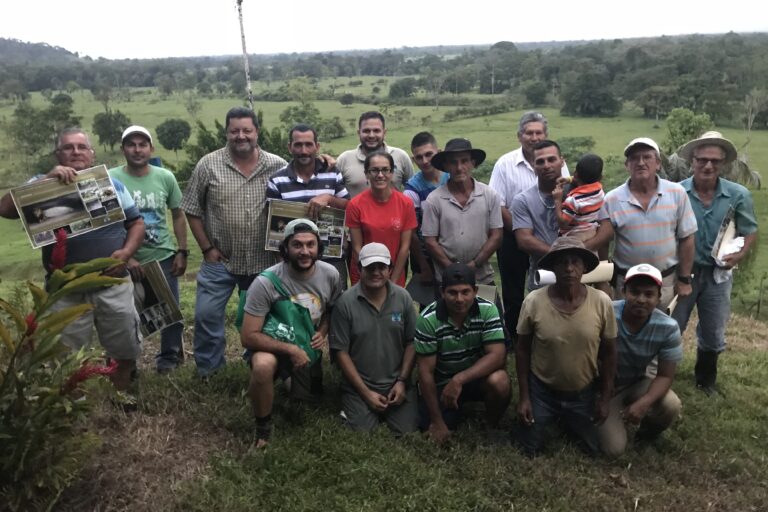 The first Panthera meetup in Lomas Azules, in 2017. In attendance were ranchers, conservation authorities, and biologist Daniel Corrales. Image courtesy of Panthera Costa Rica.
Panthera says of the 35 countries in which it works, Costa Rica is the only one that knows, at a national level, exactly where predation attacks are concentrated and what species are responsible.
Corrales says he feels proud of a recent agreement with CORFOGA, the national cattle ranchers’ association that also promotes sustainable ranching. CORFOGA technicians also collect predation reports, which, according to Corrales, is a remarkable advance as ranchers tend to trust them more than they do conservation officials.
This collaboration hasn’t been easy to achieve. Corrales says UACFel worked for 10 years and presented evidence of successful interventions on ranches to gradually win the cooperation of ranching organizations. The data proved that the interventions not only achieved environmental conservation aims, but also led to greater profitability. “I always found it really unfair that, when there was a big cat attack, the negative feedback was always directed at us [the environmental sector] when there are institutions in the ranching sector that could improve conditions to reduce predation,” Corrales says.
After more than a decade of working directly with ranchers, he says, the experience has showed him that cattle predation means inadequate farmer management. His main goal is to change this reality.
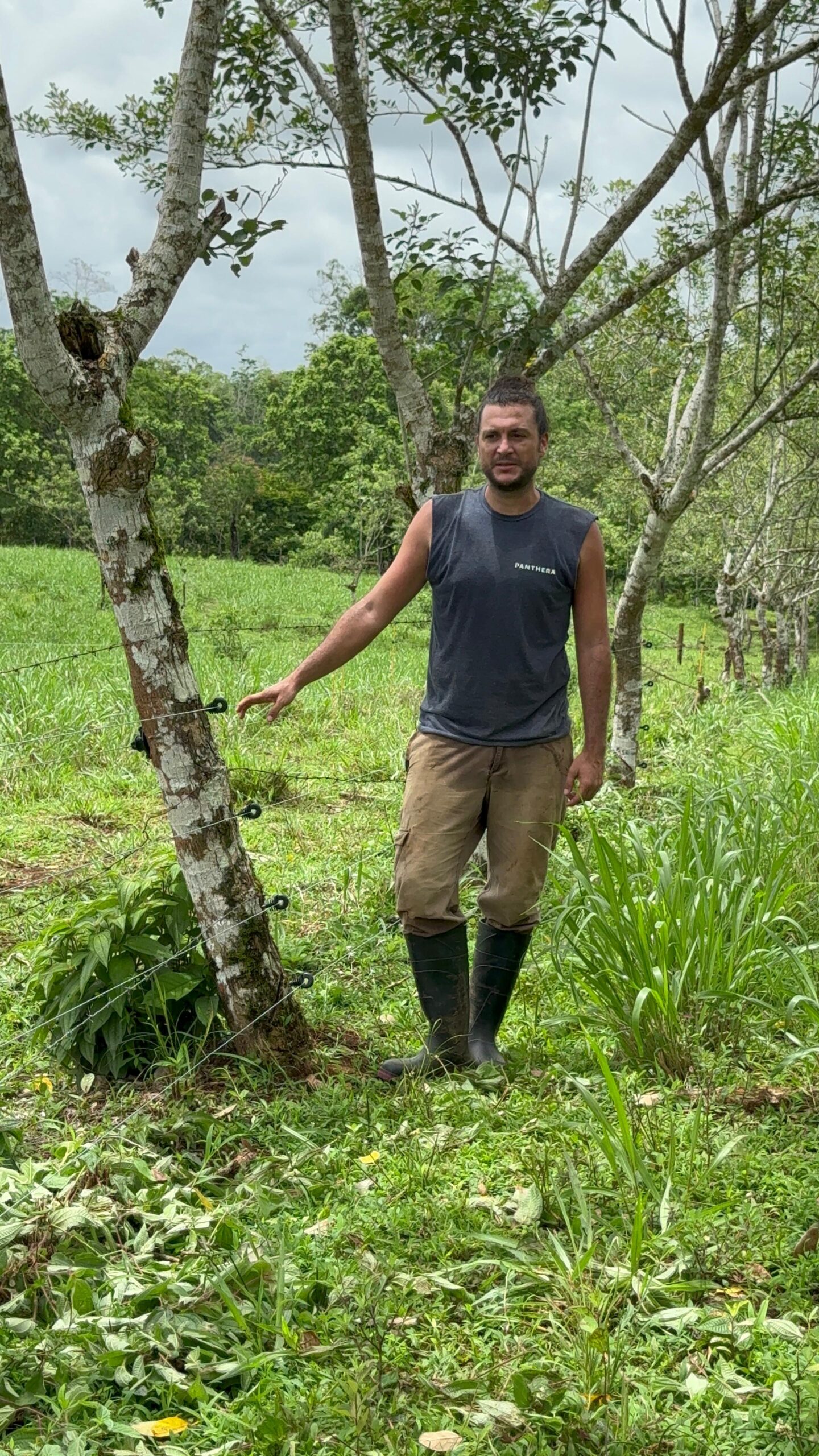 Daniel Corrales is a biologist in charge of the Project for the Cat-Cattle Coexistence with Panthera Costa Rica. Image courtesy of Panthera Costa Rica.
Convincing ranchers not to kill cats
The proposals for more modern and productive farms also help conserve cats as they help ranchers to keep them at a distance.
Traditional ranches are usually vast expanses of pasture with one or two divisions. This enables overgrazing and soil compaction. UACFel has collaborated closely with farmers to install electric fences and water troughs, which allow for more divisions and intensive rotation of cattle. This approach, according to experts, improves the pasture’s health and keeps the herd in more compact groups, removing the need to find water in forest areas where the big cats can attack.
The project also promotes the adoption of water buffalos (Bubalus bubalis), a species that has evolved a defensive instinct against predators. These buffalos protect the convention cattle and have other attractive qualities: they’re hardier, meaning they’re more resistant to heat, need less veterinary attention, and graze on weeds that other cattle won’t touch.
Yet these measures still aren’t enough to keep the big cats away, which is why UACFel’s innovations go beyond improving the farms.
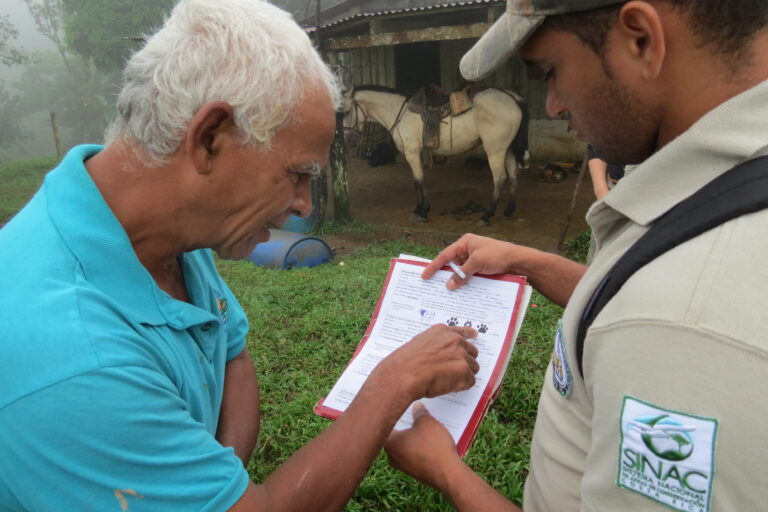 A conservation officer collects data about a predation incident. Data collection has since 2018 been recorded using a mobile phone app. Image courtesy of Panthera Costa Rica.
The main intervention is installing electric fences to prevent the wildcats from entering the pastures. This measure has been implemented at around 160 ranches, including that of José Luis Rodríguez, two hours outside the Costa Rican capital.
In 2016, the community here started experiencing puma attacks on dogs. Rodríguez recalls neighbors losing their pets, and even witnessed pumas taking them in plain daylight. At the time, he was starting a goat milk business, so his concern around potential attacks to his own animals increased.
After reporting the incidents to the environmental authorities, Rodríguez learned that his community lies within the Montes del Aguacate Biological Corridor. “For us, it was impressive to get to know that,” he says. “Pumas cross here, from the cloud forest to the dry forest, to exchange genes and strengthen the species.”
Rodriguez’s ranch was the first in the community to install an electric fence, serving as a prototype. He also implemented other deterrent devices to scare predators off.
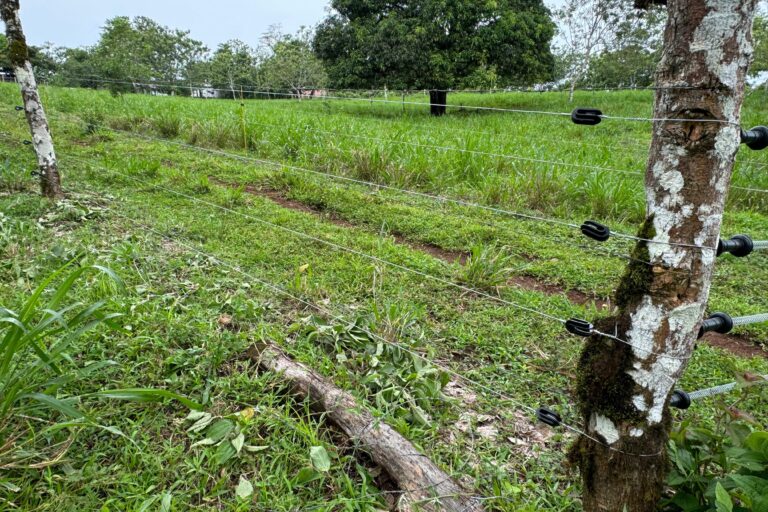 Electric fences installed to deter wildcats from entering pastures. Image courtesy of Panthera Costa Rica.
Corrales is behind the development of devices like collars with bells and lights for the cattle, with the noise and flashing meant to deter would-be predators. He also came up with “antipredation posts” that emit light and high-frequency sounds activated by the movement of cattle at night. These techniques have reduced attacks to almost zero in the areas where they’ve been implemented, according to Corrales.
“The effectiveness of the interventions has been higher than 95%, and in cases where there has been predation, it’s been due to human error,” he says.
Since 2013, around $300,000 has been invested in improving more than 400 ranchers and in deterrence technology, financed mostly by international cooperation funds. The direct work with farmers and their communities has allowed Panthera to find funding in initiatives linked not only to conservation but to socioeconomic development. Although the final goal of the initiative is cat protection, Corrales says the interventions are carried out with and for the people.
“What we want is for the jaguar [mainly] to stop being the enemy and be the thing that drives progress, happiness, better management and more technology on the ranches,” he says.
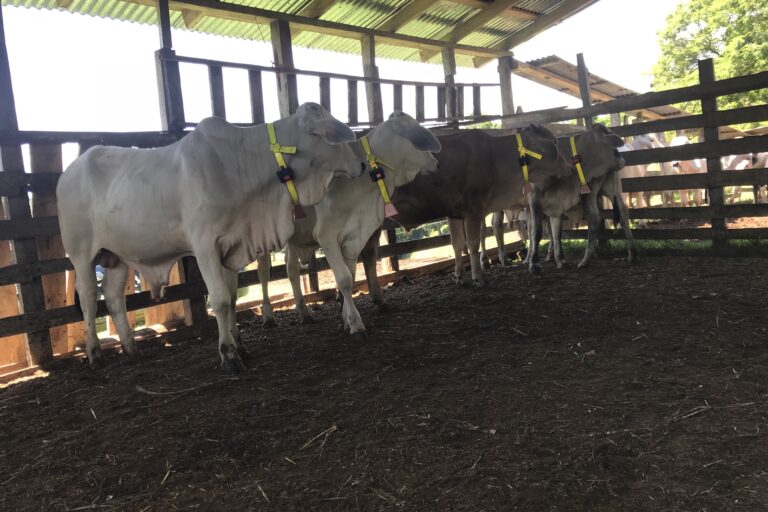 Cattle with antipredator collars. Image courtesy of Panthera Costa Rica.
A bigger balance
In the 1970s, Juan Ramón Durán arrived in Guácimo with ax in hand, intending to transform a piece of rainforest into a 50-hectare (124-acre) estate. But around 20 years ago, captivated by a new conservation spirit, he started reforesting the areas next to the gorges and he gave up hunting. He died five years ago, but his conservation spirit, as well as his ability to adapt and transform, passed on to his son Wagner, along with the ranch. For the younger Durán, being open to change has enabled his role as a pioneer in the collaboration with Panthera in his community since 2017.
The Lomas Azules community has seen the productivity of their pastures improve, and the ranchers have received training on topics related to cattle ranching in collaboration with UACFel. The biggest predation hotspot stopped suffering economic losses caused by cat attacks.
The positive results they observed on their ranches gradually opened up the Lomas Azules community to other conservation measures. A committee of volunteers came together to survey natural resources and take on challenges like poaching. “When we started, we identified 27 hunters,” Durán says, “and now there are only four left who are still causing trouble.”
Tortuguero National Park is renowned, and named after, the masses of green turtles (Chelonia mydas) that lay their eggs on its beaches. During nesting season, they’re a favored prey for jaguars. The rest of the year, jaguars are more likely to enter pastures in search of easy pickings. Durán says this is especially true for females looking for food for their cubs. Throughout his life, he’s heard of at least 40 jaguars being killed over predation incidents, and nine times out of 10 they were female.
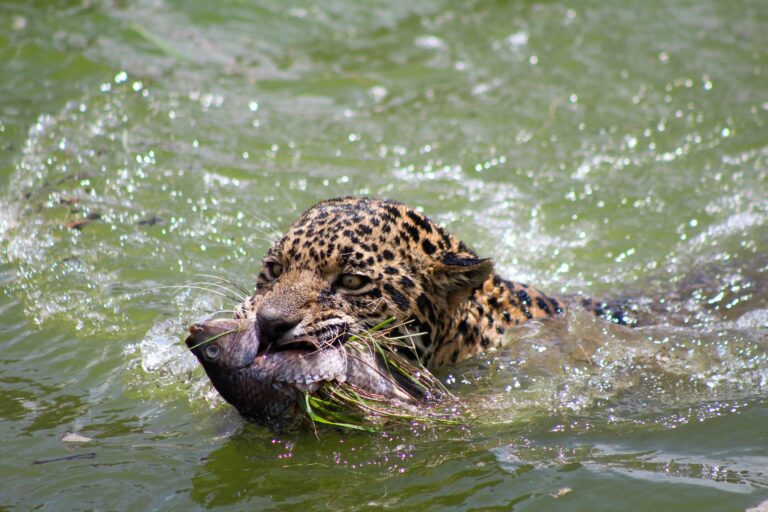 A jaguar with a fish. Image courtesy of Andrea Reyes/Jaguares en la Selva.
It was also likely a female jaguar that visited his own ranch this past February and picked off a calf. His plot has 15 divisions, bounded by electric fences, and a year earlier he got water buffalos. Yet despite all these measures, there was still an attack.
Durán says “the stars aligned” in favor of the nighttime visitor. It was February, so no turtles nesting in the park, which made his ranch a more likely target. One of the main fences was broken and he’d forgotten to check it. In addition, he’d separated the buffalos from the rest of the cattle and hadn’t put them back together. Durán speaks firmly and without a trace of resentment when he apportions blame for the incident: “It has been seven years and I’ve only had this incident with a jaguar. It was my fault.”
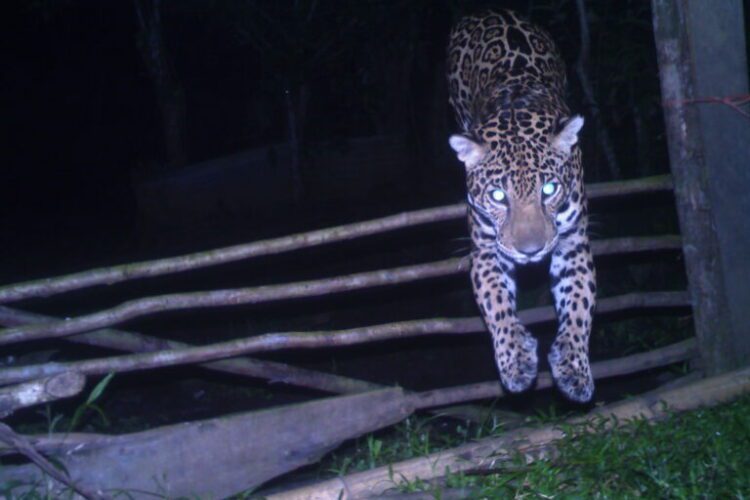
Banner image: A jaguar photographed by a camera trap on a ranch with predation issues in La Amistad Caribe Conservation Area in 2014. Image courtesy of Panthera Costa Rica.
This story was reported by Mongabay’s Latam team and first published here on our Latam site on Aug. 1, 2024.

Source link : http://www.bing.com/news/apiclick.aspx?ref=FexRss&aid=&tid=66ffb9d8f1994ac7ac35307be2cb7e3c&url=https%3A%2F%2Fnews.mongabay.com%2F2024%2F10%2Ffor-ranchers-in-costa-rica-jaguars-and-pumas-become-unexpected-allies%2F&c=633190603431851781&mkt=en-us
Author :
Publish date : 2024-10-03 12:45:00
Copyright for syndicated content belongs to the linked Source.