
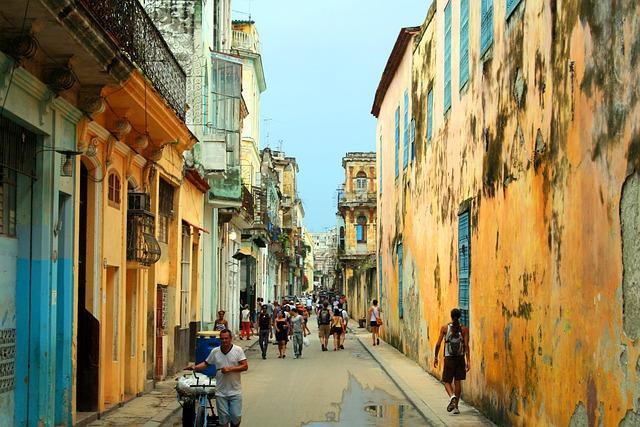
From Cuba to Panama: U.S. Interventions That Shaped Latin America
In the intricate geopolitical landscape of Latin America, few forces have played as pivotal a role as U.S. interventions throughout the 20th and 21st centuries. From the revolutionary fervor of Cuba to the strategic canal of Panama, American involvement has left an indelible mark on the region-one that continues to influence politics, economies, and social movements. This article delves into the historical events and policy decisions that have defined these interventions, exploring both the motivations behind them and their far-reaching consequences. As we examine the complexities of U.S.-Latin American relations, we seek to understand how these actions have shaped the lives of millions, while raising critical questions about sovereignty, democracy, and the enduring impact of foreign influence. In a world that is still grappling with the legacies of imperialism and interventionism, the stories of Cuba and Panama serve as crucial touchpoints for understanding the broader narrative of American engagement in Latin America.
Tracing Historical Footprints of US Interventions in Cuba and Panama
The historical involvement of the United States in Cuba and Panama reflects a complex interplay of strategic interests, ideological motivations, and the quest for regional influence. In Cuba, the Spanish-American War of 1898 marked a significant turning point, resulting in the island becoming a U.S. protectorate through the Platt Amendment. This document allowed the U.S. to intervene in Cuban affairs and to establish a military presence, thereby asserting a form of neocolonial control. The repercussions were profound: U.S. companies expanded their investments in sugar and tobacco, reshaping Cuba’s economy and leading to years of tension, ultimately culminating in the Cuban Revolution of 1959.
Meanwhile, Panama’s trajectory was significantly affected by U.S. intervention intended to facilitate the construction of the Panama Canal. The U.S. supported Panama’s separation from Colombia in 1903, followed by the establishment of a canal zone under American control, which served as a crucial conduit for maritime trade. The Hay-Bunau-Varilla Treaty reinforced U.S. dominance in the region, setting the stage for economic exploitation and political intervention that lasted throughout the 20th century. These interventions not only transformed the geopolitical landscape but also sowed the seeds of resentment that would fuel anti-American sentiment in both nations for decades to come.
| Event | Year | Description |
|---|---|---|
| Spanish-American War | 1898 | U.S. victory leads to Cuban independence but establishes U.S. dominance. |
| Platt Amendment | 1901 | Legal framework for U.S. intervention in Cuba. |
| Panama’s Independence | 1903 | U.S. support for separation from Colombia allows canal construction. |
| Hay-Bunau-Varilla Treaty | 1903 | Gives U.S. control over the Panama Canal Zone. |
Analyzing the Socioeconomic Impact on Latin American Stability
The intricate relationship between socioeconomic conditions and political stability in Latin America has been shaped significantly by U.S. interventions throughout the 20th century. Economic disparities have often catalyzed political unrest, creating a battleground for the influence of superpowers. The strategies employed by the United States, which range from outright military interventions to covert operations and support for local governments, have profoundly affected regional dynamics. These actions have frequently exacerbated income inequality and stunted social development, leading to situations that destabilize nations from Cuba to Panama.
Key factors affecting the socioeconomic landscape in Latin America include:
- Income Inequality: Disparities in wealth distribution contribute to social tensions.
- Unemployment Rates: High levels of unemployment fuel frustration and dissent.
- Corruption: Weak institutions often lead to the misallocation of resources, hindering development.
- Access to Education: Limited educational opportunities constrain economic mobility and stability.
Table 1 provides a simplified overview of interventions and their immediate effects:
| Intervention | Country | Year | Immediate Effect |
|---|---|---|---|
| Bay of Pigs Invasion | Cuba | 1961 | Heightened tensions and strengthened Castro’s regime |
| Operation Condor | Multiple | 1970s | Suppression of political dissent and human rights violations |
| Panama Invasion | Panama | 1989 | Shift in power, but long-term instability |
Recommendations for Future US-Latin America Relations and Policy Reform
The evolving dynamics of US-Latin America relations necessitate a multi-faceted approach to policy reform that prioritizes mutual respect, collaboration, and sustainable development. Moving forward, the United States should focus on strengthening economic partnerships that benefit both regions. This could be achieved through initiatives that promote trade agreements, encourage investment in infrastructure, and support technological innovation in Latin America. Implementing programs designed to combat corruption and enhance governance will also be critical, as these factors play a vital role in fostering a stable environment conducive to growth.
Moreover, addressing social issues such as immigration and public health should be at the forefront of policy discussions. Programs aimed at improving educational opportunities and job creation in Latin America can help curb migration pressures and build healthier societies. Future recommendations include:
- Collaborative initiatives focused on climate change and environmental sustainability.
- Investment in community-based projects that uplift local economies.
- Enhanced diplomatic dialogues to address security concerns and promote regional stability.
To Wrap It Up
In conclusion, the historical narratives of U.S. interventions across Latin America reveal a complex interplay of political ambitions and humanitarian justifications that have left lasting impacts on the region. From Cuba’s revolutionary fervor to Panama’s strategic canal, these interventions underscore the intricate ties between U.S. foreign policy and local struggles for sovereignty and autonomy. As Latin America continues to navigate its path forward, understanding this history is crucial for both policymakers and citizens alike, fostering a dialogue that respects the region’s diverse voices and aspirations. The lessons drawn from the past may offer valuable insights as we consider the future of U.S.-Latin American relations in an increasingly interconnected world.









