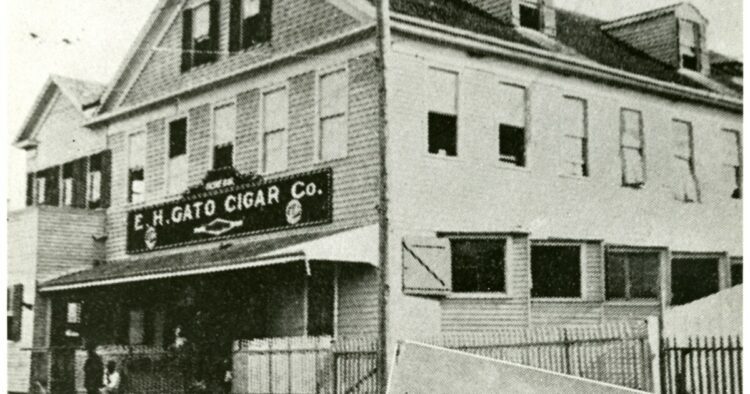
State Archives of Florida, Florida Memory.
Old woman making a cigar in the Key West cigar factory – Key West, Florida. 1900 (circa).
That archive, Johnson said, they and many other scholars are currently attempting to rescue and rebuild.
The collection is influenced by two major literary movements of the era: Romanticism and Modernismo. Romanticism, which is rooted in the 19th century, is focused on the exaltation of emotion, the individual and the unattainable, according to Johnson.
“In Latin America particularly, it’s also the moment of a huge amount of patriotism and nation building,” they said.
Modernismo comes out of the 1880s and is associated with writers like Martí and Rubén Darío. It’s based on the idea of art for its own sake, with a focus on intellect and the use of innovative writing structures. It is particularly significant because it came from Latin America, Johnson says.
“[It] is one of the major world literary movements to come out of Latin America and then influence the Anglophone and the other European literary traditions, rather than the other way around, which is the way that we think of these things traveling because of the colonial history there,” Johnson said.
Excerpt of Una Patria Azul / A Blue Patria from Tears and Flowers:
Yo he pensado en el misterio de una noche silenciosa, contemplando las estrellas desde el buque en alta mar, que los mares son la patria de la vida venturosa,
donde embriáganse las almas del romántico sonar.
Una patria azul, muy bella con sus brisas y su bruma,
esa bruma que parece de los cielos regio tul;
una patria donde flotan, cual partículas de espuma
los ensueños, las quimeras, embriagándose de azul.
Porque azules son los mares y los cielos y las olas,
y al correr veloz la nave todo azul se ve cruzar;
los ensueños, como espuma, fingen tiernas barcarolas,
y las brisas los suspiros de la amada al despertar.
—
I have thought about the mystery of a night that’s wreathed in silence, gazing upward at the stars from aboard a ship on the high seas,
for the seas are the patria of a life full of adventure
where the spirit gets itself drunk on the most romantic of dreams.
A blue patria, oh so lovely with her breezes and her brume, her fog that is like a splendid royal tulle that veils the heavens;
a patria where float, like so many particles of seafoam,
every daydream, every fantasy, getting themselves drunk on blue.
Because the seas are blue, the skies are blue, and the waves they are blue,
and as the ship runs on swiftly, all of blue it seems in crossing;
daydreams born there, like the seafoam, conjure up tender barcarolles,
and the breezes seem the sighs of a beloved upon waking
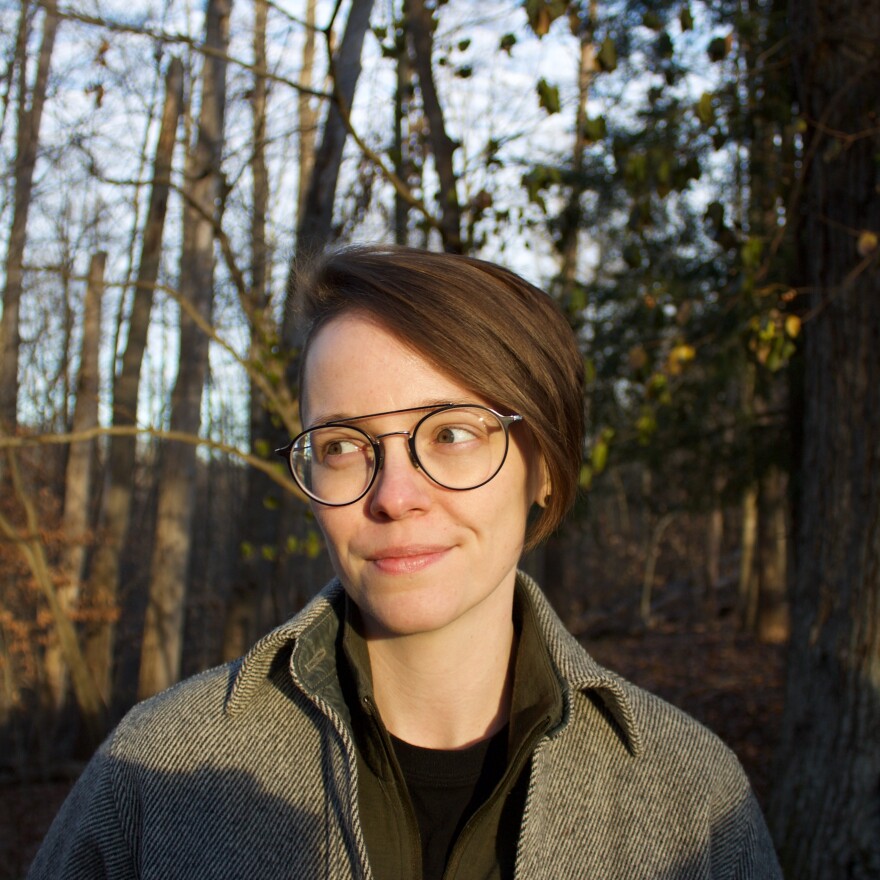
Rhi Johnson is an assistant professor in Spanish and Portuguese at Indiana University. They translated the poetry in “Tears and Flowers: A Poet of Migration in Old Key West.”
But Lagrimas y Flores doesn’t fit directly into any one movement or genre — Feliciano’s multifaceted identity is reflected in the work. But Joy believes its messaging may still resonate with many today, particularly those who’ve been displaced or chose to migrate from their home countries.
“If you think about how many people today have had to or have chosen to live such mobile lives, often of involuntary displacement, and this sense of being in transit or liminal,” Joy said. “His work anticipates that by over a hundred years.”
The collection itself is divided into two sections: Lagrimas, or Tears, which focuses on political strife and patriotism, and Flores, or Flowers, which includes poetry dedicated to women of Key West and features floral imagery as well as discussions of beauty and comfort.
It’s in the Flores section that Johnson said they see the book’s “Key West-ness” appear.
A contemporary of Feliciano Castro, named Octavio J. Monteresy, who was a Cuban literary critic and playwright, wrote that Feliciano “found welcome in the community by leaving a bouquet of verses at the feet of all the pretty ladies in town.”
A man of few words
Much of Feliciano’s poetry was inspired by upheaval in his early life. He moved with his godfather away from his family in Galicia, Spain — a region experiencing economic desperation — to Havana, Cuba, when he was just 9 years old.
“As a little boy he traversed the Atlantic so the sea was imbued with feelings of both grief and loss for family,” Joy said.
He dedicated poems to family members that, to Joy’s understanding, he never saw again.
“And then also the sea is imbued with imagery of something new, some adventure,” she added.
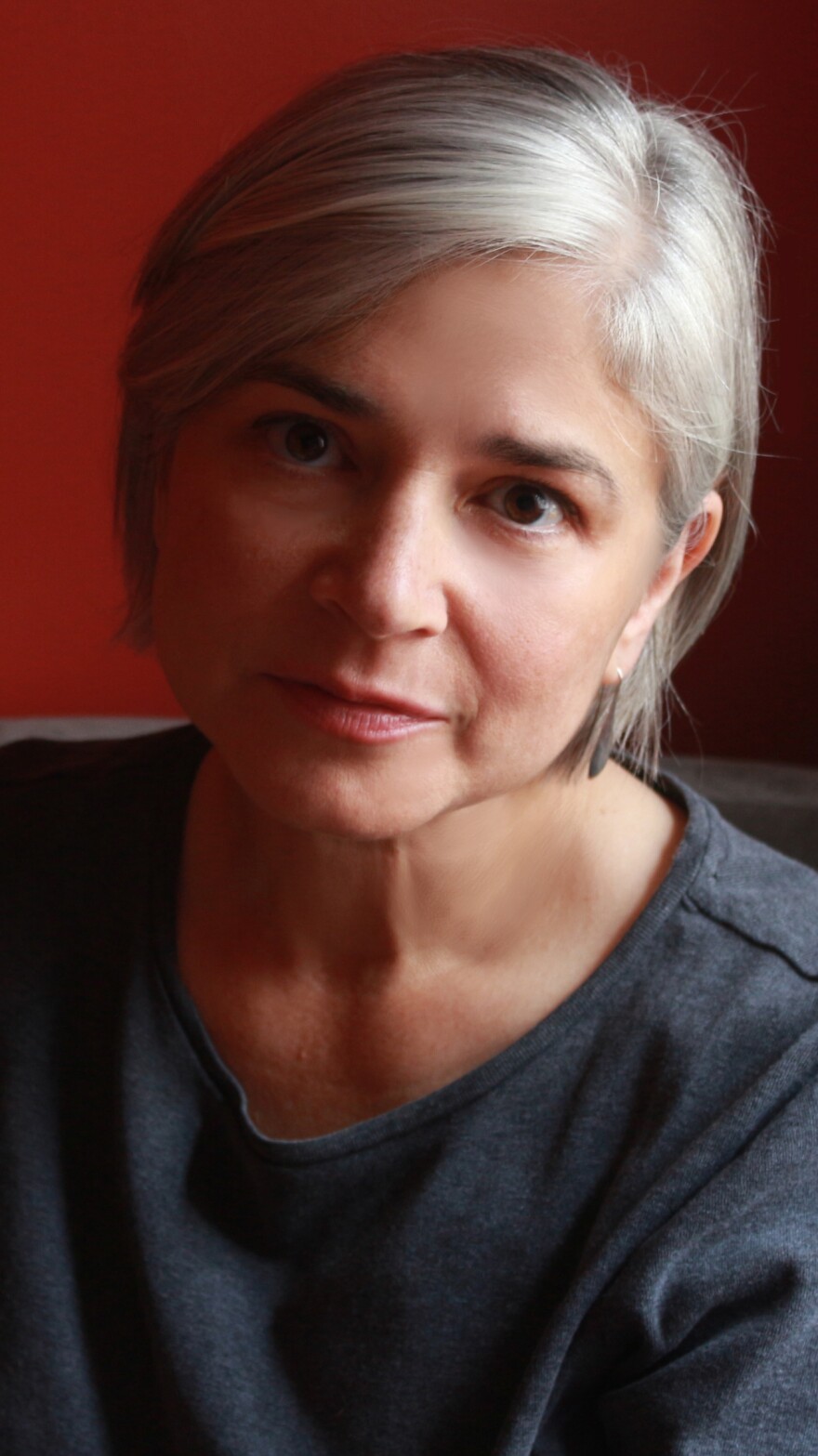
Joy Castro is the Willa Cather professor of English and Ethnic Studies, director of the Institute for Ethnic Studies at the University of Nebraska and granddaughter of Feliciano Castro, the original poet of the collection Lagrimas y Flores.
The rest of Feliciano’s life was surrounded by that adventure. After studying for a time in Rome at a school designed to train men for the priesthood, a profession the translators say he was too much of a player and romantic to be suited for, Feliciano returned to Havana.
There, he was left financially strained after his godfather, the patron who raised him in Cuba, unexpectedly passed away. He also suffered a romantic loss after a brief marriage ended.
Seeking a fresh start, he headed to Tampa but after struggling to find a job with a suitable income he headed south for Key West where he found a job as a lector, reading to workers at the E.H. Gato Cigar Factory in town.
“The history of lectores in the Caribbean is a really fascinating one as well that a lot of people don’t know about today,” Joy said.
Feliciano Castro, though caring and engaged, was a man of few words by the time his granddaughter, Joy, who simply knew him as Papi, would visit his home on Elizabeth Street in Key West in the 1970s and 80s.
Feliciano went on to become an influential figure in town. He founded the Florida Press at 311 Elizabeth Street, a house that still stands today. The press handled much of the Spanish-language printing on the island. He was also named the honorary vice consul to Spain for Key West and Monroe County in 1926 and in 1934, became the administrator of a Spanish-language newspaper, Cayo Hueso.
Upcoming events
Tears and Flowers will feature at a series of events in Central and South Florida in October:
Thursday, Oct. 17, the event “The Dawn of Latinx Creative Writing in Florida: Culture, Identity, and Community in Key West and Tampa” will feature a panel discussion at the student union at the University of Central Florida in Orlando, followed by a dramatic reading of Feliciano Castro’s poems by three actors from Descolonizarte Teatro at the Winter Park Library.Friday, Oct. 18, at the 2024 Florida Historical Society Annual Meeting and Symposiumat the University of Central Florida in Orlando, the book will feature in a roundtable discussion.Saturday, Nov. 23 and Sunday Nov. 24 the book will be part of the Miami Book Fair.
Source link : http://www.bing.com/news/apiclick.aspx?ref=FexRss&aid=&tid=66bb3dab2431490ab48a909195186ec8&url=https%3A%2F%2Fwww.wlrn.org%2Farts-culture%2F2024-08-13%2Fpoetry-key-west-cuban-american-feliciano-castro&c=4561621902675087386&mkt=en-us
Author :
Publish date : 2024-08-13 00:00:00
Copyright for syndicated content belongs to the linked Source.