Applications can still be received in the meantime through the official U.S. Citizenship and Immigration Services website.
Despite the current lawsuit, the program will be a huge relief for many families, Florida Immigrant Coalition federal campaign lead Yareliz Mendez-Zamora said.
“They sued over this program, claiming that it violates various parts of the Constitution, and it’s a part of… President Biden’s open border policy, which it’s not,” Mendez-Zamora said.
The application has a $580 filing fee and no fee waiver, which can be a barrier for program applicants who are already financially struggling. Mendez-Zamora declined to comment on the absence of a fee waiver.
Local immigration resources
Joan Anderson is a program coordinator for Baker Interfaith Friends, a volunteer visitation group visiting people in an immigration detention center in Baker County, about an hour north from Gainesville. The group has been visiting people in ICE detention for the last nine years, Anderson said, and provides support to the families who are left behind when people are taken into detention.
“To be a presence there is so important to people inside,” Anderson said. “Because they feel like somebody will hear them, somebody will see them and that’s so important.”
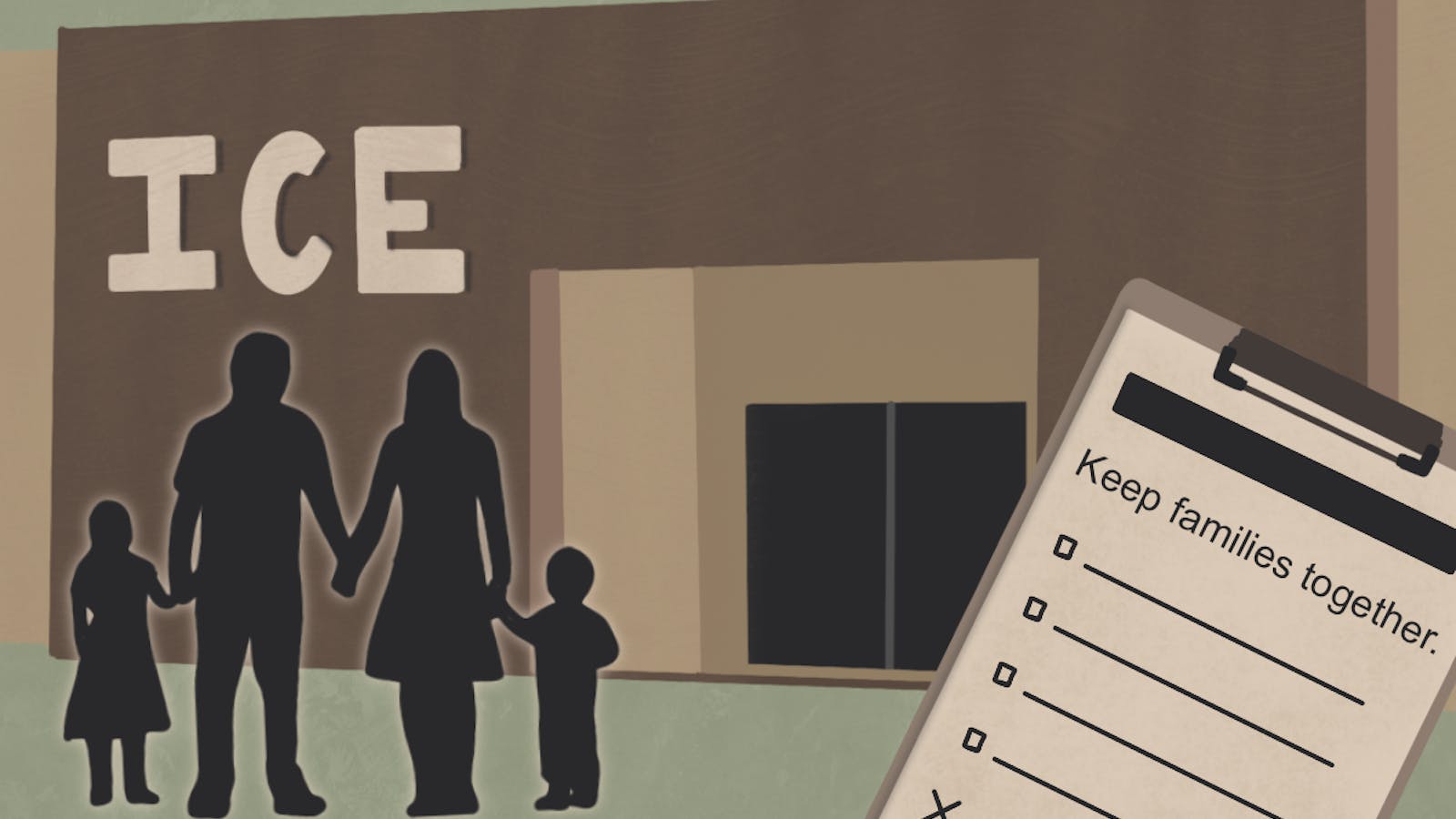
The Keeping Families Together program applies to many of the people the Baker Interfaith Friends volunteers visit, Anderson said. Many who are detained by ICE have very little contact with the outside world, she added.
Baker Interfaith Friends’ mission has expanded over the last several years, including trying to change some of the conditions and circumstances many immigrants exist under. The organization would like to abolish the detention system altogether, Anderson said.
“We’ve turned, also, to helping some of the families who are left behind on the outside,” Anderson said. “When their breadwinner is put into detention, they wonder how they’re going to pay next month’s rent.”
Regardless of status, immigrants are huge and productive contributors to the economy, Rural Women’s Health Project Director Veronica Robleto said. People often have a misconception that those who are undocumented or don’t have a status “don’t want to do it the right way,” she said.
The Rural Women’s Health Project works to break down health and justice barriers for Spanish-speaking immigrants in North Central Florida. The project focuses on community outreach and providing educational resources to aid in eliminating stigma, financial hardships and discrimination against undocumented immigrants.
The organization is based on four focus areas, Robleto said:
Social services, which aids in referring immigrants to social, legal and health services.
Health access, which includes four “promotoras de salud,” a Spanish term the organization uses to describe its community health workers.
Policy, which extensively focuses on immigrant safety in the community.
And social justice, which coordinates legal information workshops for the community about rights, responsibilities and the immigration system.
“The truth is that there are very few actual right ways that are available to most people,” Robleto said. “So that’s where I think it falls on our lawmakers to create more avenues for people to gain status.”
Undocumented students and students with DACA — or the Consideration of Deferred Action for Childhood Arrivals — do not qualify for federal or state aid in Florida. This includes the Machen Florida Opportunity Scholarship, Bright Futures, National Merit and other federal loans and grants, according to the “dreamer guide” on the Office of Student Financial Aid and Scholarships website.
Chispas UF, the university’s only student-run organization that focuses on immigrant rights and immigrant advocacy, carries resources on its website for students needing assistance. They did not respond to emails from The Alligator asking for comment.
Undocumented students who need more resources are urged to reach out to the Florida Immigrant Coalitions hotline: 1-888-600-5762.
Being undocumented, hardships
Brenda, 43, from Mexico, crossed the U.S.-Mexico border when she was 17. She remains undocumented to this day and currently resides in Ocala. Like many immigrants, Brenda came to the U.S. with hopes of achieving the “American dream.” She is being identified by her first name due to her undocumented status.
“You come here thinking it’ll be all roses — which is what people tell you — but the reality is, it’ll never be that way,” Brenda said in Spanish. “You’ll have a hard time. You have no car and the worst part is never knowing the language.”
Brenda, whose last name has been removed because of her undocumented status, said she decided to stay undocumented but continued working hard under false documents and kept a low profile to provide for her family. Rather than going through the process of legal residency or seeking out assistance, Brenda focused on survival. She gave birth to both her children in the U.S., which to her was more than enough.
“Many people here have a difficult time, but you still have to find a way to move forward,” Brenda said, “one way or another.”
Still, Brenda said the U.S. provides people with something other countries in South America don’t — education. She said she believes the process of deciding to use government assistance and getting documented or not is personal to each person. The government will assist you if needed, she said, and has more than enough adequate resources.
When Brenda gave birth to her first child, a federal program paid for the birth and gave her the treatment she needed. She was still 17 at the time.
Being undocumented doesn’t determine if you’ll be unsuccessful, Brenda said. The U.S. provides people with extensive education and the opportunities to work hard, she said, you just have to take the help.
“I know many immigrants who are struggling, but I also know several who are still undocumented with jobs who live better,” Brenda said, “because this country does have the opportunities, if you want to take them.”
Contact Vivienne Serret at [email protected]. Follow her on X @vivienneserret.
The Independent Florida Alligator has been independent of the university since 1971, your donation today could help #SaveStudentNewsrooms. Please consider giving today.
Vivienne Serret
Vivienne Serret is a UF journalism and criminology senior, serving as the Fall 2024 race and equity reporter for The Alligator’s Enterprise desk. She previously worked as a columnist and previously reported for The Alligator’s university desk as the student government reporter. She loves karaoke and lifting at the gym.
Source link : http://www.bing.com/news/apiclick.aspx?ref=FexRss&aid=&tid=66f155913c7048a49086c6d37ef19aa3&url=https%3A%2F%2Fwww.alligator.org%2Farticle%2F2024%2F09%2Fkeeping-families-together-program&c=5893813682769018369&mkt=en-us
Author :
Publish date : 2024-09-20 03:52:00
Copyright for syndicated content belongs to the linked Source.