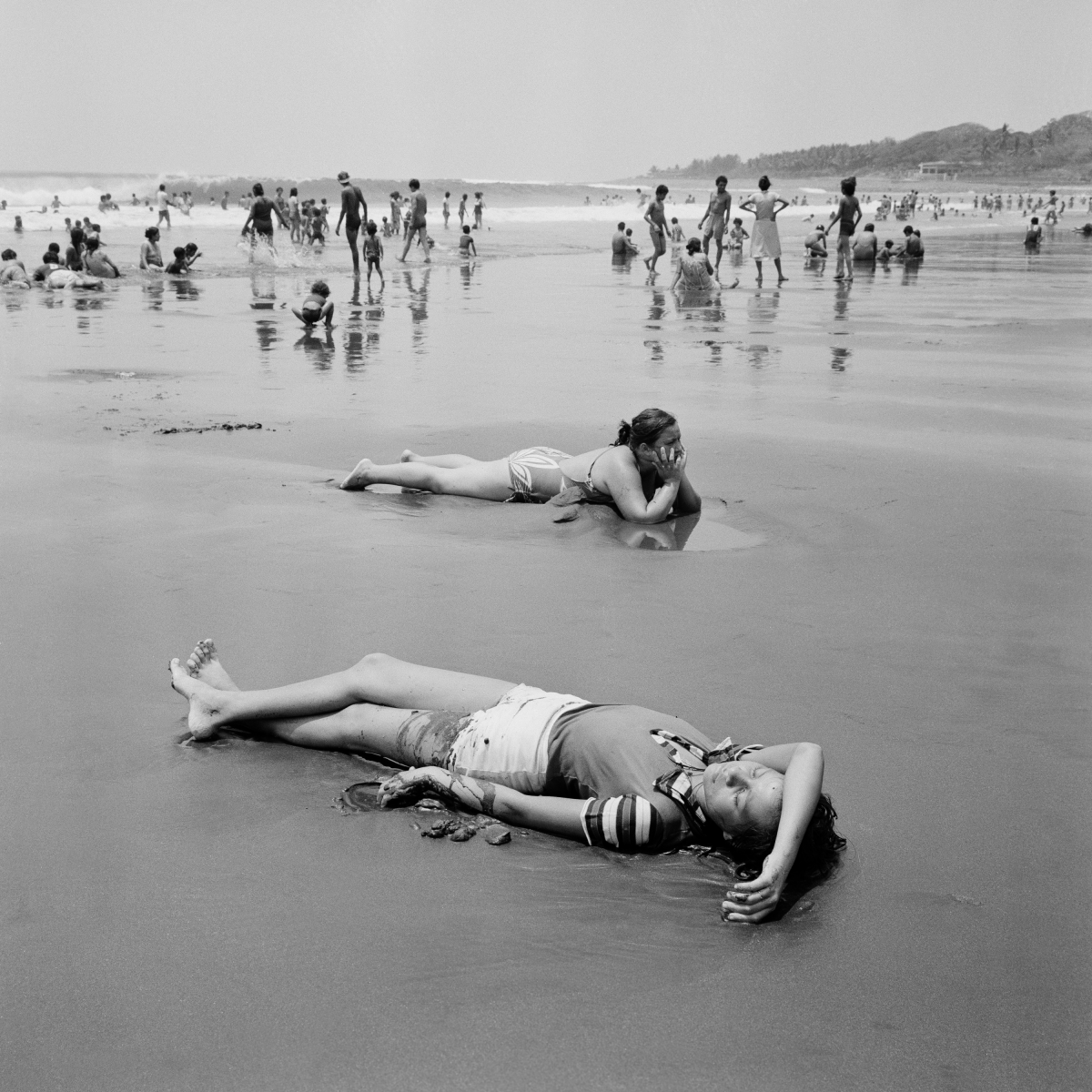
 Families congregate on the Pacific coast beach in La Libertad, El Salvador, in April 1983. (Robert Nickelsberg | Getty Images)
Legacy of Lies begins with images of the U.S. diplomatic and military presence, followed by images of El Salvador’s military and of left-wing guerrillas, and ends with images of daily life.
It is a portrait of a time, between 1981 and 1984, in which U.S. foreign policy has come under heavy criticism for aiming to direct democratic change yet condoning the brutality and violence exacted by the Salvadoran military and security forces on political opponents and civil society.
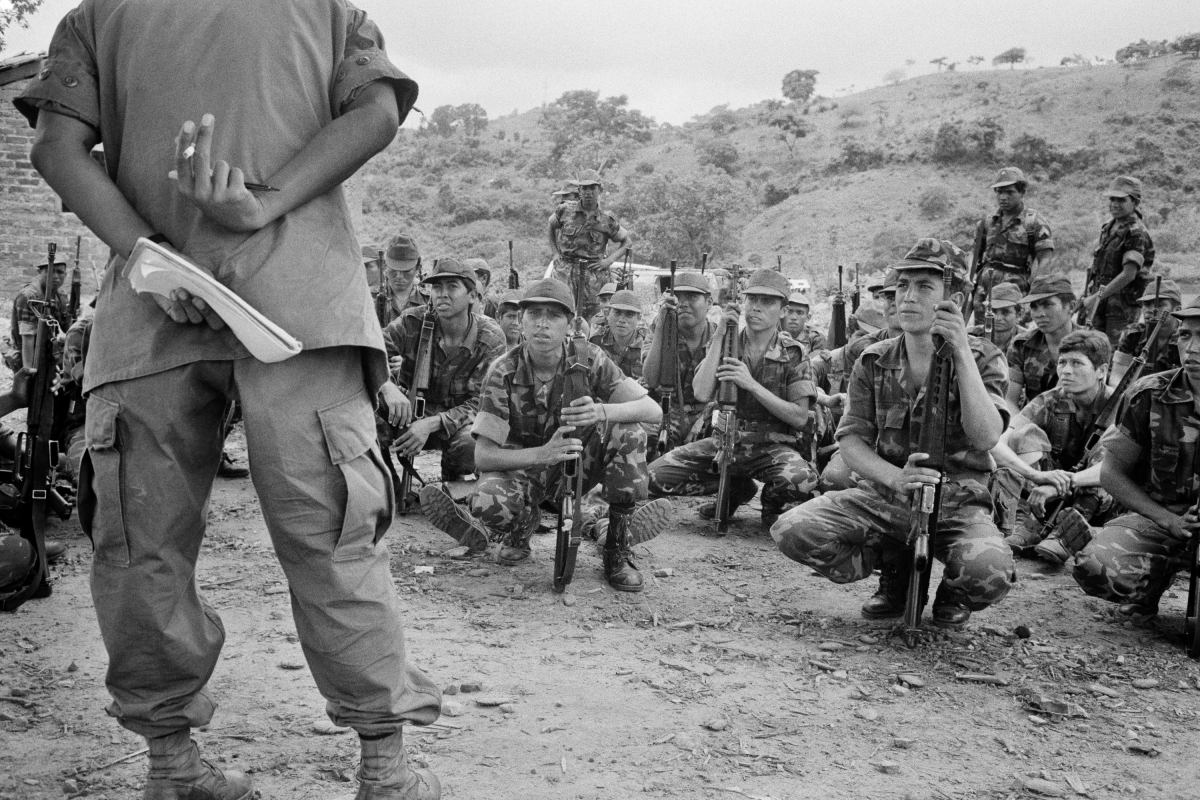 A U.S. Army advisor (left) leads Salvadoran army soldiers during an open air class in San Juan Opico, El Salvador, on June 20, 1983. (Robert Nickelsberg | Getty Images)
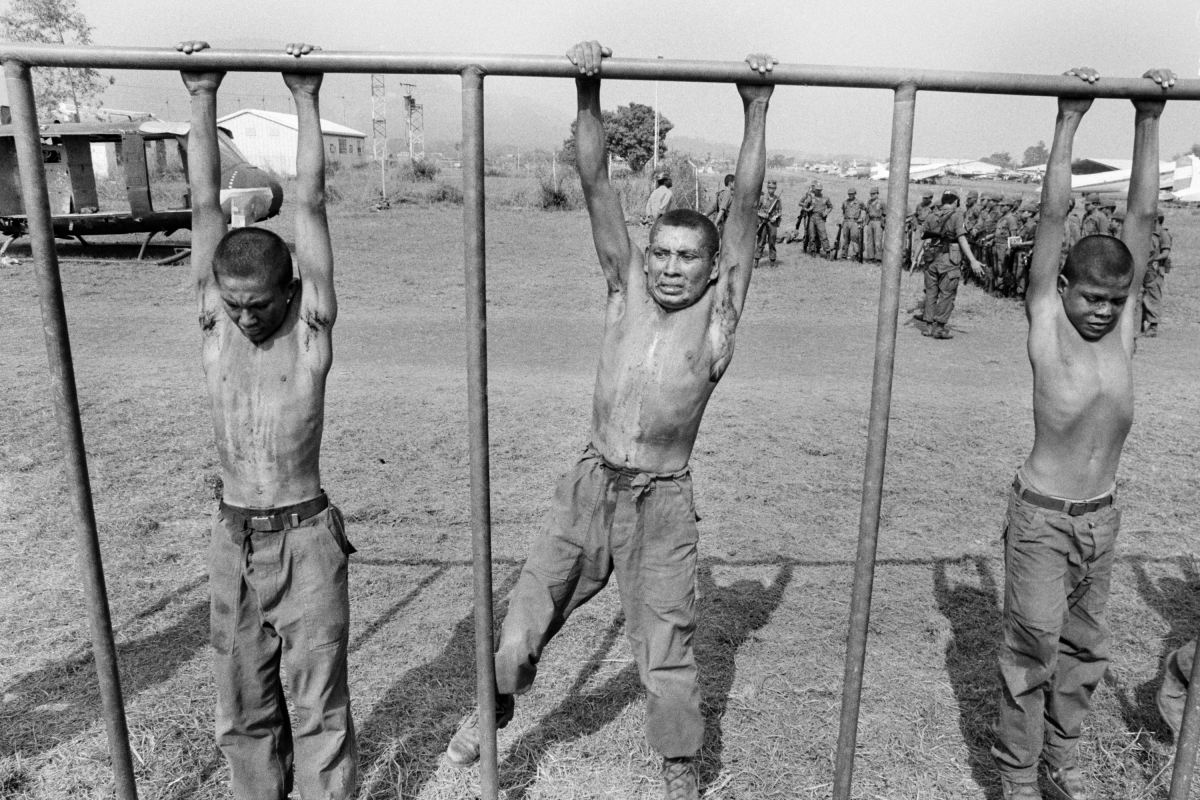 Salvadoran army recruits hang from a crossbar during a training exercise overseen by U.S. Army Rangers and Special Forces at the Ilopango air base in San Salvador, El Salvador, in March 1983. (Robert Nickelsberg | Getty Images)
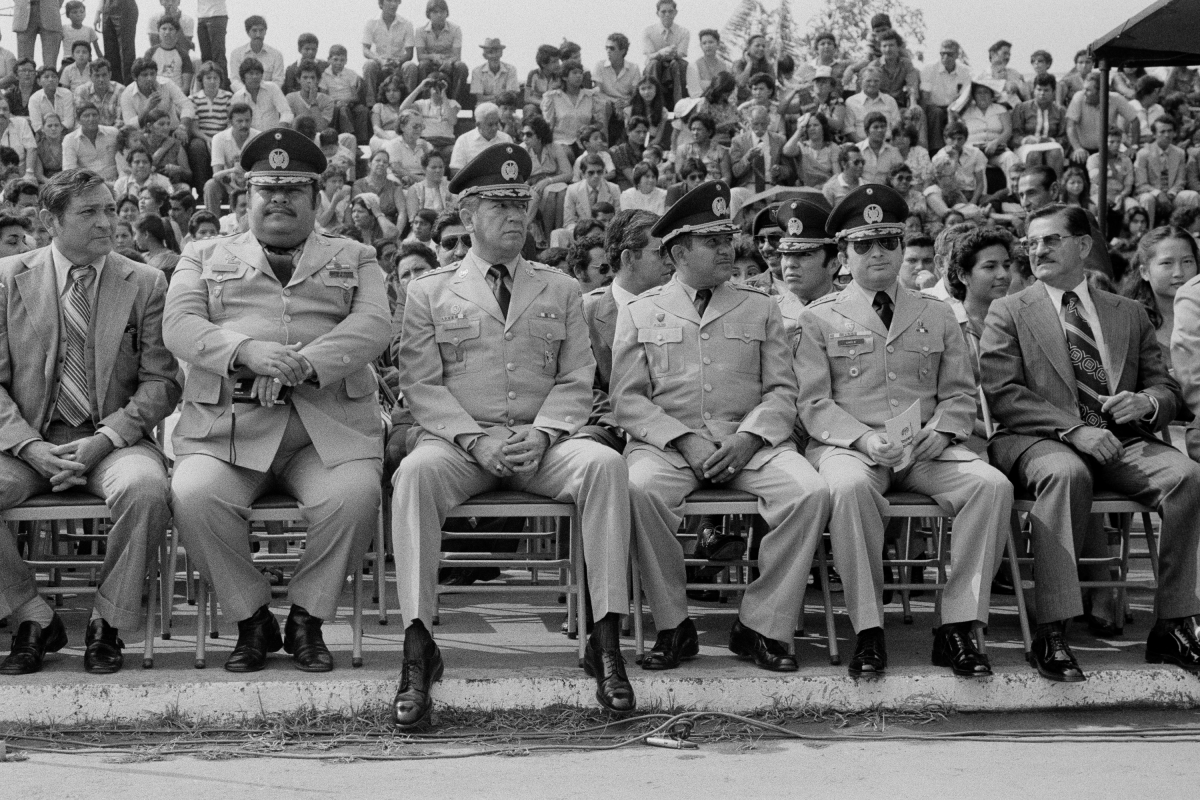 Salvadoran military commanders and the head of the Treasury Police, Col. Nicolás Carranza (third from the left), sit during a military ceremony at the Escuela Militar Capitán General Gerardo Barrios in Santa Tecla, El Salvador, in May 1983. (Robert Nickelsberg | Getty Images)
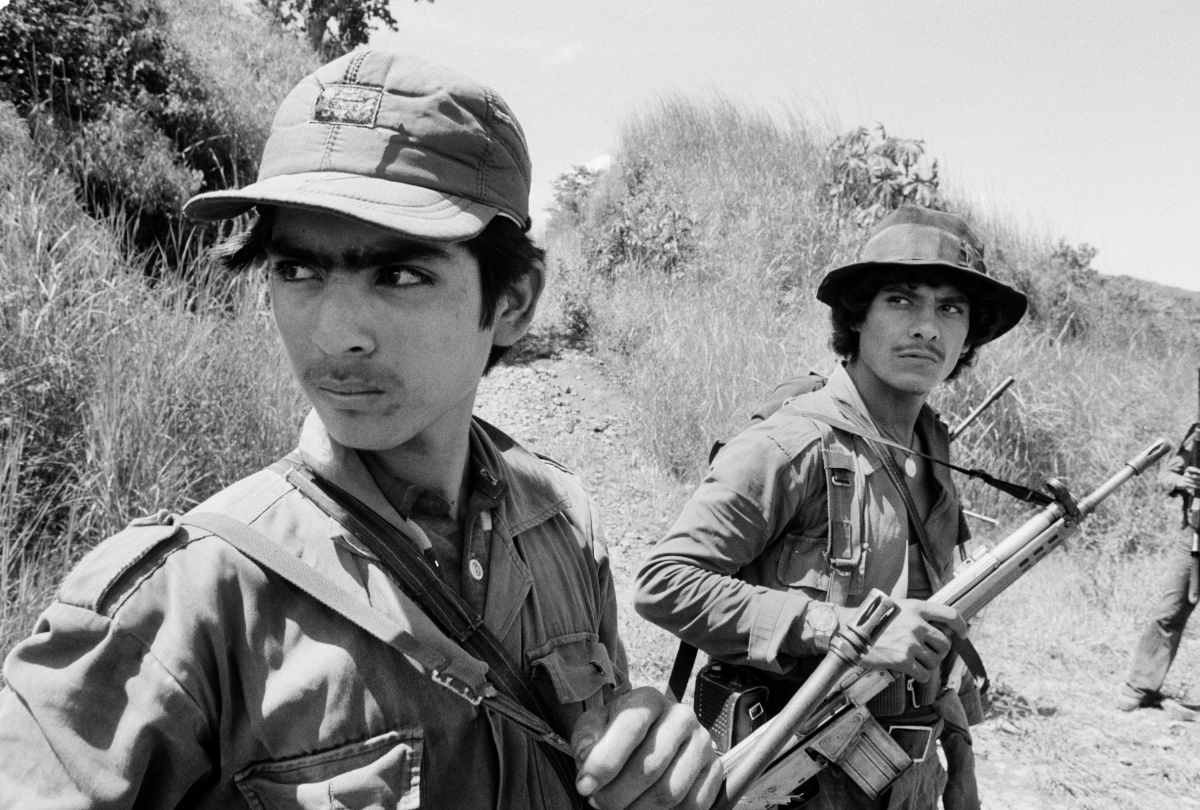 Two guerrillas from the Farabundo Martí Popular Liberation Forces (FPL) watch a low-flying Salvadoran military observation plane near the Guazapa volcano on the road to Suchitoto, El Salvador, on Oct. 21, 1983. (Robert Nickelsberg | Getty Images)
With its Cold War mindset following the failures of the Vietnam War, the U.S. increased its support and training for El Salvador’s security forces, which encouraged the annihilation of the political opposition and helped fuel recruitment for the opposing left-wing guerrilla armies.
From 1980 to 1992, El Salvador’s civil war resulted in the deaths of as many as 75,000 civilians and other atrocities.
Following the Chapultepec Peace Accords of 1992, the U.S. abandoned its focus on El Salvador. The country suffered an immense social and political upheaval it has not since recovered from.
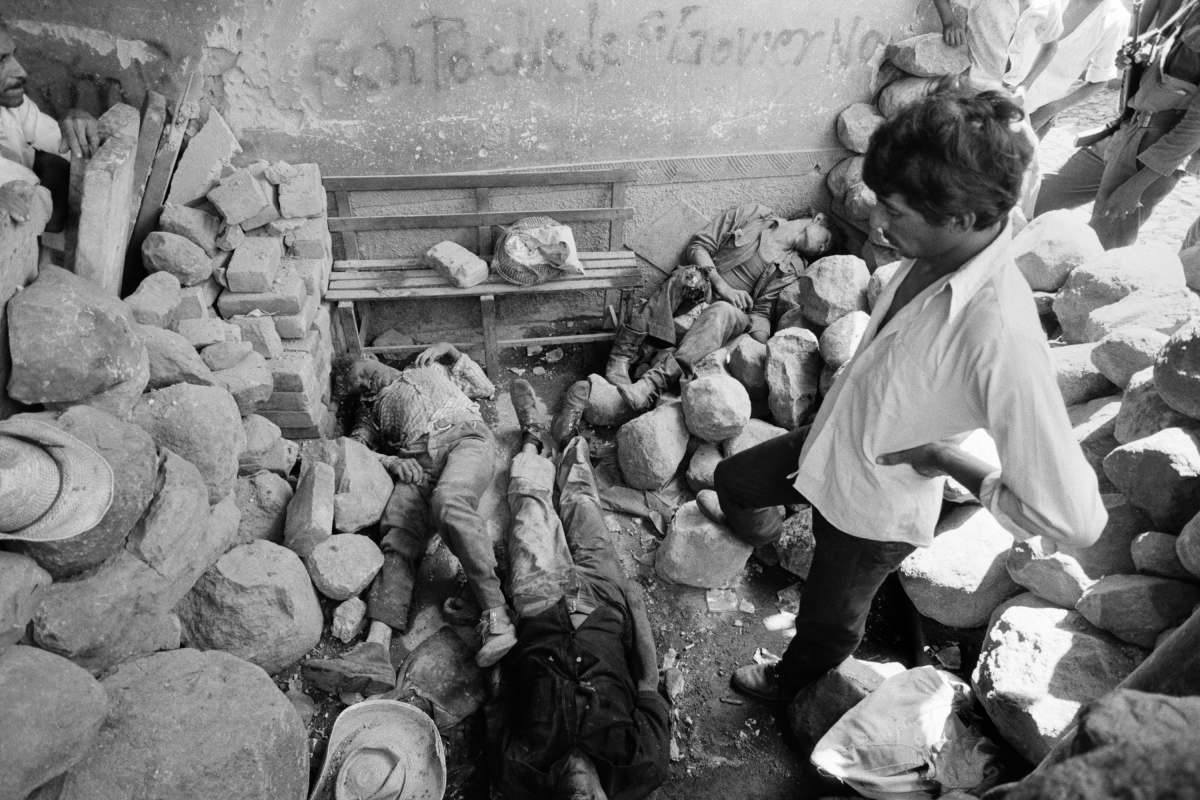 Civilians look over the dead bodies of three civil defensemen killed during an overnight attack by guerrillas from the Farabundo Martí National Liberation Front (FMLN) in Santa Clara, El Salvador, in July 1982. (Robert Nickelsberg | Getty Images)
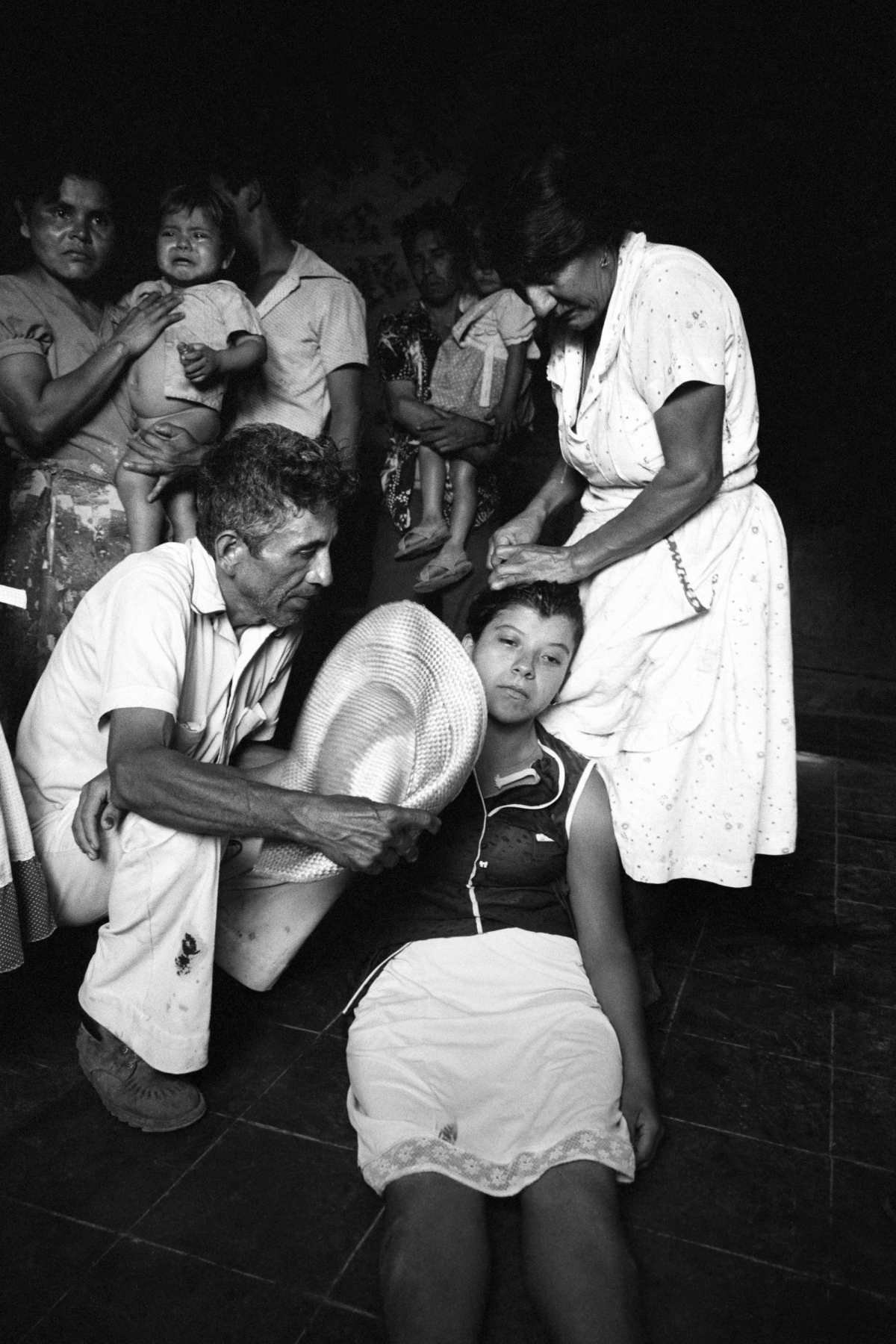 The sister of a civil defenseman (center) faints upon hearing of the death of her brother during an overnight attack on the civil defense post in Santa Clara, El Salvador, in July 1982. (Robert Nickelsberg | Getty Images)
The images focus on contemporary Latin America, a region engulfed in the ramifications of the Cold War, the rivalry between the U.S. government and the Soviet Union. Central America’s turmoil began with the 1954 coup d’état in Guatemala orchestrated by the CIA. The consequences resonated for decades and affected all sectors of Latin American life up to the present day.
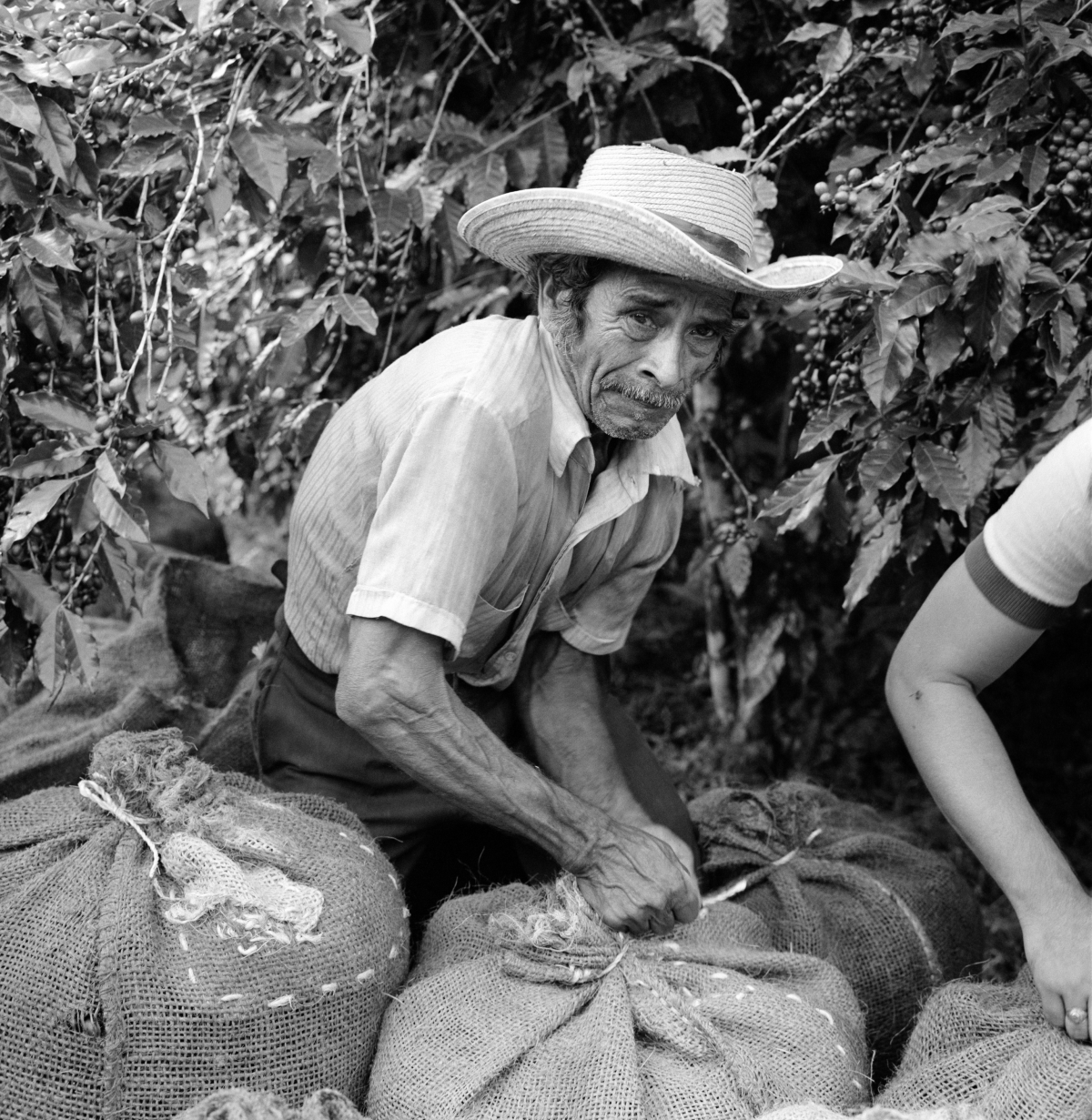 Salvadoran laborers load bags of freshly picked coffee beans destined for export at a privately owned coffee farm in Santa Tecla, El Salvador, in October 1982. (Robert Nickelsberg | Getty Images)
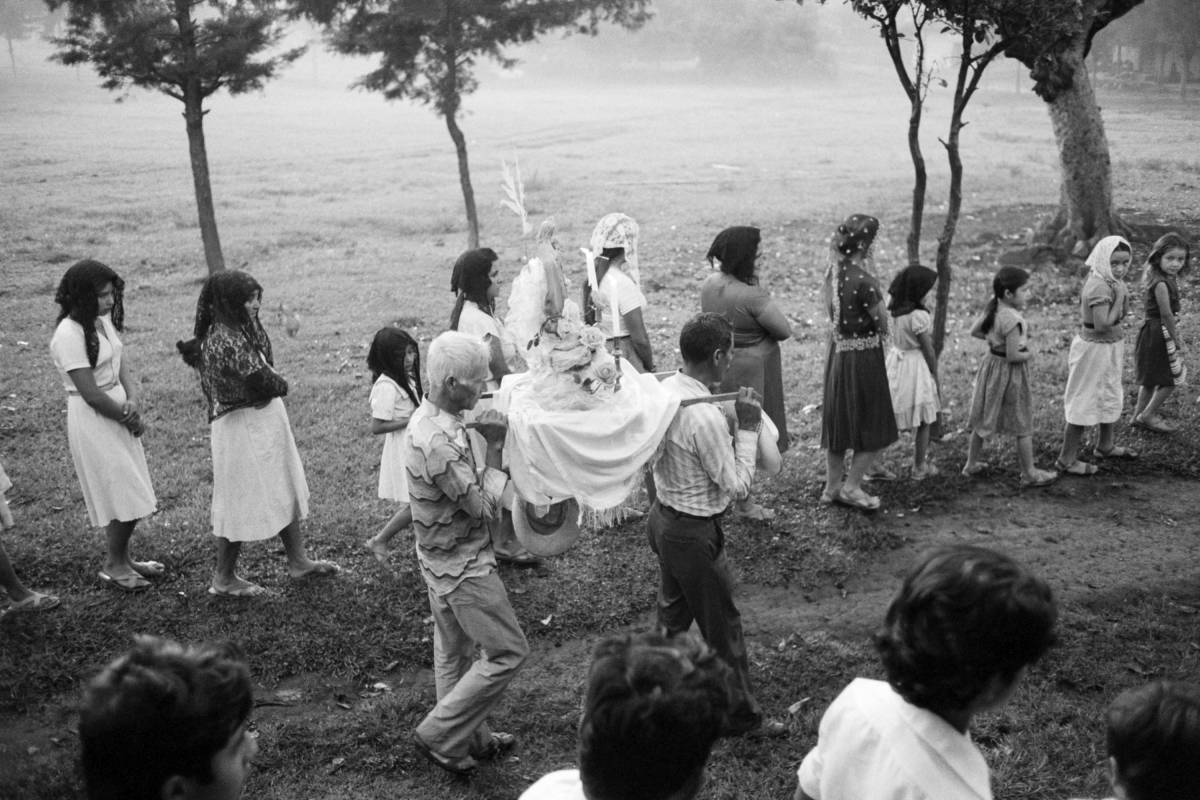 An altar with a statue of Jesus Christ is carried in a religious procession through the streets of Perquín, Morazán department, El Salvador, on Oct. 23, 1983. (Robert Nickelsberg | Getty Images)
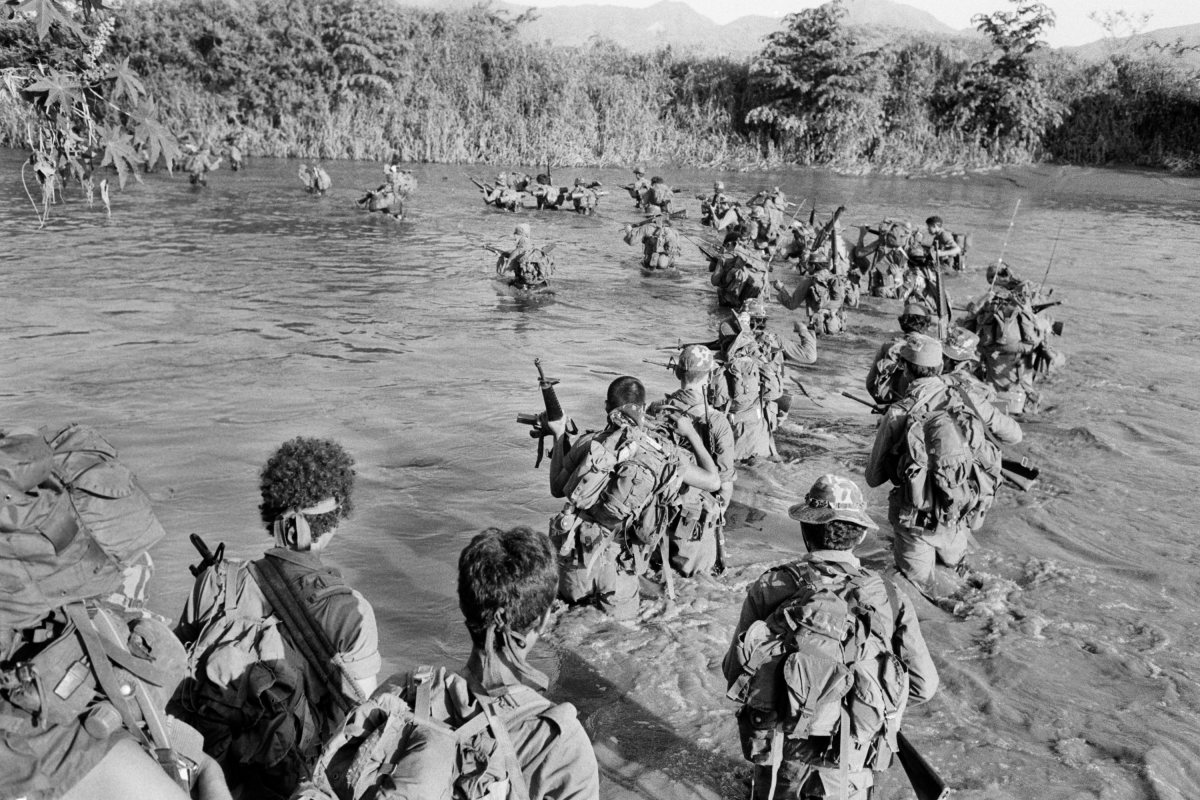 Salvadoran members of the Atlacatl battalion cross a river during a military operation in San Miguel department, El Salvador, sometime in late August or early September 1983. (Robert Nickelsberg | Getty Images)
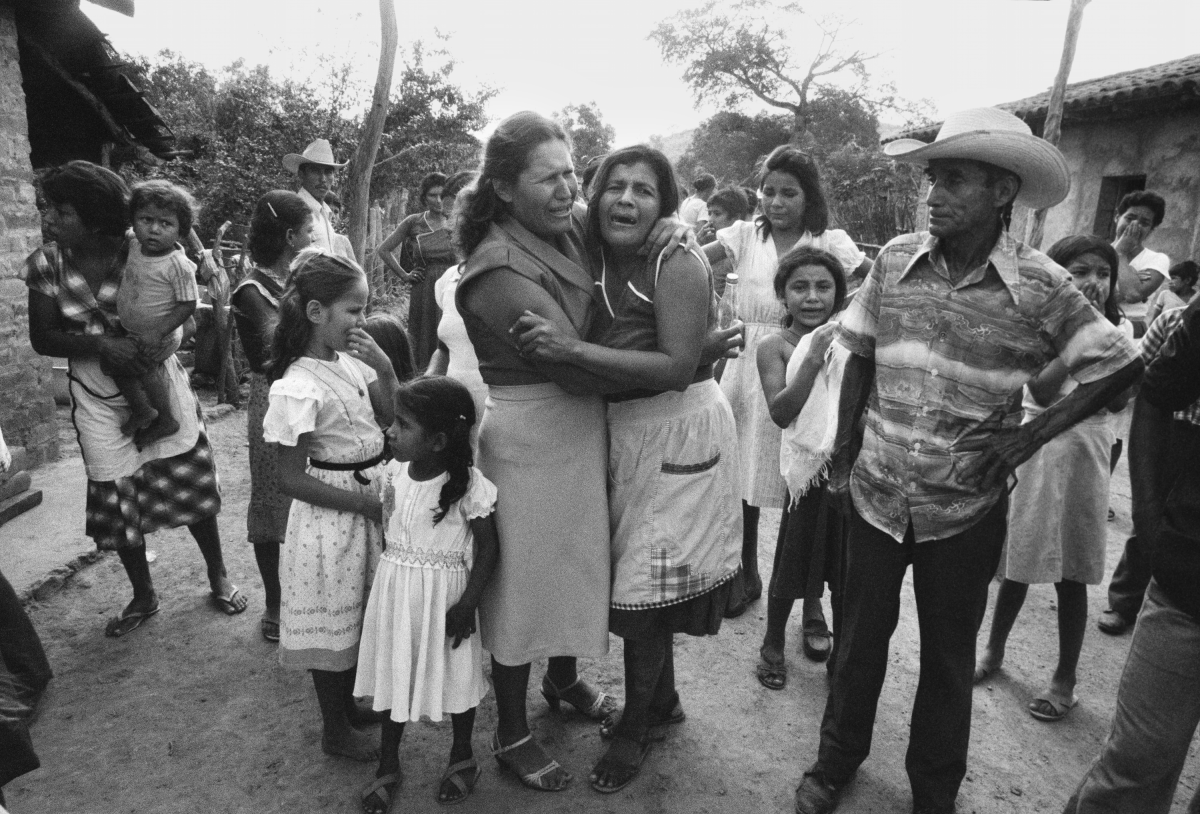 Local residents mourn as a truck carrying caskets of dead relatives arrives in Guadalupe, San Vicente department, El Salvador, on May 9, 1983. (Robert Nickelsberg | Getty Images)
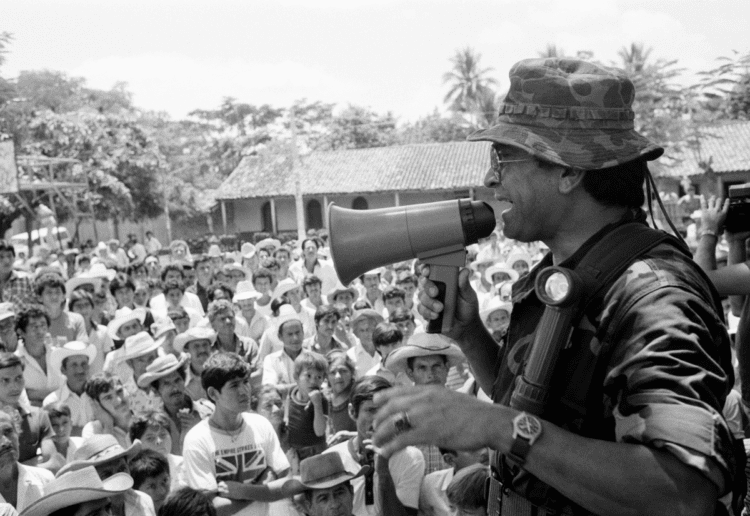
 Col. Sigifredo Ochoa Pérez, the former commander of the counterinsurgency unit Destacamiento Militar 2 and then head of the Fourth Brigade, speaks at a public gathering in Sensuntepeque, El Salvador, in September 1984. (Robert Nickelsberg | Getty Images)
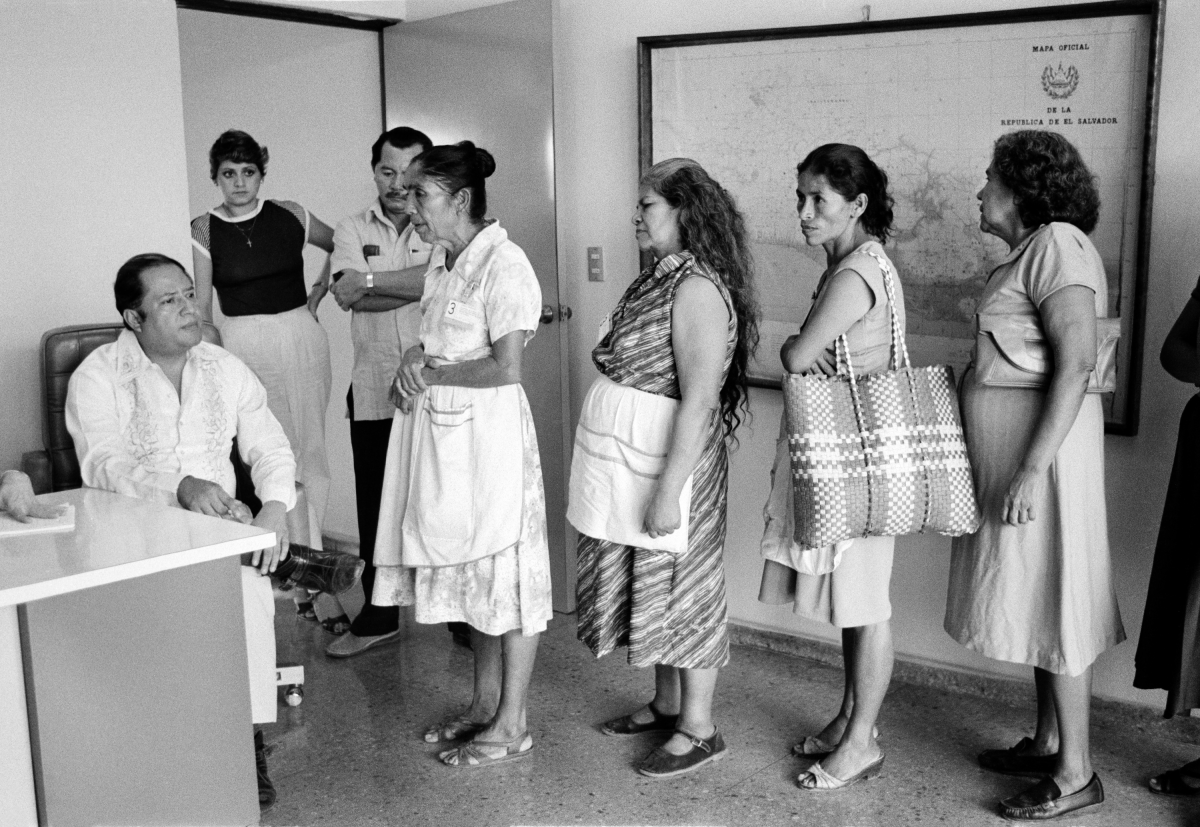 At the central office of the Salvadoran Human Rights Commission, a staff member (left) listens to women relay their cases regarding disappeared family members in San Salvador, El Salvador, in August 1983. (Robert Nickelsberg | Getty Images)
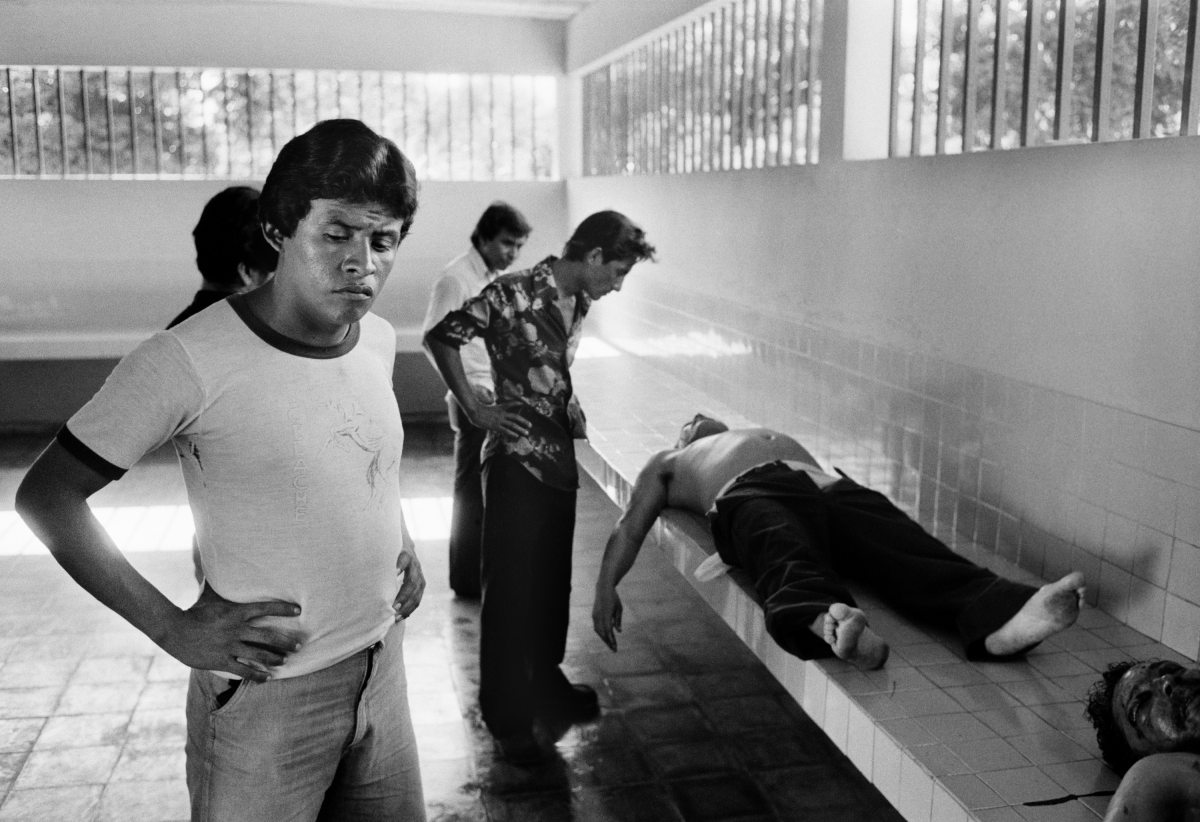 Unidentified men look at two corpses in the city morgue in La Libertad, El Salvador, on Aug. 10, 1984. Both victims were shot in the face and showed additional signs of bruising. (Robert Nickelsberg | Getty Images)
Source link : http://www.bing.com/news/apiclick.aspx?ref=FexRss&aid=&tid=674388458ec1403ab2091c94ba11bde0&url=https%3A%2F%2Fwbhm.org%2Fnpr-story%2Fa-photographers-devastating-documentation-of-el-salvadors-civil-war-in-the-1980s%2F&c=16025204484288065026&mkt=en-us
Author :
Publish date : 2024-11-24 06:29:00
Copyright for syndicated content belongs to the linked Source.