However, a current survey by the chamber amongst its around 150 members, shows that confidence is now significantly higher.
“Numerous companies are considering investments in renewable energy supplies, in upgrading machinery and in hiring new staff,” Klaus told DW, observing a general ‘spirit of optimism’ among businesses.
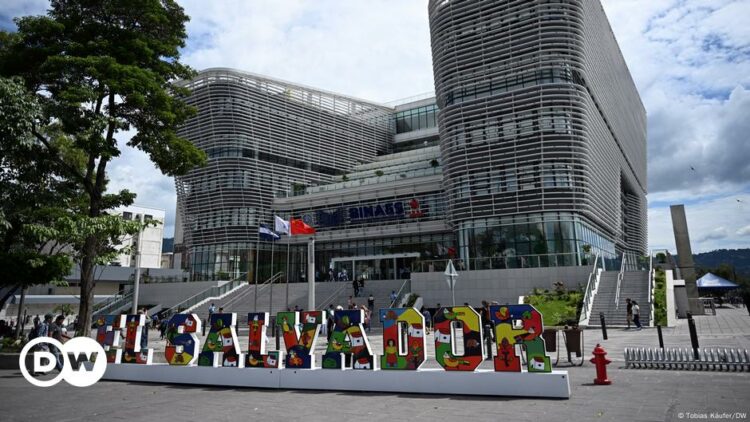
In April 2024, for instance, Google also opened a new headquarters in San Salvador.
The American IT giant stated at the time that it wanted to help digitize and modernize the country.
Since then, its modern glass building has become a symbol for the hope that the economic miracle could actually be on its way.
El Salvador’s President Nayib Bukele sees the new Google headquarters in San Salvador as symbol for future prosperityImage: Camilo Freedman/SOPA Images/Sipa USA/picture alliance
Controversial megaproject
The government is banking on a ripple effect and is also pinning further hopes on tourism.
The “Surf City II” project, for example, aims to appeal to water sports enthusiasts from all over the world.
“We have one of the most spectacular beaches in the country,” Bukele stated years ago.
“Surfers tell me it’s one of the best surfing beaches in the world but there is not even a decent road to get there,” he said.
Also other beaches in the area have not been made accessible, Bukele said.
He promotes the project and has promised to invest $100 million (€95m).
Furthermore, plans for a new, second Pacific airport are in the pipeline. The idea is to bring tourists from Western countries and the southern US directly to the beaches.
Investors also have plans to build new hotels for these target groups, including the global surfing scene.
Questioning the promises
“The ecological damage of this project is so substantial that a sustainable implementation is basically impossible,” Ines Klissenbauer, Central America expert at the Latin American aid organization Adveniat, told DW.
In her view, it is simply another attempt by President Bukule to attract capital to the highly indebted country.
Claudia Ortiz, the Salvadoran opposition politician, fears that the new economic miracle might resemble the country’s contested Bitcoin strategyImage: Tobias Käufer/DW
Claudia Ortiz from the oppositional Vamos party remains skeptical, too.
She compares the project to El Salvador’s failed Bitcoin strategy.
“Bitcoin is part of an authoritarian project and a system in which public funds are used at discretion and without transparency,” Ortiz criticizes.
Throughout El Salvador, there are signs in stores that Bitcoin is accepted as a means of payment.
However, the average person is far from being able to afford the virtual currency.
“El Salvador’s economic problems and the economic needs of the people will not be solved by making Bitcoin a legal tender,” Ortiz told DW.
DocFilm – Cryptocurrencies – The Future of Money?
To view this video please enable JavaScript, and consider upgrading to a web browser that supports HTML5 video
This article was originally published in German.
Source link : http://www.bing.com/news/apiclick.aspx?ref=FexRss&aid=&tid=67487cd2951f4b2292552902c6c184e5&url=https%3A%2F%2Fwww.dw.com%2Fen%2Fhow-realistic-is-el-salvadors-economic-miracle%2Fa-70889508&c=16819823453054891057&mkt=en-us
Author :
Publish date : 2024-11-25 11:00:00
Copyright for syndicated content belongs to the linked Source.