
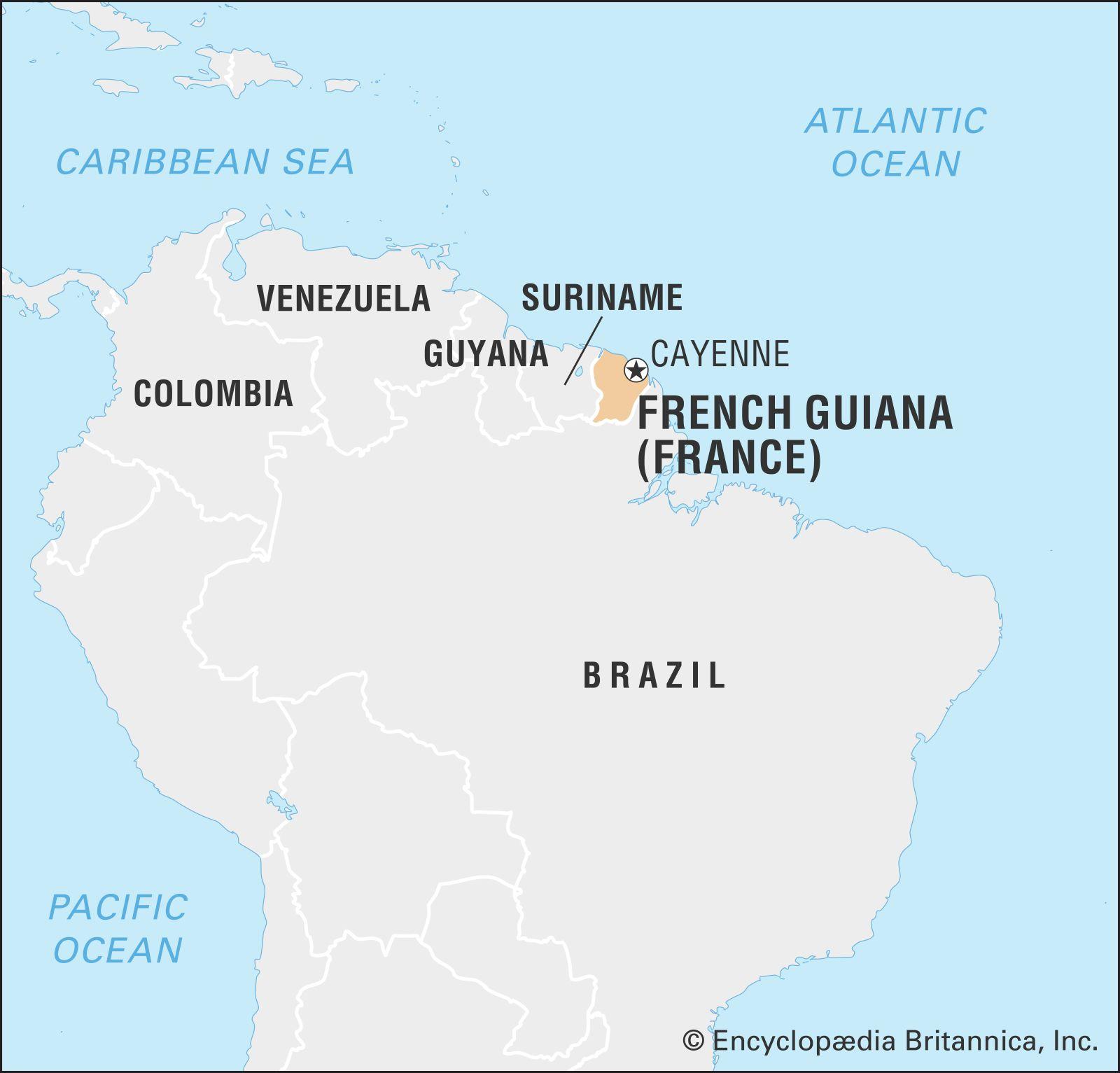
In the heart of South America, nestled between Brazil and Suriname, lies the often-overlooked territory of French Guiana, a unique region that is as rich in biodiversity as it is in cultural diversity. Although it is politically an integral part of France, the territory boasts a distinct identity shaped by its lush rainforests, vibrant indigenous populations, and a complex colonial history. This article delves into the significance of French Guiana’s geographical location, illustrated in Figure 1, and examines how its positioning not only influences environmental dynamics but also plays a critical role in geopolitical discussions and scientific research. As the world becomes increasingly attentive to issues of climate change and ecological conservation, French Guiana emerges as a crucial focal point, providing insights that could shape our understanding of both local and global ecological challenges.
Exploring the Strategic Geographic Significance of French Guiana in South America
The strategic geographic importance of French Guiana can be understood through its unique positioning on the northeastern coast of South America. As an overseas department of France, this territory serves as a critical gateway between the Caribbean and the South American continent. Nestled between Brazil to the south and Suriname to the west, French Guiana plays a vital role in both humanitarian and military frameworks, exemplifying France’s influence in the region. Additionally, the region boasts expansive natural resources that enhance its geopolitical leverage, enabling it to attract both ecological conservation efforts and commercial interest from international entities.
French Guiana is not just a prime location for resource extraction; it also facilitates trade routes and enhances security partnerships within the broader Caribbean and Latin American context. The active presence of the Guiana Space Centre, a vital space launch facility, adds another layer of strategic significance, making the territory a hub for technological advancement and collaboration. This perspective is further amplified when considering the ecological diversity of the Amazon rainforest, which spans much of its territory, enabling French Guiana to emerge as a crucial player in discussions surrounding environmental protection and sustainable development initiatives. Key factors contributing to French Guiana’s strategic position include:
- Proximity to key global markets in North America and Europe.
- Access to rich biodiversity and natural resources.
- Significant military and naval presence to secure French interests.
- Role as a spaceport facilitating international cooperation in aerospace endeavors.
Unlocking the Economic Potential of French Guiana: Opportunities for Sustainable Development
French Guiana, located on the northeastern coast of South America, is characterized by its rich biodiversity and untapped natural resources. This region serves as a unique confluence of cultures, ecosystems, and economic opportunities. With its lush rainforest, extensive river systems, and proximity to the Caribbean Sea, French Guiana is positioned to embrace sustainable development models that can drive economic growth while conserving its unique environment. Key areas for exploration include:
- Ecotourism: Promoting the natural beauty and biodiversity of French Guiana can attract environmentally-conscious travelers, stimulating local economies.
- Agriculture: Utilizing sustainable farming practices can enhance the local food supply while ensuring the preservation of natural habitats.
- Renewable Energy: With abundant natural resources, harnessing solar and wind energy can provide sustainable power solutions for the region.
Moreover, French Guiana’s strategic location makes it an ideal hub for international trade, especially with its access to both ocean routes and neighbor countries. The region can leverage investments in infrastructure, such as ports and transportation networks, to facilitate commerce. A proactive approach to governance could also enhance the business environment, fostering innovation and attracting both national and foreign investments. Potential avenues for growth include:
- Mining: Sustainable extraction practices can unlock mineral wealth while minimizing environmental impact.
- Research and Development: Collaborating with global institutions can position French Guiana as a center for scientific research, particularly in biodiversity and climate change.
- Manufacturing: Establishing eco-friendly manufacturing facilities can promote job creation and diversify the economy.
Insights and Conclusions
As we conclude our exploration of French Guiana’s geographical significance within South America, it becomes increasingly clear that this intriguing region is not merely a point on the map. With its diverse ecosystems, strategic location, and rich cultural tapestry, French Guiana stands at the crossroads of environmental research, geopolitical interests, and historical narratives. The pivotal role it plays in the dynamics of the continent and beyond cannot be overstated, revealing layers of complexity that warrant further investigation and understanding. As we continue to scrutinize the forces that shape this unique locale, observing its evolution will undoubtedly offer valuable insights into the broader context of South American geopolitics and conservation efforts. Stay tuned for more in-depth analyses and updates as the story of French Guiana unfolds.









