
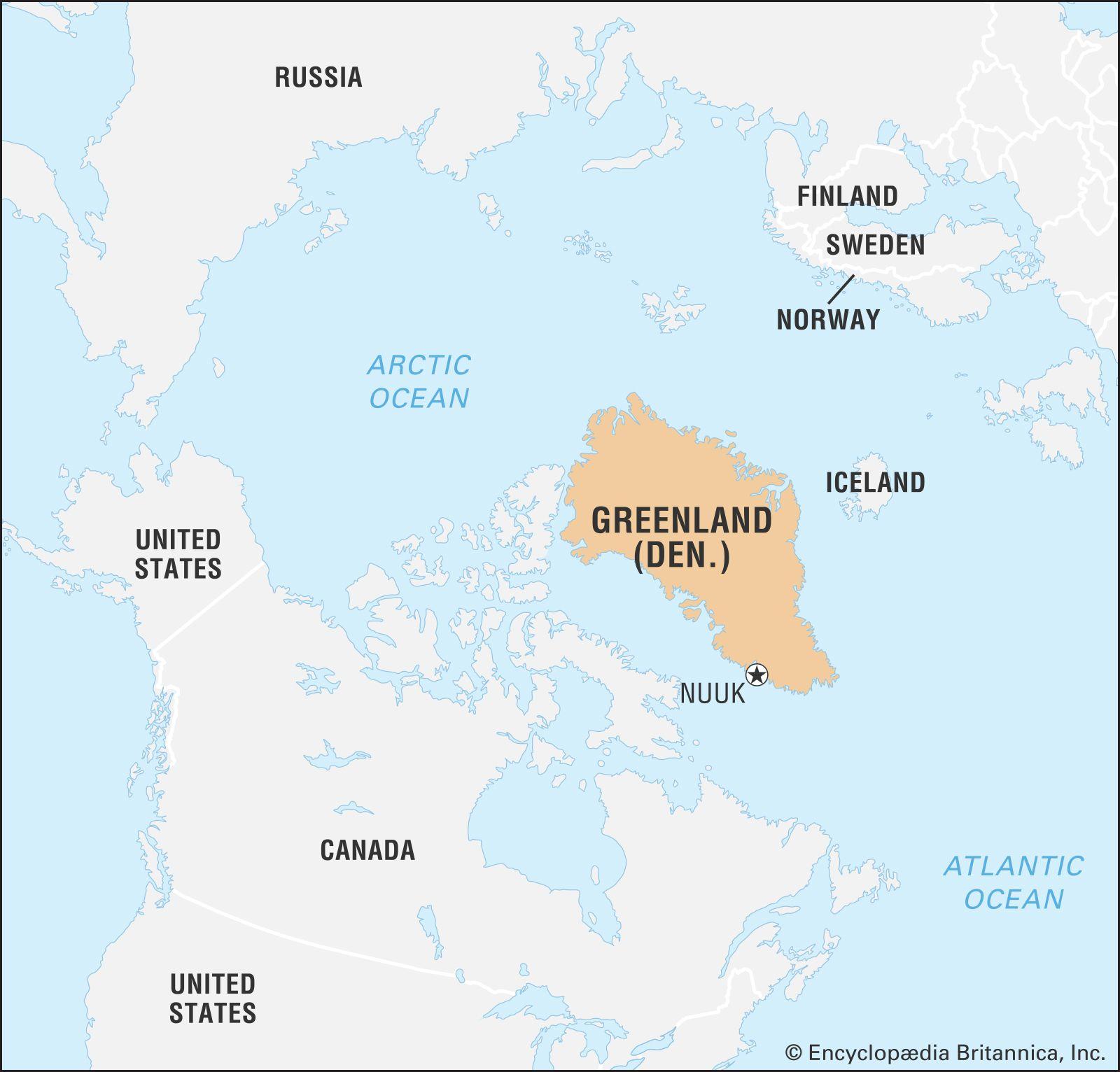
In a pointed rebuke to former U.S. President Donald Trump’s controversial interest in purchasing Greenland, the island’s Prime Minister has made it clear that the autonomous territory has no desire to either become part of the United States or align more closely with Denmark. In a statement that echoes the sentiments of many Greenlandic citizens, Prime Minister Múte Bourup Egede emphasized the island’s commitment to preserving its unique identity and autonomy. This declaration comes in the wake of a significant diplomatic discussion that has once again placed Greenland at the center of geopolitical interest, raising questions about sovereignty, autonomy, and the implications of foreign influence in the Arctic region. As global players jostle for power and resources in an increasingly strategic landscape, Greenland stands firm in asserting its right to self-determination.
Greenland’s Assertion of Independence Amid Trump’s Interest in Territory Acquisition
In a bold declaration of autonomy, Greenland’s Prime Minister has made clear the territory’s desire to forge its path apart from external influences, particularly in light of former President Trump’s controversial interest in purchasing the region. Despite its status as an autonomous territory under the Kingdom of Denmark, Greenland is asserting its identity and autonomy with renewed vigor. The Prime Minister emphasized that the people of Greenland do not aspire to become “Americans or Danes,” reinforcing a strong sense of national identity that prioritizes indigenous culture and self-determination over foreign entanglement.
This assertion of independence comes at a time when interest in the Arctic is growing, driven by climate change and its potential to open new shipping routes and access natural resources. As Greenland navigates its relationships with larger nations, it aims to highlight the significance of self-governance. The following points illustrate Greenland’s stance and aspirations:
- Cultural Heritage: Emphasis on preserving the Inuit culture and traditions.
- Environmental Responsibility: Advocating for sustainable resource management in the Arctic.
- Political Sovereignty: Strengthening ties with Denmark while asserting a distinct political identity.
In analyzing the geopolitical landscape, it is evident that Greenland’s assertion is not merely about resisting external pressures but also about embracing a future that is envisioned through the lens of local Governance. A simple examination of their economic aspirations reflects this resolve:
| Sector | Aspiration |
|---|---|
| Mineral Exploration | Maximize local benefit |
| Tourism | Sustainable development focus |
| Green Energy | Lead in renewable initiatives |
This holistic approach illustrates that Greenland is not merely reacting to external interest but actively crafting its narrative and future, prioritizing self-determination and responsible development.
Implications for U.S.-Greenland Relations and Pathways for Enhanced Autonomy in Arctic Governance
The recent statement by Greenland’s Prime Minister underscored a growing sentiment for greater autonomy among the populace, emphasizing a desire for self-determination that may reshape the dynamics of U.S.-Greenland relations. Greenland, while part of the Kingdom of Denmark, has sought to assert its identity and governance structure, aiming for a future where decisions reflect more of its interests than those of external powers. This stance could complicate diplomatic dialogue with the U.S., especially concerning strategic interests in the Arctic, where both nations have historically interacted within frameworks of cooperation and mutual benefit. The rekindling of interest in Greenland by American political figures, particularly regarding potential economic and military partnerships, must navigate this emerging narrative of independence.
As Greenland looks to increase its autonomy, several avenues could facilitate enhanced governance and cooperation in the Arctic region, fostering partnerships that respect its aspirations. Key strategies could include:
- Bilateral agreements that prioritize Greenlandic oversight on resource management.
- Collaborative scientific research initiatives aiming to address climate change impacts on the Arctic.
- Cultural exchanges that celebrate Greenland’s unique heritage while engaging with the U.S. politically and socially.
- Joint security agreements that reflect Greenland’s strategic importance without compromising its sovereignty.
These potential collaborations carry significant implications not only for local Greenlandic development but also for regional stability in a geopolitically sensitive Arctic, where competing national interests intersect. Engaging in meaningful dialogue that recognizes Greenland’s autonomy may pave the way for innovative governance models that empower local communities while fulfilling strategic security and environmental objectives. In this context, the relationship between Greenland and the U.S. could transform into a partnership rooted in mutual respect and joint stewardship of Arctic resources.
In Retrospect
In conclusion, Greenland’s Prime Minister has firmly established the nation’s stance on sovereignty, rejecting former President Trump’s overtures of acquisition with a resounding message: the people of Greenland are content with their identity and autonomy. This significant moment reflects not only the broader implications of colonial legacies but also a growing assertion of self-determination among smaller nations in the face of global power dynamics. As Greenland navigates its future amidst rising geopolitical interests, the PM’s statement serves as a reminder of the importance of respect for national identity and the rights of indigenous peoples. As discussions around Arctic affairs continue to evolve, the world will be watching closely to see how Greenland maintains its distinctive path while engaging with larger international forces.











