This thermal drill at Camp Century in Greenland was used to drill through the ice cap in 1966.
U.S. Army Cold Regions Research and Engineering Laboratory via Wikimedia Commons, Public Domain
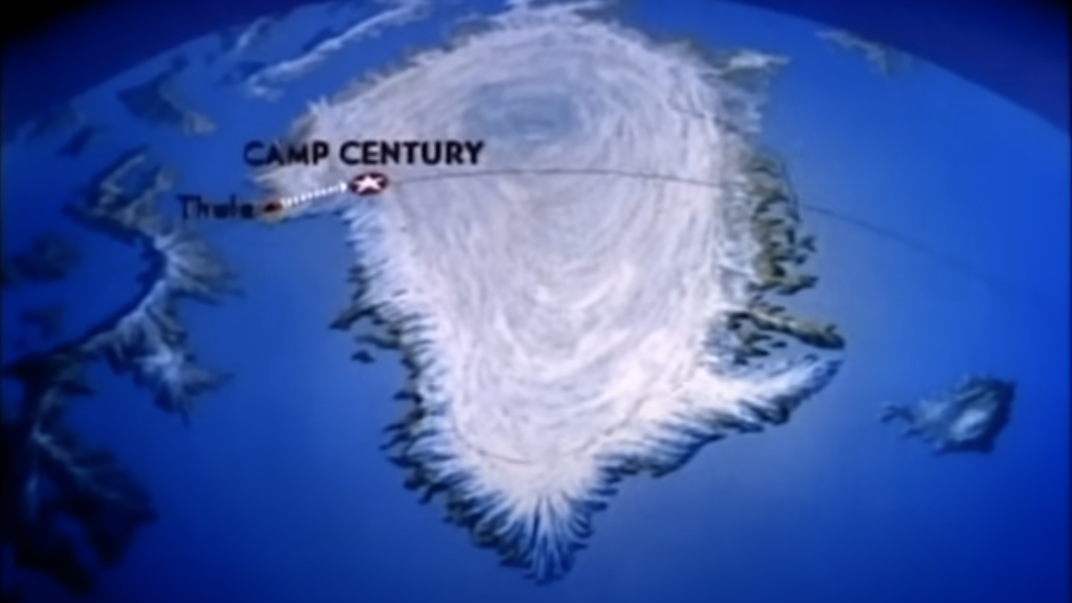
A Popular Science issue from February 1960 described the project for readers: “In building the fantastic community, 800 miles from the North Pole, Army Engineers, in cooperation with the Danish Government (Greenland is a part of the Kingdom of Denmark), have proved that the traditionally antagonistic Arctic can be tamed… It will be home—snug, comfortable and warm—for 100 scientists, engineers and soldiers who are expected to move in late this year,” as reported by Popular Science. However, the U.S. army didn’t immediately share Project Iceworm’s true nature with the Danish government.
The construction of Camp Century in such a remote location—where temperatures can drop to minus 70 degrees Fahrenheit and wind speeds can be stronger than 120 miles per hour—is certainly impressive. And the facility was one of the first to draw power from a portable nuclear reactor, per Newsweek’s Jess Thomson, which was removed in 1967, when the camp and Project Iceworm were abandoned because of the impracticality of maintaining the structure within the constantly moving ice sheet.
Tons of hazardous waste, however, were left behind, including 53,000 gallons of diesel fuel, 63,000 gallons of wastewater (including sewage) as well as unknown amounts of low-level radioactive coolant from the reactor, according to estimates by the University of Colorado Boulder’s Cooperative Institute for Research in Environmental Sciences (CIRES).
The U.S. Army’s Top Secret Arctic City Under the Ice! “Camp Century” Restored Classified Film
A study published in 2016 also suggests the site might contain toxic pollutants such as polychlorinated biphenyls. Now, scientists are concerned that Earth’s rising temperatures might melt the ice covering Camp Century and expose the waste.
“When we looked at the climate simulations, they suggested that rather than perpetual snowfall, it seems that as early as 2090, the site could transition from net snowfall to net melt,” William Colgan, a climate and glacier scientist at York University and co-author of the 2016 study, said in a statement at the time. “Once the site transitions from net snowfall to net melt, it’s only a matter of time before the wastes melt out; it becomes irreversible.”
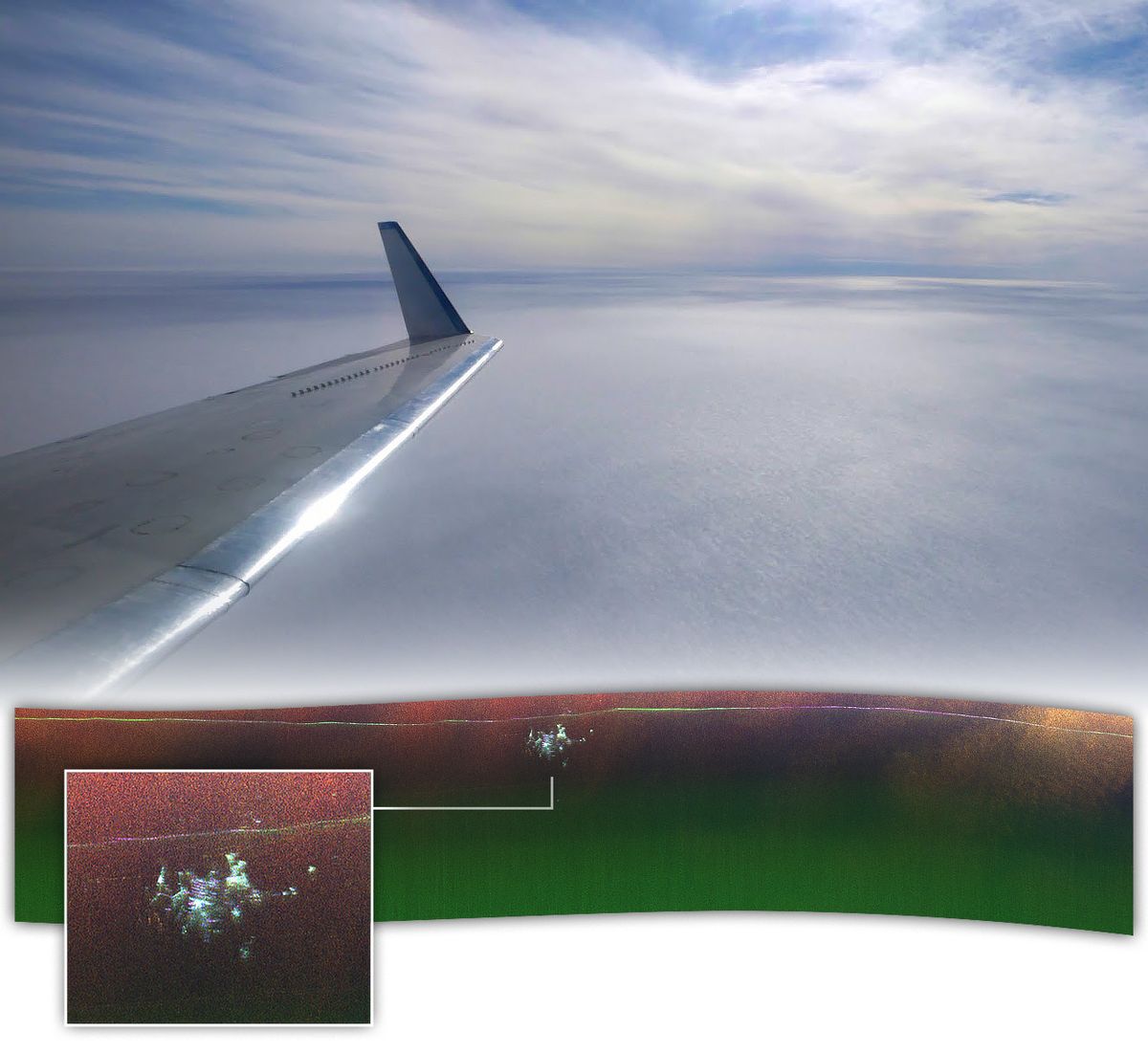
Camp Century has been detected by previous airborne surveys, but those radars have produced two-dimensional maps without much detail, per the statement. When spotted by the team in April, however, NASA’s UAVSAR (Uninhabited Aerial Vehicle Synthetic Aperture Radar), mounted on the belly of the plane, provided a map with more dimensionality than previous data, and the results seem to align with historical documentation of the site.
“In the new data, individual structures in the secret city are visible in a way that they’ve never been seen before,” Greene explains in the statement.
Scientists expect to use the UAVSAR to measure ice sheet thickness in Antarctica and refine estimates of future sea-level rise. The usefulness of the UAVSAR’s image of Camp Century is still unclear, but the unexpected detection was certainly a blast from the past.
Get the latest stories in your inbox every weekday.
Filed Under:
Airplanes,
American History,
Climate Change,
Cold War,
Cool Finds,
Denmark,
Global Warming,
Greenland,
NASA,
Secrets of American History,
Weapons
Source link : http://www.bing.com/news/apiclick.aspx?ref=FexRss&aid=&tid=674dcbdd17c44b6aaed95c3ba8feee96&url=https%3A%2F%2Fwww.smithsonianmag.com%2Fsmart-news%2Fnasa-radar-detects-abandoned-site-of-secret-cold-war-project-in-greenland-a-city-under-the-ice-180985550%2F&c=8283758341485577905&mkt=en-us
Author :
Publish date : 2024-12-02 00:16:00
Copyright for syndicated content belongs to the linked Source.