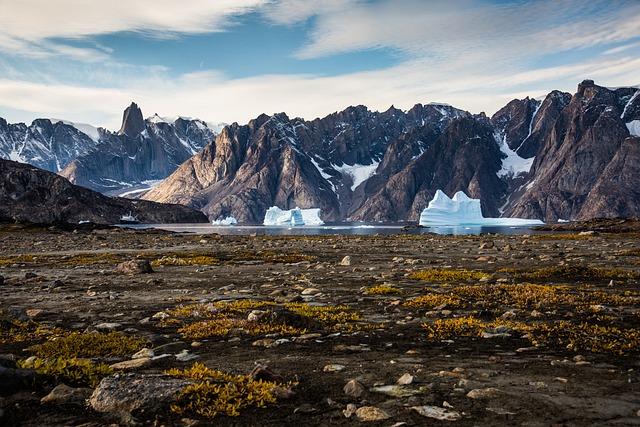
In a surprising revival of interest in a long-discussed territorial acquisition, former President Donald Trump has once again asserted that the United States should pursue ownership of Greenland. During recent comments, Trump emphasized the strategic importance of the Arctic region amidst ongoing geopolitical tensions and economic opportunities. This renewed push for the large island, which is currently an autonomous territory of Denmark, has reignited debates over U.S. international policy and territorial expansion. As discussions surrounding climate change, natural resource access, and national security continue to evolve, Trump’s statements have sparked both intrigue and controversy within political circles. This article examines the implications of Trump’s comments and the potential ramifications for U.S.-Denmark relations and Arctic governance.
Trump’s Renewed Interest in Greenland: Implications for US Foreign Policy and Economic Strategy
Former President Donald Trump’s renewed interest in Greenland marks a significant shift in the United States’ approach to Arctic geopolitics and resource management. Historically, Greenland has been positioned as a strategic asset due to its geographical location and vast natural resources, including rare earth minerals and potential shipping routes that could be unlocked as global warming progresses. Under Trump’s vision, acquiring or strengthening ties to Greenland could reshape the U.S. economic strategy, prioritizing energy independence and global trade routes. This ambition aligns with broader concerns regarding competition with nations like China and Russia, which have shown increasing interest in the Arctic region.
The implications of this renewed focus on Greenland extend beyond mere economic interests and venture into realms of international diplomacy and military strategy. Engaging with Greenland may enhance U.S. military presence in the Arctic, thereby providing a counterbalance to foreign powers attempting to expand their influence. Additionally, the potential for economic cooperation with Denmark, the sovereign state controlling Greenland, could lead to beneficial partnerships. Key considerations include:
- Resource Management: Exploring sustainable strategies for potential mineral extraction.
- Military Strategy: Enhancing U.S. defense capabilities in the Arctic region.
- Danish Relations: Strengthening diplomatic ties with Denmark to bolster support for U.S. interests.
| Aspect | Potential Impact |
|---|---|
| Economic Growth | Increased access to resources |
| National Security | Enhanced military presence |
| International Relations | Improved U.S.-Denmark ties |
Exploring the Potential Benefits and Challenges of US Acquisition of Greenland’s Resources and Geopolitical Significance
The discussion surrounding the potential acquisition of Greenland by the United States brings a host of significant advantages and obstacles to the forefront. Economic opportunity is one of the most compelling aspects, as Greenland is estimated to harbor substantial mineral resources, including rare earth elements, uranium, and natural gas. The U.S. could enhance its energy independence and bolster its technological sectors through such assets. Additionally, the location of Greenland offers strategic military positioning within the Arctic, an area of increasing interest to global powers as climate change opens new shipping routes and access to untapped resources. However, these benefits are countered by considerable political and ethical challenges.
Historically, Greenland has been an autonomous territory of Denmark, and the desire for acquisition raises questions of national sovereignty and the implications of transitioning from one colonial power to another. The sentiments of the local Inuit population must also be addressed, as their voices and rights could be significantly impacted by foreign ownership of their land. Moreover, the potential backlash from Denmark and other international actors could strain diplomatic relations. The balance between technological advancement and respect for local cultures presents a complex landscape that policymakers must navigate if the U.S. is serious about pursuing these opportunities while ensuring respect for Greenland’s unique identity.
Key Considerations in U.S. Acquisition of Greenland:
| Benefits | Challenges |
|---|---|
| Access to valuable mineral resources | Questions of national sovereignty |
| Strategic military positioning | Potential local opposition from residents |
| Increased energy independence | Diplomatic strain with Denmark and allies |
Insights and Conclusions
In conclusion, President Trump’s renewed push for the acquisition of Greenland underscores the ongoing complexities of international diplomacy and territorial aspirations. As discussions surrounding the potential acquisition gain momentum, they evoke historical echoes of previous negotiations and geopolitical strategies. The sentiment expressed by the President points to a broader vision for U.S. expansion and influence, though it remains to be seen how these ambitions will align with the realities of global relations and the perspectives of the Greenlandic people. As the debate continues, observers will be watching closely to see how this issue unfolds on the international stage and what implications it may hold for U.S. foreign policy in the Arctic and beyond.