
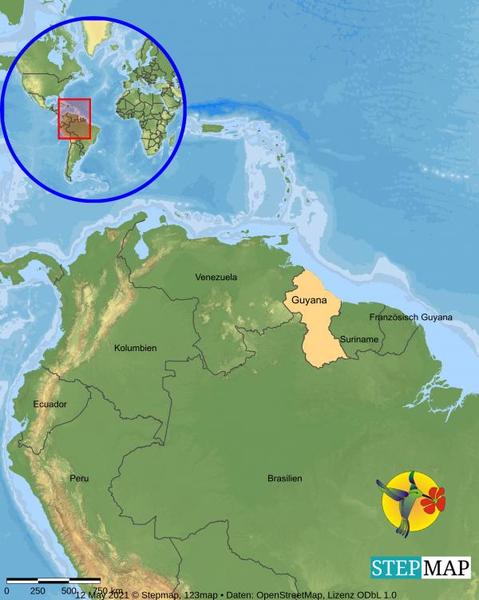
In a growing diplomatic spat between neighboring South American nations, Guyana’s President has vehemently condemned Venezuela’s recent announcement to conduct elections in territories claimed by Guyana. This escalating tension comes amid ongoing disputes over the border, as President Irfaan Ali emphasizes the illegitimacy of Venezuela’s actions and reaffirms Guyana’s sovereignty over the contested region. The situation raises significant concerns about regional stability and the implications for bilateral relations, prompting responses from various international observers and organizations. In this context, we delve into the details of the controversy and the historical backdrop that has led to this latest clash between the two countries.
Guyana’s President Responds Firmly to Venezuela’s Electoral Claims in Disputed Territory
In a strong rebuttal to Venezuela’s announced plans to conduct elections in a disputed region, Guyana’s president has asserted that such actions are not only unwarranted but also infringe upon Guyana’s sovereignty. The president described the Venezuelan government’s decision as a provocative maneuver aimed at undermining Guyana’s territorial integrity and called for the international community to recognize and uphold the legal borders established through international law. He emphasized that Guyana will not be intimidated or drawn into a diplomatic rift over the territory, insisting that the nation stands united against any illegal claims.
The president outlined several key points in his defense of Guyana’s position:
- International Law: Guyana’s territorial claims are supported by international treaties and rulings.
- Peaceful Resolution: Emphasis on dialogue and diplomacy as opposed to unilateral actions.
- Regional Support: Calling on CARICOM and other regional bodies to support Guyana’s stance.
| Response Points | Details |
|---|---|
| Legal Standpoint | Guyana cites the 1899 arbitral award favoring its territorial claims. |
| National Unity | Calls for solidarity among Guyanese citizens against external claims. |
| International Relations | Engagement with global powers to validate territorial sovereignty. |
Concerns Over Sovereignty: Implications of Venezuela’s Proposed Elections on Regional Stability
The recent announcement by Venezuela regarding elections planned for disputed territories has raised significant alarms among neighboring countries, particularly Guyana. President Irfaan Ali of Guyana has publicly condemned the move, asserting that Venezuela’s actions threaten not just bilateral relations but also the broader stability of the region. With historical claims and tensions flaring over territorial boundaries, the potential for escalating conflict becomes increasingly plausible. Observers fear that the proposed elections could serve as a catalyst for renewed unrest, further complicating an already fragile geopolitical landscape.
In light of these developments, several key factors emerge that could have profound implications for regional dynamics:
- Increased Tensions: Venezuela’s actions may provoke heightened military readiness and political mobilization in Guyana.
- International Response: The role of global powers and organizations could be pivotal in mediating the situation to prevent conflict.
- Regional Alliances: The possibility of new alliances forming against perceived aggression could reshape the geopolitical map of South America.
The situation is further complicated by historical grievances stemming from the long-standing border dispute, which continues to be a point of contention. As both nations navigate these murky waters, the potential for misunderstandings or miscalculations looms large, heightening the stakes for all involved. The risk of external interventions could also magnify the ramifications of any unilateral decisions made by Venezuela, underscoring the urgent need for diplomatically-oriented solutions.
International Community Urged to React: Support for Guyana’s Territorial Integrity Needed
In a bold response to Venezuela’s announcement of plans to conduct electoral activities within what Guyana considers its sovereign territory, President Irfaan Ali has rallied both national support and international attention. He underscored the grave implications of this act, highlighting that it undermines Guyana’s territorial integrity and sets a concerning precedent for regional stability. The Venezuelan government’s initiative not only breaches international protocols but also threatens the delicate balance of cooperation in the Caribbean, an area historically marked by respect for borders and mutual sovereignty.
Experts and political analysts are now calling on the international community to take a firm stand against such provocations. To galvanize support, key actions are being proposed, including:
- Diplomatic Engagement: Nations are encouraged to communicate strongly with Venezuela to uphold international agreements.
- Public Statements: Countries should publicly condemn this unilateral action to discourage further infringements.
- Support for Legal Measures: Engagement with international bodies like the United Nations to address the issue diplomatically and legally.
A cohesive international effort is imperative, as any neglect could embolden similar territorial claims by other nations, endangering not just Guyana but potentially affecting the sovereignty of multiple states across the region.
Future Outlook
In conclusion, the escalating tensions between Guyana and Venezuela underscore a significant geopolitical crisis in the region. President Irfaan Ali’s firm stance against Venezuela’s plans to conduct elections in territories claimed by Guyana highlights not only the deep-rooted historical grievances but also the potential for further diplomatic strain. As the international community watches closely, the implications of this development will likely reverberate throughout the Caribbean and beyond, emphasizing the importance of sovereignty and territorial integrity in an increasingly complex global landscape. Future actions by both nations, as well as the response from international governing bodies, will be crucial in determining the next steps in this ongoing conflict.











