
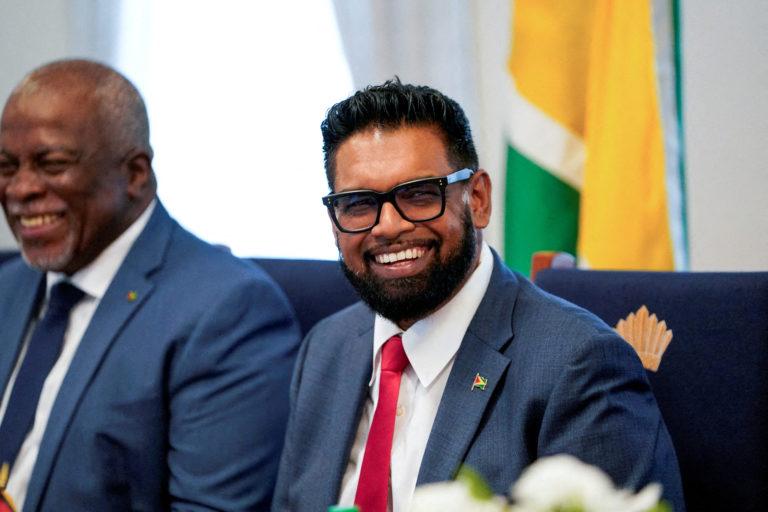
In a significant political development for South America, Guyana’s President has secured another term in office amid an election that not only captured the attention of local voters but also drew keen interest from neighboring Venezuela and the United States. The just-concluded electoral process unfolded against a backdrop of economic promise, driven largely by the country’s burgeoning oil sector, which has positioned Guyana as a key player in regional geopolitics. As the results rolled in, analysts weighed the implications of the election outcome on Guyana’s domestic policies and its relations with both Venezuela, which has long held territorial claims over parts of Guyana, and the U.S., which remains vigilant over the region’s stability and security. This article delves into the election’s results, the political landscape, and what the future may hold for Guyana under its re-elected leadership.
Guyana’s Political Landscape Shifts as President Secures Second Term Amid Regional Tensions
The recent electoral victory of Guyana’s president not only solidifies his hold on power but also underscores a period of intense scrutiny from neighboring Venezuela and the United States. As tensions simmer over territorial disputes and economic interests, this election has been particularly significant. Observers noted a surge in incidents of diplomatic posturing, including a series of statements from Venezuelan officials challenging Guyana’s sovereignty over the oil-rich Essequibo region. The stakes are high, with US interests in the region focusing on supporting democratic institutions and mitigating the influence of adversarial states.
Guyana’s evolving geopolitical dynamics have drawn international attention, and several factors contribute to this heightened concern:
- Oil Discovery: The recent discovery of vast oil reserves has positioned Guyana as a pivotal player in the Caribbean economy.
- Regional Alliances: Strengthening ties with the US and Caribbean nations may shift the balance of power in the region.
- Election Integrity: The credibility of the electoral process has been called into question, influencing international perceptions.
With the president’s re-election, local stakeholders are tasked with navigating these emerging challenges while fostering stability and growth. The implications of this electoral outcome stretch beyond Guyana’s borders, extending into the broader continental landscape as nations recalibrate their foreign policies in response to the shifting currents of power.
US and Venezuela’s Stake in Guyana’s Election Outcome: Implications for Foreign Relations
As Guyana approaches a new term under President Irfaan Ali, both the United States and Venezuela are closely monitoring the ramifications of this electoral outcome. The U.S. views Guyana as a crucial player in South America, especially with the recent discoveries of vast oil reserves in its territorial waters. The election results are likely to influence U.S. foreign policy in the region, particularly in areas such as:
- Energy Security: The U.S. is keen on fostering relationships with countries that have significant energy resources, especially as it seeks to diversify its energy imports.
- Geopolitical Stability: A stable Guyana is seen as a counterbalance to Venezuela’s political turbulence and its close ties with countries like Russia and China.
- Investment Climate: The U.S. aims to attract American investors to Guyana, anticipating long-term economic benefits from its oil production potential.
On the other hand, Venezuela, grappling with internal turmoil and international isolation, perceives Ali’s victory as a challenge to its territorial claims over the Essequibo region, which has been a longstanding source of contention. The implications for Venezuela include:
- Regional Tensions: A strengthened Guyanese government under Ali may embolden diplomatic and economic maneuvers that challenge Venezuela’s interests.
- Alliance Politics: Venezuela may seek stronger alliances with allies like Russia to counterbalance U.S. influence in the region.
- Public Sentiment: Domestically, a perceived threat from Guyana could be leveraged by the Venezuelan government to consolidate nationalistic sentiments.
Navigating New Challenges: Recommendations for Guyana’s Leadership in a Divided Geopolitical Climate
As Guyana embarks on another term under the leadership of President Irfaan Ali, navigating the complexities of a geopolitically charged environment remains paramount. The nation finds itself at a crossroads, facing implications from regional powers such as Venezuela and influential players like the United States. It is essential for Guyana’s leadership to adopt a proactive stance that promotes stability without compromising national interests. Given the current dynamics, the following strategies could serve as a blueprint for navigating these turbulent waters:
- Strengthen Diplomatic Ties: Foster relationships with both neighboring countries and global superpowers to create a balanced approach to foreign policy.
- Promote Economic Diversification: Leverage Guyana’s emerging oil sector while investing in agriculture, tourism, and technology to reduce over-reliance on any single industry.
- Enhance Internal Cohesion: Encourage a national dialogue that encompasses diverse voices within society, working to bridge divides and foster unity.
Furthermore, establishing a robust framework for economic cooperation could mitigate adversarial influences by creating interdependencies that promote peace. For instance, engaging in regional trade agreements may not only bolster local economies but also position Guyana as a pivotal player in South America’s economic landscape. A potential strategy table could outline various sectors targeted for collaboration:
| Sector | Recommendations | Potential Partnerships |
|---|---|---|
| Energy | Invest in renewable sources to complement oil output | Brazil, Suriname |
| Agriculture | Expand crop exports and technology transfer | Caribbean Community (CARICOM) |
| Tourism | Promote eco-tourism and cultural heritage | Colombia, Peru |
Closing Remarks
In conclusion, the recent electoral victory of Guyana’s President Mark Phillips signals not only a continuation of his administration’s policies but also reinforces the geopolitical dynamics in the region, particularly in relation to Venezuela and the United States. As Guyana navigates its ambitions for economic development, particularly in the oil sector, the international community will undoubtedly be watching closely how this administration addresses internal challenges and external pressures. The outcome of this election is a testament to the complex interplay of domestic politics and international diplomacy in a nation poised for significant growth amidst a backdrop of regional tension. As Guyana moves forward, it is essential to monitor how these relationships evolve and impact the nation’s path in the coming years.









