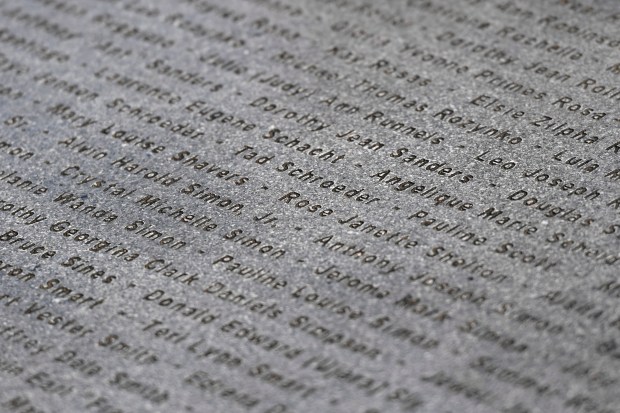
Show Caption
1 of 8
Expand
Despite ongoing criticism, the tour has strong support from the government’s Tourism Authority and Guyana’s Tourism and Hospitality Association.
Tourism Minister Oneidge Walrond told the AP the government is backing the effort at Jonestown but is aware “of some level of push back” from certain sectors of society.
She said the government already has helped clear the area “to ensure a better product can be marketed,” adding that the tour might need Cabinet approval.
“It certainly has my support,” she said. “It is possible. After all, we have seen what Rwanda has done with that awful tragedy as an example.”
Rose Sewcharran, director of Wonderlust Adventures, the private tour operator who plans to take visitors to Jonestown, said she was buoyed by the support.
“We think it is about time,” she said. “This happens all over the world. We have multiple examples of dark, morbid tourism around the world, including Auschwitz and the Holocaust museum.”
Luring tourists
The November 1978 mass suicide-murder was synonymous with Guyana for decades until huge amounts of oil and gas were discovered off the country’s coast nearly a decade ago, making it one of the world’s largest offshore oil producers.
New roads, schools and hotels are being built across the capital, Georgetown, and beyond, and a country that rarely saw tourists is now hoping to attract more of them.
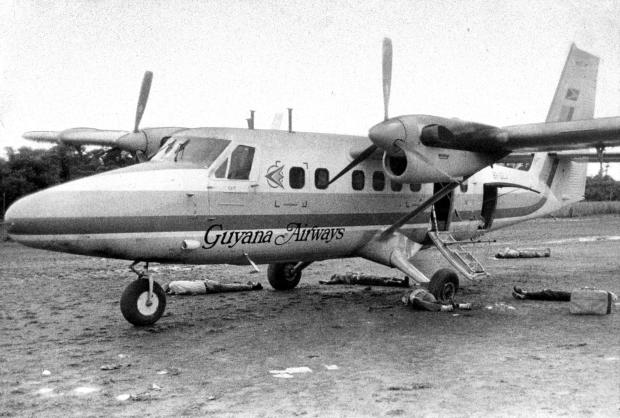
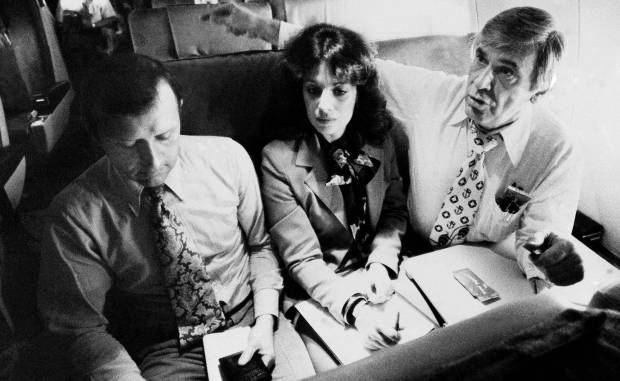
An obvious attraction is Jonestown, argued Astill Paul, the co-pilot of a twin-engine plane that flew U.S. Rep. Leo J. Ryan of California and a U.S. news crew to a village near the commune a day before hundreds died on Nov. 18, 1978. He witnessed gunmen fatally shoot Ryan and four others as they tried to board the plane on Nov. 18 and fly back to the capital.
Paul told the AP he believes the former commune should be developed as a heritage site.
“I sat on the tourism board years ago and did suggest we do this, but the minister at the time lashed the idea down because the government wanted nothing to do with morbid tourism,” he recalled.
Until recently, successive governments shunned Jonestown, arguing that the country’s image was badly damaged by the mass murder-suicide, even though only a handful of Indigenous people died. The overwhelming majority of victims were Americans like Vilchez who flew to Guyana to follow Jones. Many endured beatings, forced labor, imprisonment and rehearsals for a mass suicide.
Those in favor of a tour include Gerry Gouveia, a pilot who also flew when Jonestown was active.
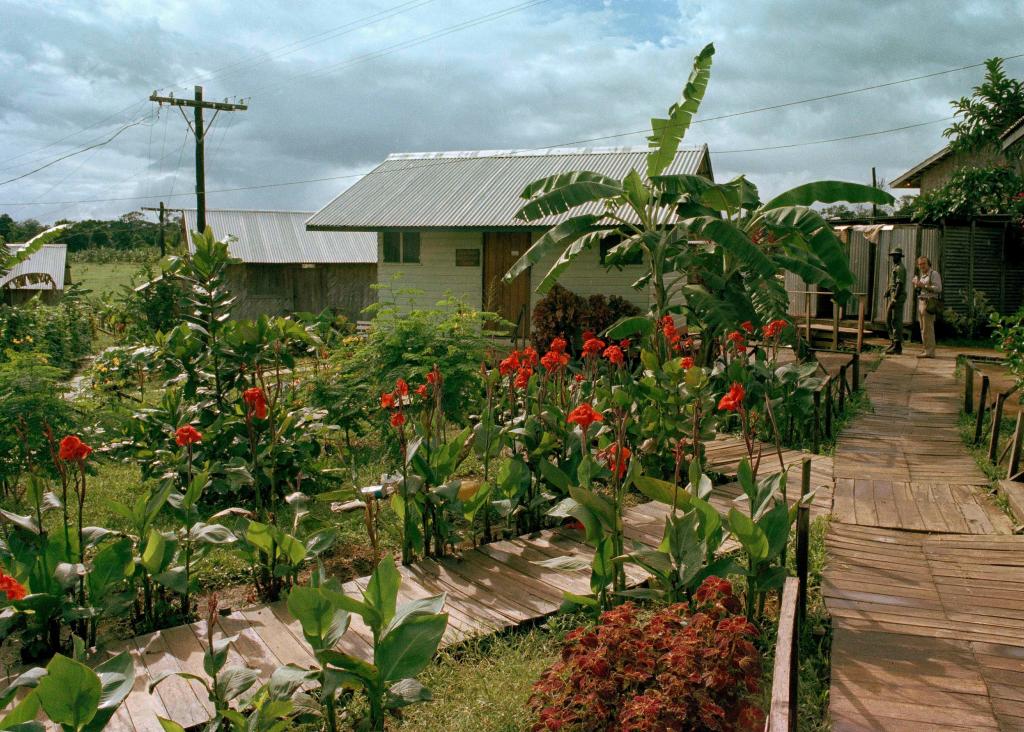
“The area should be reconstructed purely for tourists to get a first-hand understanding of its layout and what had happened,” he said. “We should reconstruct the home of Jim Jones, the main pavilion and other buildings that were there.”
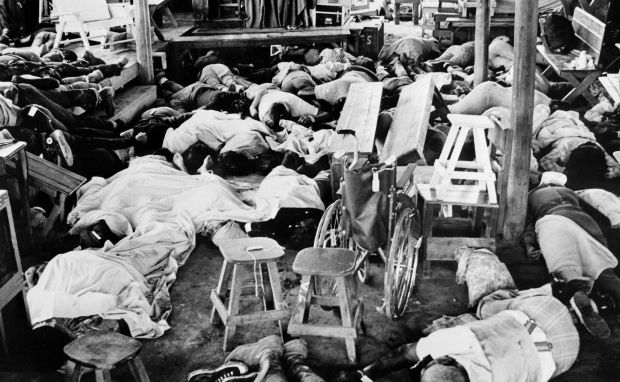
Today, all that is left is bits of a cassava mill, pieces of the main pavilion and a rusted tractor that once hauled a flatbed trailer to take temple members to the Port Kaituma airfield.
An offering to the land
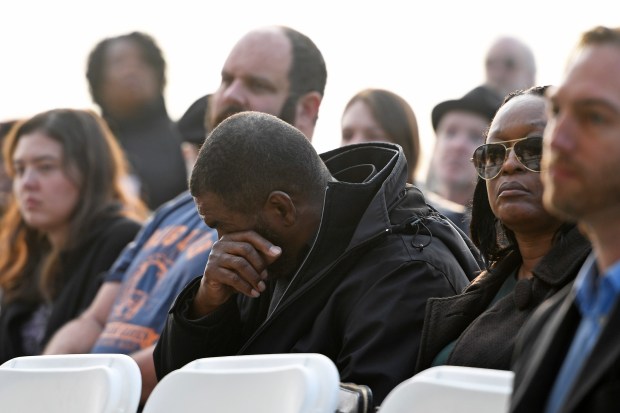
Until now, most visitors to Jonestown have been reporters and family members of those who died.
Organizing an expedition on one’s own is daunting: the area is far from the capital and hard to access, and some consider the closest populated settlement dangerous.
“It’s still a very, very, very rough area,” said Fielding McGehee, co-director of The Jonestown Institute, a nonprofit group. “I don’t see how this is going to be an economically feasible kind of project because of the vast amounts of money it would take to turn it into a viable place to visit.”
McGehee warned about relying on supposed witnesses who will be part of the tour. He said the memories and stories that have trickled down through generations might not be accurate.
“It’s almost like a game of telephone,” he said. “It does not help anyone understand what happened in Jonestown.”
He recalled how one survivor had proposed a personal project to develop the abandoned site, but those from the temple community said, ‘Why do you want to do that?’
McGehee noted that dark tourism is popular, and that going to Jonestown means tourists could say they visited a place where more than 900 people died on the same day.
“It’s the prurient interest in tragedy,” he said.
If the tour eventually starts operating, not everything will be visible to tourists.
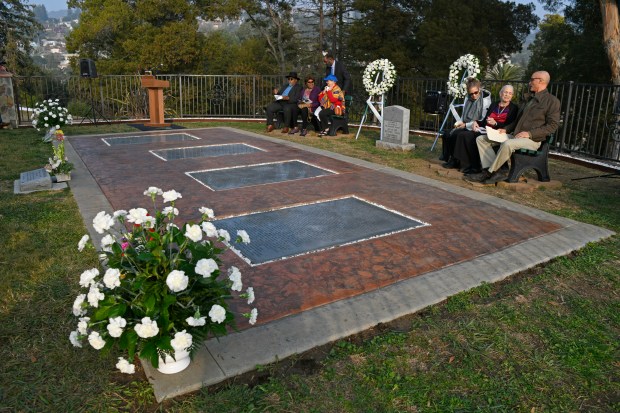
When Vilchez returned to Guyana in 2018 for the first time since the mass suicide-murder, she made an offering to the land when she arrived in Jonestown.
Among the things she buried in the abandoned commune where her sisters and nephews died were snippets of hair from her mother and father, who did not go to Jonestown.
“It just felt like a gesture that honored the people that died,” she said.
___
Coto reported from San Juan, Puerto Rico.
____
Follow AP’s coverage of Latin America and the Caribbean at https://apnews.com/hub/latin-america
Originally Published: December 9, 2024 at 11:16 AM PST
Source link : http://www.bing.com/news/apiclick.aspx?ref=FexRss&aid=&tid=67574fb4ed5e40b7954fe094c6e01a97&url=https%3A%2F%2Fwww.mercurynews.com%2F2024%2F12%2F09%2Fmore-than-900-people-died-in-jonestown-guyana-wants-to-turn-it-into-a-tourist-attraction%2F&c=7328272293415109546&mkt=en-us
Author :
Publish date : 2024-12-09 04:37:00
Copyright for syndicated content belongs to the linked Source.