Shell Beach
This 145km stretch of beach is the main reason people find themselves planning a trip to northwest Guyana, but visitors don’t just come for the endless expanse of unspoiled Atlantic coastline; they come hoping to see a prehistoric sea turtle crawl ashore and lay her eggs.
From March to August, Shell Beach becomes the nesting ground for four of the world’s eight endangered species of marine turtles. Unfortunately, in 2017, the beach was closed to tourism following serious flooding and coastal erosion. To access it today, you’ll need to arrange transportation with a local travel agency.
For up to date information, check the government Guyana travel advice page.
Rewa River
Located in the heart of the Rupununi Wetlands, as well as being surrounded by pristine rainforest, Rewa is a great destination for ecotourists looking to get off Guyana’s beaten path.
The area offers visitors one of the best chances of seeing many of Guyana’s great mammals, including jaguar, ocelot, tapir, capybara, brocket deer, giant armadillo, peccaries and seven different monkey species. There are also healthy populations of giant river otters, black and spectacled caiman and giant river turtles.
Hooked on the outdoors? Don’t miss our selection of Kyrgyzstans’s most impressive natural wonders.
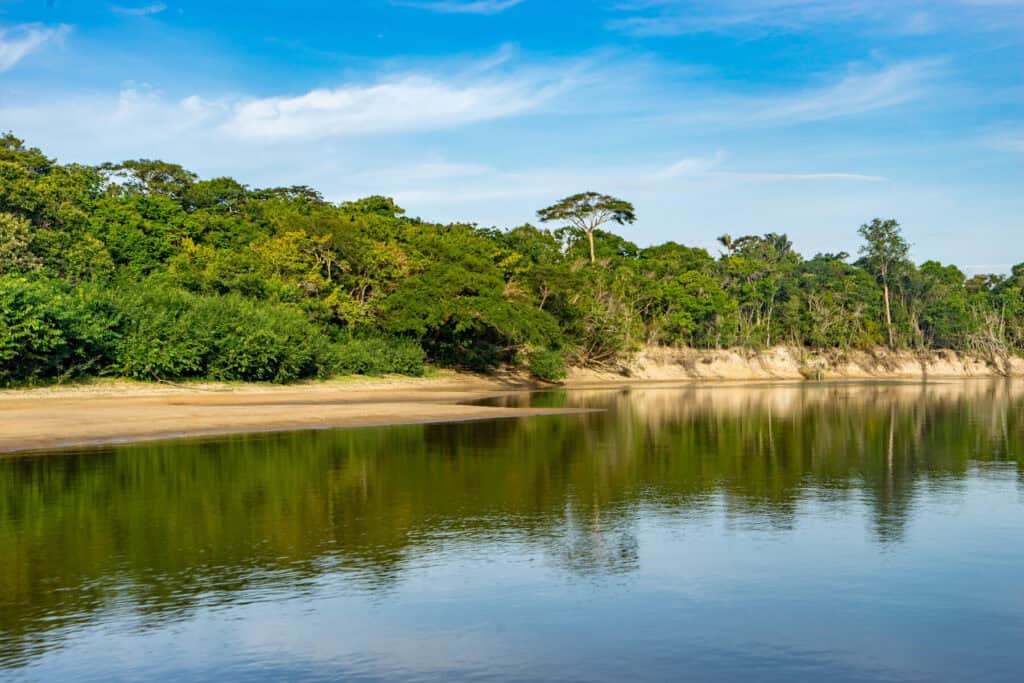 Rupununi is home to endless freshwater river systems © Gail Johnson, Shutterstock
Rupununi Savannahs
In an area of the south, Guyana’s forest ends, and does so abruptly. One moment you’re driving through a sea of green that surely stretches into eternity, and the next moment it stops and spits you out into vast savannah lands resembling East Africa. Welcome to the Rupununi, the other half of Guyana and one of the most untouched areas in the world.
The Rupununi Savannahs encompass roughly 13,000km2 and cover a significant portion of southern Guyana and parts of northern Brazil. Within the Rupununi Savannahs there are some of the world’s most biodiverse wetlands, rainforest-covered mountains, endless freshwater river systems marked by strands of palms in the middle of grasslands, Dr Seuss-like termite mounds, sprawling Amerindian villages and cattle ranches steeped in history.
Kanuku Mountains
According to Conservation International, the Kanuku Mountains support the highest biodiversity in Guyana and are one of the last remaining pristine Amazonian habitats. This helps to explain why it is such a rich forest, as its name means in the local Makushi dialect.
The mountain range, which rises out of the Rupununi savannahs in southwestern Guyana, sustains more than 50% of Guyana’s avifauna and at least 70% of the country’s mammal species. Rare and endangered species include the giant river otter, black caiman, harpy eagle, jaguar, giant river turtle, giant armadillo, giant anteater and the arapaima fish.
With nearly no development outside of the Amerindian communities, pressure from humans on the Kanuku Mountains remains relatively low and allows the mountains to remain in a pristine state.
Essequibo River
The Essequibo River is South America’s third-largest river and runs the entire length of Guyana. From its humble source in the Acarai Mountains along Guyana’s southern border with Brazil, the Essequibo River flows north for more than 966km – winding, twisting and roaring through savannahs and tropical forests along the way – until its mouth opens up some 32km in width and it spills into the Atlantic Ocean.
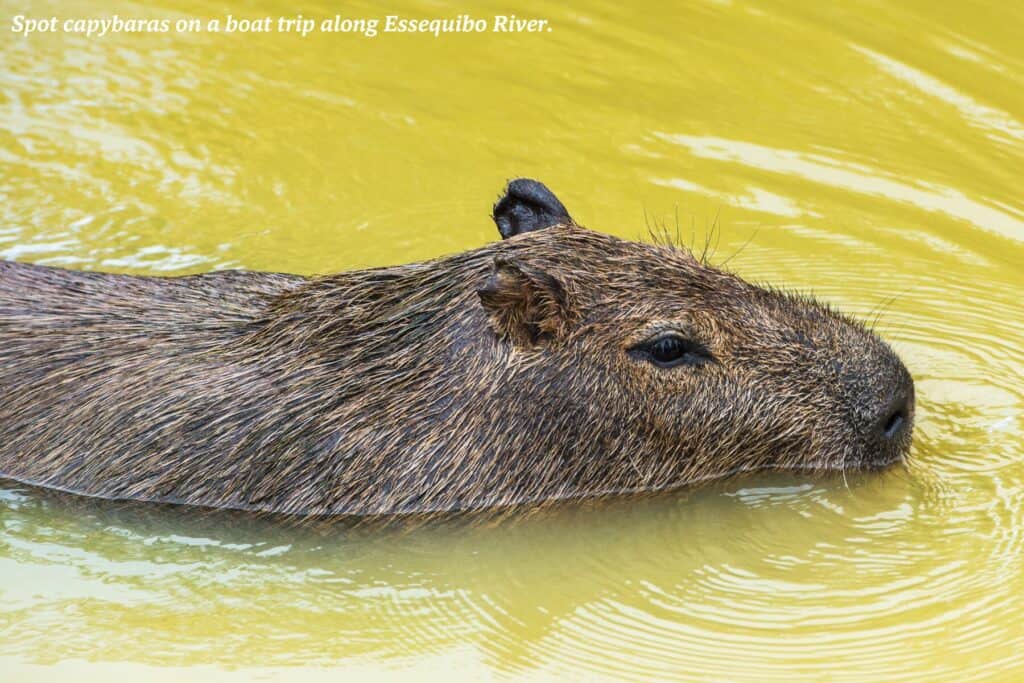
Visitors can rent houses along the river and take boat trips in search of black caiman, tree boas and capybaras.
For more of the world’s natural wonders, see our guide to the best natural attractions in Iceland.

Source link : https://www.bradtguides.com/guyanas-top-natural-attractions/
Author :
Publish date : 2024-05-15 03:00:00
Copyright for syndicated content belongs to the linked Source.