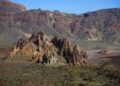
Detail of monumental rock art on Picure Island, Venezuela (copyright Phil Riris/Jose Oliver)
Dr José Oliver, Reader in Latin American Archaeology at UCL Institute of Archaeology, added: “The engravings are mainly concentrated along a stretch of the Orinoco River called the Atures Rapids, which would have been an important prehistoric trade and travel route.
“We think that they are meant to be seen specifically from the Orinoco because most travel at the time would have been on the river. The archaeology tells us that it was it was a diverse environment and there was a lot of trade and interaction.
“This means it would have been a key point of contact, and so making your mark could have been all the more important because of that – marking out your local identity and letting visitors know that you are here.”
Publishing their findings in Antiquity, the research team conclude that it is vital that these monumental rock art sites are protected to ensure their preservation and continued study, with the Indigenous peoples of the Orinoco region central to this process.
Dr Natalia Lozada Mendieta from Universidad de los Andes said: “We’ve registered these sites with the Colombian and Venezuelan national heritage bodies as a matter of course, but some of the communities around it feel a very strong connection to the rock art. Moving forward, we believe they are likely to be the best custodians.”
The research was funded by the Leverhulme Trust, The Society of Antiquaries of London, Universidad de los Andes, the Fundación de Investigaciones Arqueológicas Nacionales (Colombia), and the British Academy.
The full article, Monumental engravings of the Orinoco River, can be read on the Antiquity website
Source link : https://www.bournemouth.ac.uk/news/2024-06-04/largest-known-prehistoric-rock-engravings-discovered-south-america
Author :
Publish date : 2024-06-04 06:06:59
Copyright for syndicated content belongs to the linked Source.