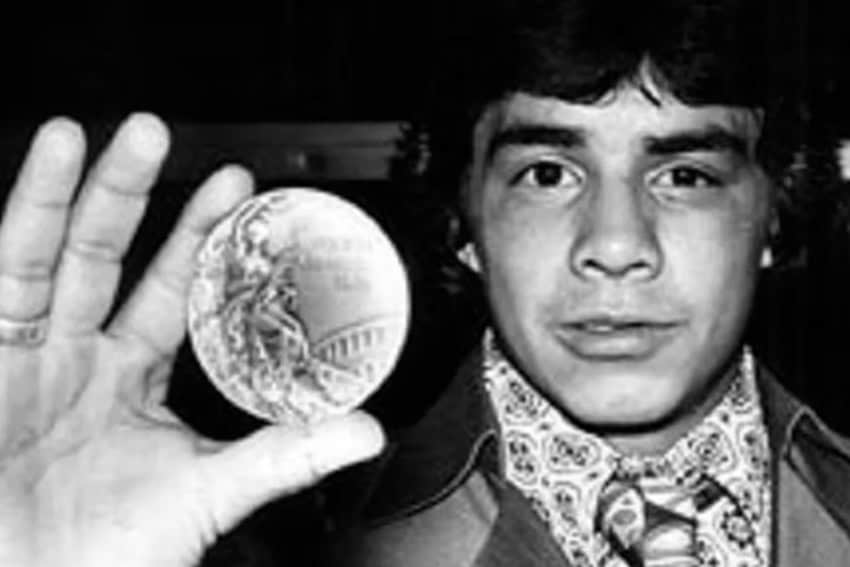
Success in the 1948 Olympics in London — which saw five medals and the first Olympic titles — came from the “upper class” sports practiced in expensive sports clubs. General Humberto Mariles Cortés, who like many of the competitors in the equestrian events, was a military man, brought home three of these medals. His Olympics started in the army town of Aldershot with a silver medal in the three-day team event before heading to Wembley Stadium for the show jumping. Some riders seem to forge a team of equals with their horse, but with Cortés you never doubted who was in charge. He was a bulky, larger-than-life man who dominated his mount. Cortés was riding last and with Mexico in line for a team medal, he took no chances. He was the only leading rider to acquire a time penalty, but only hit one barrier around a tough course, securing both individual and team gold.
Cortes competed in two further Olympics but there would be a controversial end to his life. In 1964 he was sentenced to 25 years in prison after a road rage incident left another driver dead. Released by presidential pardon, he was arrested in Paris in 1972 and accused of drug smuggling. Cortés denied the charges but died in prison before his trial.
Jose Pedraza and Jerzy Hauslabar
Establishing a dynasty.
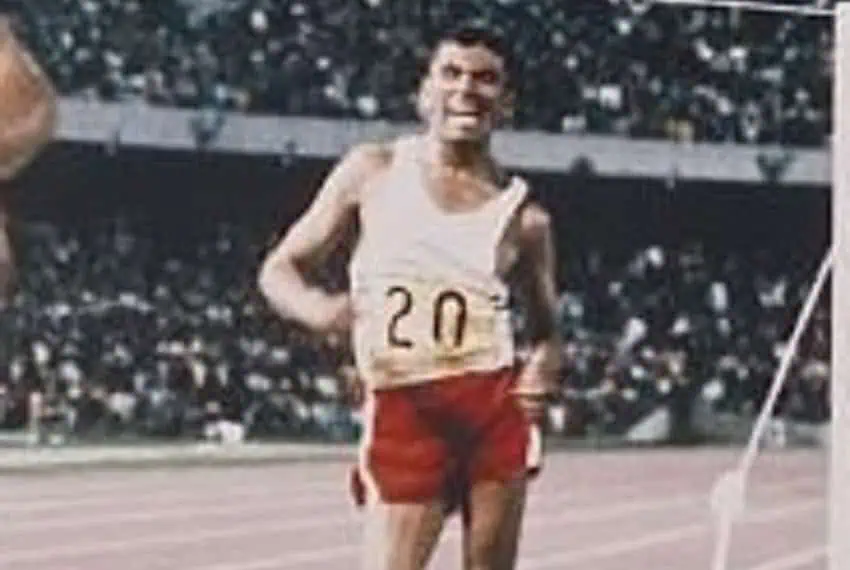 Jose Pedraza took silver in front of a rapturous home crowd in 1968, sparking a dynasty of Mexican walkers. (Olympedia)
With Mexico hosting the 19th Olympic Games, the hunt was on for home medals, particularly in the prestigious track and field events. An opportunity was identified in the walks, a sport rapidly losing appeal in Western Europe. Could a weak field combine with the high altitude of Mexico City to give Mexican walkers an edge?
One of the numerous foreign coaches who came out to work with the Mexican team was a Polish sailor, war veteran, and walker, Jerzy Hauslabar. Walkers tended to be tall men with long strides. Most of the Mexcans in Hauslabar’s squad were shorter and stockier. The answer was to develop a completely new style, swinging the hips more to fit in shorter, rapid, steps.
When his star, Jose Pedraza, came into the stadium after 20 kilometers on the roads he was a long way behind the two leading Russians but, cheered on by the home crowd, he used those short steps to race past Nikolay Smaga and then close on Volodymyr Holubnychy. Holubnychy was able to hold on for his second Olympic title but Pedraza’s silver medal — Mexico’s first in athletics — brought the sport of walking both investment and recruits. Inspired by Jerzy Hauslabar and Jose Pedraza, Mexican walkers would win three Olympic titles and seven medals by the end of the century.
Alfonso Zamora
The Olympics nurture a sporting great
Over the years, Mexico has won thirteen boxing medals, including two golds in 1968. However, their greatest Olympic boxing story is that of Alfonso Zamora. Zamora had a street fighter’s style, and in 1972 he brawled his way to the bantamweight final.
His opponent in the final was Orlando Martinez of Cuba. Martinez, like Zamora, had a powerful punch but, having come through the Cuban boxing system he was the better technical boxer. He knocked Zamora to the canvas late in the first round and seemed to have him in trouble again early in the second. Zamora did not lack strength or courage and fought back, seeking the one big punch that could still turn events in his favor. The result was three rounds of athleticism, skill, and sportsmanship with Zamora bringing home a silver medal. The professional game was always going to be his natural environment and within three years Zamora was a world champion having won all of his 29 fights by knockouts.
1984 came around, and with the East European nations threatening to boycott the Los Angeles Games the organizers gave the Olympics a major rebranding. There was big-money sponsorship, the amateur rules were swept aside and the Olympics took on a new level of showmanship. Fans who could watch Michael Jordan in basketball, Stefanie Graf in tennis, and professional stars in the soccer tournament were enthralled by athletes from across the world competing at the very highest level.
For Mexico, the new-look Olympics brought a steady stream of medals, many of which came from the women’s teams. In the diving pool and on the Taekwondo mats stars such as Alejandra Orozco and María Espinoza enjoyed Olympic success and in 2012 the men’s soccer team defeated mighty Brazil for the gold.
The most important Mexican gold of all time the story of Soraya Jiménez, however, was so unexpected, so dramatic and in the end so tragic that we have told it separately and in detail here.
Bob Pateman is a Mexico-based historian, librarian and a life term hasher. He is editor of On On Magazine, the international history magazine of hashing.
Source link : http://www.bing.com/news/apiclick.aspx?ref=FexRss&aid=&tid=66b68e40799d4c12acc6a55adebe1a75&url=https%3A%2F%2Fmexiconewsdaily.com%2Fculture%2Fmexicos-greatest-olympians-olympic-games%2F&c=8523082088952679897&mkt=en-us
Author :
Publish date : 2024-08-09 09:59:00
Copyright for syndicated content belongs to the linked Source.