Nearly 90% of avocados sold in the United States are imported from Mexico. People in the United States gobble up nearly 3 billion pounds of avocados annually, three times more than we ate 20 years ago.
Yet local and Indigenous communities, small farmers, and farm workers aren’t reaping the benefits of avocados’ meteoric rise. Instead, the lucrative industry has attracted organized crime and locals are suffering the costs of violence, pollution, water hoarding, land grabs and deforestation.
That’s why the Center for Biological Diversity, where I work, and more than 25 other organizations sent a letter last week to federal officials urging them to stop importing and promoting avocados grown on lands deforested since 2014.
Eastern monarch butterfly numbers have fallen more than 90% over the past 20 years. They face extreme threats throughout their migration, from habitat loss to pesticides, so having safe overwintering grounds in Mexico is critical to the species’ survival.
As of 2018, nearly 2,400 acres of the Monarch Butterfly Biosphere Reserve had been replaced by avocado plantations. The surrounding forests have also been logged, making the reserve more vulnerable to the effects of climate change and less suitable for the butterflies.
See related: Avocados: The green gold that wipes out western Mexico’s forests
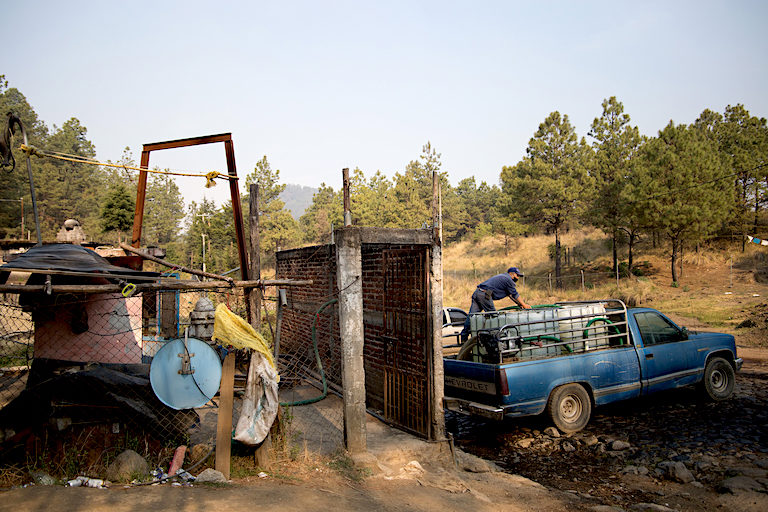 Avocado farmers fill large tanks at a community spring in Michoacan, reducing the amount of water available to other farmers for their own crops. Image by Monica Pelliccia for Mongabay.
But it’s not just monarchs in danger. Avocado expansion endangers 10 species of threatened pollinators in Mexico, including lesser long-nosed bats, Mexican long-tongued bats, rufous hummingbirds and three species of bumble bees. Over the past 10 years, 10 football field sized tracts of land a day have been cleared to expand avocado production.
While Mexico and the United States signed an agreement to stop deforestation to help fight climate change, Michoacán’s forests continue to be destroyed to grow more avocados. Because most of Michoacán’s avocado harvest is sent our way, the United States has a huge influence on the industry there. Mexican officials have asked for help to keep avocados associated with deforestation out of the U.S. market.
State, agriculture and trade officials need to put a mechanism in place to ensure that only deforestation-free avocados reach the United States. The USDA already inspects avocado shipments for pests — they can also certify that the fruit wasn’t grown on deforested lands. Until that mechanism is in place and shoppers can feel confident about where their avocados came from, avocado imports from Mexico should be suspended.
In the meantime, grocery stores and importers can commit to only selling deforestation-free avocados and hold their supply chains accountable for any destruction of forests and violence toward local and Indigenous communities.
Avocado lovers can look for fair trade, organic and domestically grown avocados. Fair trade certification protects forests and independent producers, although fewer than 1% of the avocados consumed in the United States are fair trade. Buying organic avocados supports smaller producers and safeguards workers and the environment from toxic chemicals.
The majority of avocados are grown on long-established plantations by law-abiding farmers, so banning imports of avocados from recently deforested lands won’t harm their livelihoods or affect our ability to keep enjoying avocado toast and guacamole.
But it would help reduce criminals’ power over the industry, protect local communities and the future of monarch butterflies.
Stephanie Feldstein is the Population and Sustainability Director at the Center for Biological Diversity.
See related coverage:
Indigenous agroforestry dying of thirst amid a sea of avocados in Mexico
Avocados: The green gold that wipes western Mexico’s forests from the map
agribusiness, Agriculture, Butterflies, Commentary, Conflict, Conservation, Deforestation, Drivers Of Deforestation, Environment, Forests, Governance, Government, Insects, Land Grabbing, Trade, Wildlife, Wildlife Conservation
Latin America, Mexico, North America, United States
Source link : https://news.mongabay.com/2024/04/mexicos-avocado-industry-harms-monarch-butterflies-but-will-u-s-officials-act-commentary/
Author :
Publish date : 2024-04-22 03:00:00
Copyright for syndicated content belongs to the linked Source.