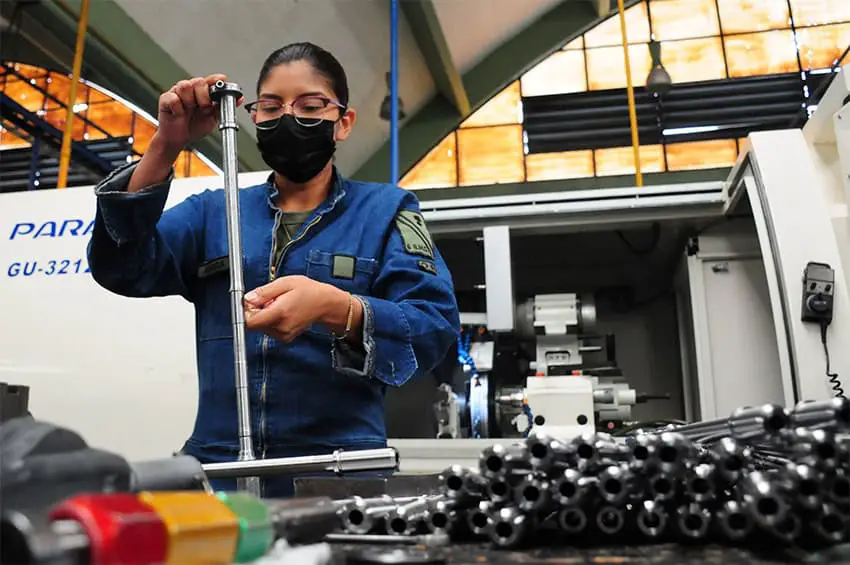
Increasing participation of Mexican women in the country’s workforce has the potential to add hundreds of billions of dollars annually to Mexico’s economy, according to a new report.
If Mexican women participated in the workforce at the same rate as Mexican men, Mexico’s annual economic activity would increase by 26.6% or US $390.5 billion, the Milken Institute said.
Less than half of working-age Mexican women are employed. (Alice Moritz Nigro/Cuartoscuro)
Lifting the female labor force participation (LFP) rate to levels comparable to Nordic countries would add over $200 billion per year to the Mexican economy, while reaching the U.S. rate would increase GDP by well over $100 billion, the California-based think tank found.
The numbers are part of the report “Women Powering Growth: The Potential of Female Workers in Latin America,” published on Tuesday by the Milken Institute.
The think tank also outlined a range of strategies that could help increase the number of women in the workplace in Mexico and other Latin American countries.
What is Mexico’s female labor force participation rate?
According to World Bank Data cited in the report, 46.5% of all working-age Mexican women worked in the formal or informal sectors in Mexico at the end of 2023.
The figure for men was more than 30 points higher at 77.5%.
The Milken Institute noted that Mexico has the lowest female LFP of Latin America’s five biggest economies: Brazil, Mexico, Argentina, Colombia and Chile.
It also said that Mexico has the third lowest rate across Latin America.
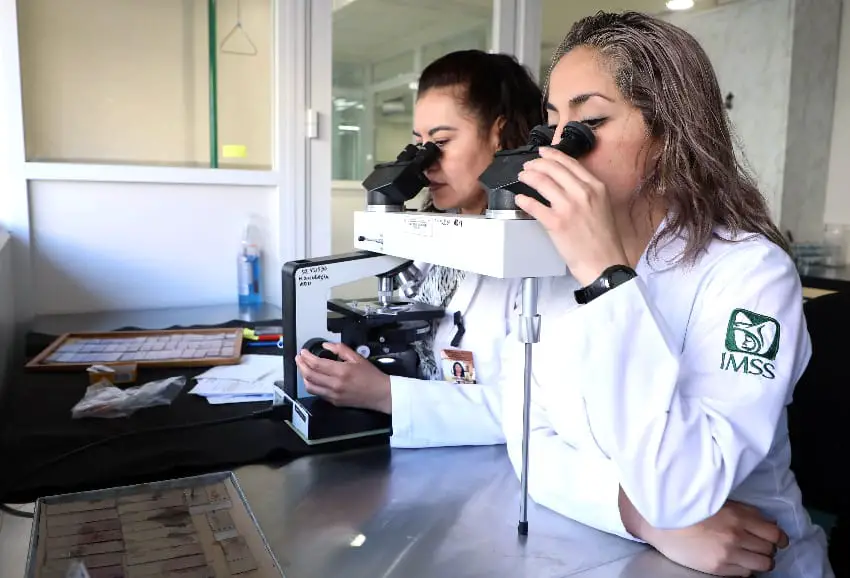 More women in the workforce could add billions of dollars to Mexico’s GDP. (Cuartoscuro)
The think tank highlighted that 21 million working-age Mexican women, or 40.1% of the total, have completed intermediate or higher education. However, 8.9 million of “these highly skilled women remain outside the labor force,” the Milken Institute said.
“This is despite a large demand for human capital in Mexico,” it added.
“The vast pool of untapped highly skilled female labor, combined with the size of its economy and growing demand for workers, makes Mexico a perfect example of the latent income gains within Latin America’s female population.”
The potential gains from increasing Mexican women’s workforce participation
The Milken institute used methodology outlined in a 2017 International Monetary Fund working paper to calculate potential economic gains from increasing the number of women in the Mexican workforce.
If female LFP increased by just over 16 points to the 62.6% average of Nordic countries, the annual gain for the Mexican economy would be US $208.2 billion, according to the think tank’s analysis.
 The new report was produced by the Milken Institute, an economic think tank based in California. (Milken Institute)
That amount would increase per capita GDP by $1,633, or 14.2%, the Milken Institute said.
Mexico’s per capita GDP was $13,926 last year, according to the World Bank.
Increasing female LFP to the United States level of 56.5% would add $132 billion annually to the Mexican Economy, the Milken Institute found.
The $390.5 billion estimated gain from gender parity in the Mexican workplace would increase per capita GDP by around $3,000.
The Milken Institute noted that its economic gain estimates “do not account for the effects of increasing female employment on men’s work.”
“Two offsetting effects might arise. On the one hand, male workers might be displaced by the entry of female workers. This might be especially true among high-income households where men can afford to increase leisure time due to additional income, which in turn might decrease the supply of highly skilled male workers (who tend to earn higher wages),” the think tank said.
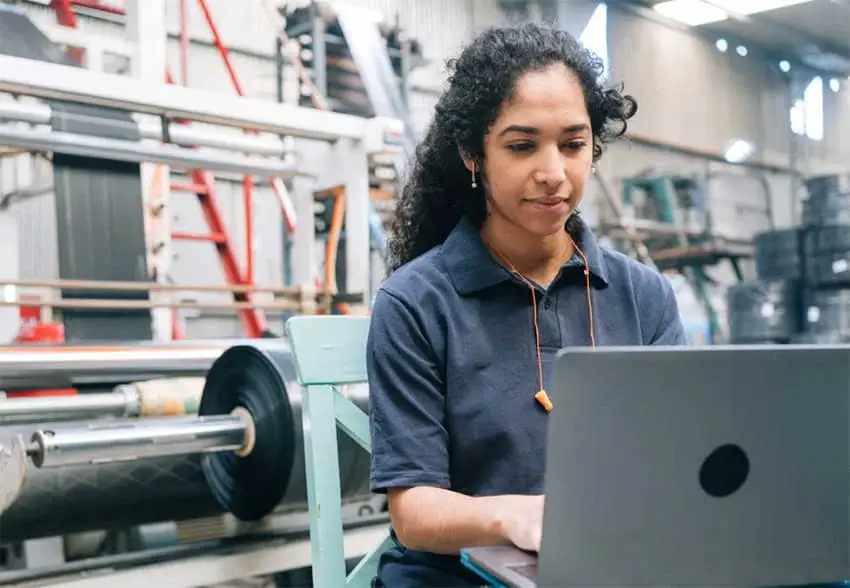 The majority of Mexican women would like to have paid work, but less than half actually do. (Milken Institute)
“On the other hand, male and female labor are complementary, and the new skills that women bring into the workforce can boost the productivity of male workers. Therefore, productivity gains could offset the decrease in the labor supply of highly skilled men.”
How can Mexico get more women in the workforce?
The report states that “Latin American women who are not currently in the workforce consistently express a desire to work, suggesting that the low LFP rates throughout the region are the result of constraints on women’s paid employment.”
“… In every one of Latin America’s five major economies, an overwhelming majority (64% or more) of women express a preference for paid work, either exclusively or in tandem with housekeeping duties,” the Milken Institute said.
Maggie Switek, a senior director at the think tank and lead author of the report, said that “the number one thing that keeps women out of the workforce is infant care and childcare.”
The report says that “strategies that have successfully increased female LFP include public provision of childcare services, investments in female education, and policies aimed at narrowing gender pay differentials and promoting inclusive hiring.”
 The Milken Institute’s senior research director, Maggie Switek, was the lead author of the report. (Milken Institute/Instagram)
However, it adds that “the relative effectiveness” of the strategies “depends on the context in which they are implemented.”
The Milken Institute detailed the prevailing situation in Mexico and the four other major Latin America economies, and offered recommendations to increase female LFP under the three subheadings that appear below.
1. Increase availability of high-quality and low-cost childcare
The report states that Mexico has “the most severe child penalties” among Latin America’s major economies.
Child penalties, also known as motherhood penalties, “are defined as the average effect of the first child on the male-to-female employment ratio, with positive child penalties implying an amplification in the gender gap in LFP,” the report says.
The Milken Institute said that “the obstacle represented by childcare can be effectively overcome.”
“Policies such as childcare subsidies, public preschools, and other cost remedies that result in access to free or low-cost childcare have been consistently identified as successful in increasing the levels of women’s work,” it said.
Switek said that “the expansion of high-quality, low-cost childcare remains a clear public policy in which Mexico needs to invest.”
The report states that childcare enrollment rates in Mexico are less than 10% of the eligible population.
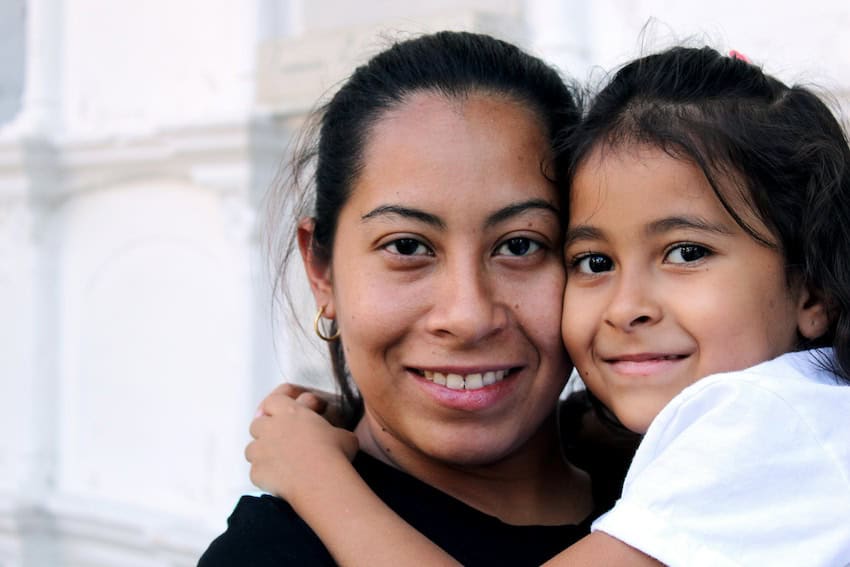 Increased availability of high-quality childcare could allow more women to enter the labor force in Mexico. (Jhon David/Unsplash)
That could change during the term of the next federal government, as President-elect Claudia Sheinbaum has pledged to bring back public “early education centers.”
As part of austerity measures, President Andrés Manuel López Obrador ended a government-subsidized childcare program early in his six-year term.
2. Decrease gender pay gaps by combating workplace discrimination
The Milken Institute said that “gender-based social inequities” can prevent women from advancing to more senior, higher paid positions.
It also said that the opportunities for women to remain at work are “particularly low in Mexico.”
“… Gender pay gaps and workplace discrimination are closely linked. Stereotypes impact employers’ hiring decisions and wages, which in turn affect the incentives for women to seek employment and remain in the workplace,” the think tank said.
 Gender pay gaps and workplace discrimination affect women’s employment choices. (Cuartoscuro)
“… While shifting social norms is a lengthy and complex process, policies such as enforcing flexible working conditions help to drive change in the right direction,” the Milken Institute said.
“… Overall, narrowing the gender pay gap and fighting gender biases that lead to workplace discrimination could promote female LFP, and thereby increase family wealth, across Latin America’s major economies,” the think tank added.
3. Increase formal employment opportunities for highly educated women
The report notes that more than 50% of both male and female workers in Mexico have jobs in the country’s vast informal economy. As a result they don’t have access to benefits such as health care, sick pay and paid vacations.
“Female workers are especially exposed to the vulnerabilities of unregulated work because informal employment often serves as a fallback for women otherwise excluded from paid work due to household duties,” the Milken Institute said.
It said that policies promoting formal employment “should strike a balance between creating formal job opportunities and structuring incentives to make these jobs attractive to women.”
“Because [economic] growth fosters job creation, policies that promote growth play a crucial role in reducing informality,” the think tank said.
“Measures to streamline registration of businesses and improvements in oversight also tend to increase formal job creation. To ensure that women can access these newly created formal jobs, such policies need to be accompanied by measures that support women’s ability to work,” the Milken Institute added.
Those measures include the provision of low-cost childcare as well as policies aimed at closing the gender pay gap and reducing workplace discrimination.
Mexico News Daily
* Read more about Mexican women in the workplace and the challenges they face in this MND report published earlier this year.
Source link : http://www.bing.com/news/apiclick.aspx?ref=FexRss&aid=&tid=66c9694d72b1486f867389a28e5d26c2&url=https%3A%2F%2Fmexiconewsdaily.com%2Fbusiness%2Fmexican-women-in-the-workforce-mexico-gdp-billions-dollars%2F&c=6940914189336908711&mkt=en-us
Author :
Publish date : 2024-08-21 11:49:00
Copyright for syndicated content belongs to the linked Source.