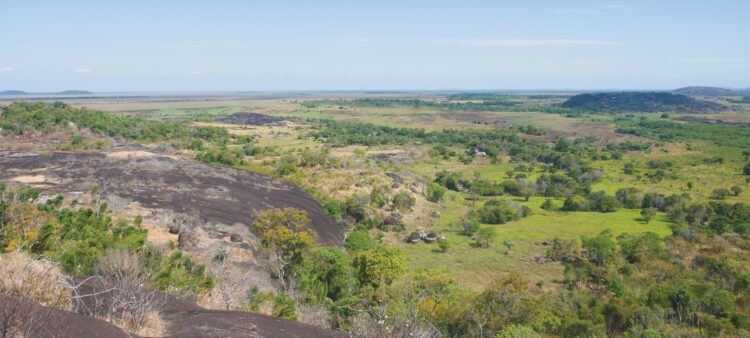
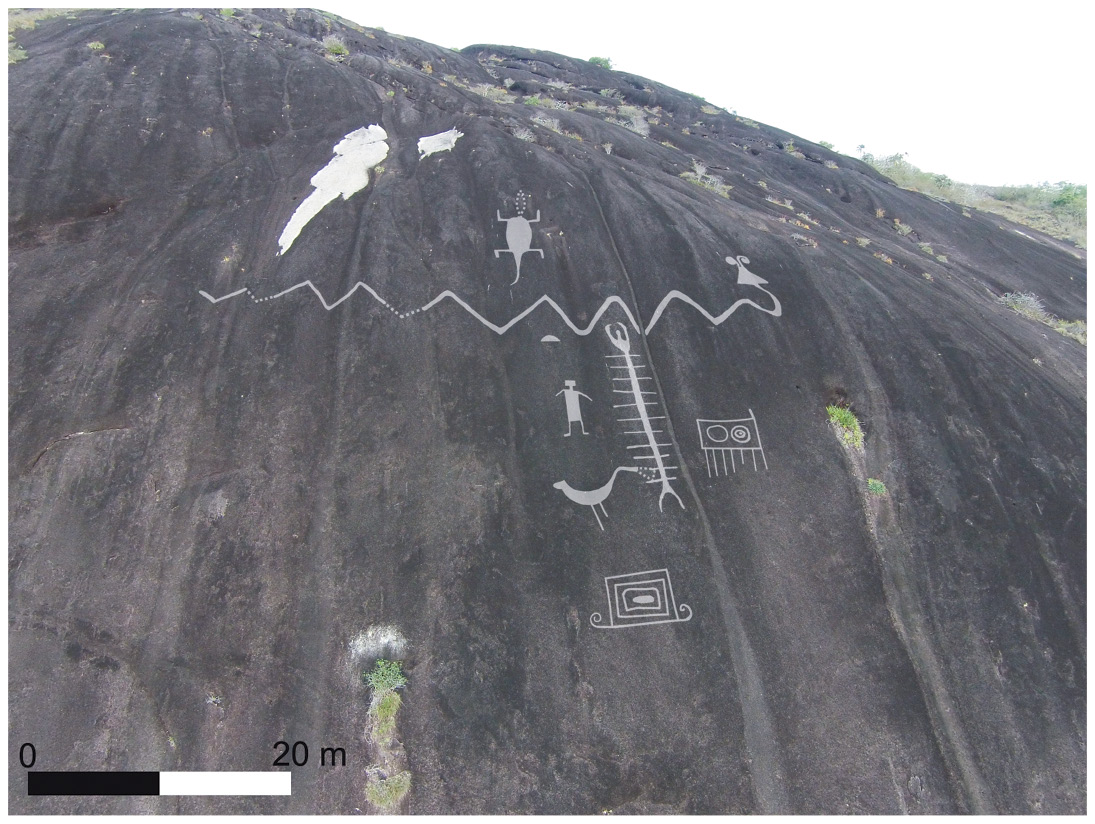
Some of these monumental sites consist of panels with 15-20 motifs, while others have just one or two. Common images include gigantic snakes (by far the most widespread motif, found at almost all monumental sites), centipedes, and a range of other animals, as well as human figures and a variety of geometric shapes. Many of these individual motifs measure more than 10m2, and the largest example – a huge snake at the site of Cerro Pintado in Venezuela – is more than 40m long. Only a handful of rock-art sites of comparable size exist across the world, and nowhere else are there so many of them in one place. These monumental engravings are not only enormous but also extremely visible. The landscape around the Middle Orinoco is largely savannah, but scattered across this flat, open environment are granite outcrops that form huge, rounded hills that can be seen for miles. It is here that the monumental art is usually found, the shapes scratched into the light granite often standing out vividly from the dark surface of the rock.
The artists
The predominance of the snake motif offers a clue to the identity of the creators of this monumental art, as these animals feature heavily in the mythology of several Indigenous groups still present in the Orinoco today. In these myths, snakes are often linked to creation, both of the world at large, and more particularly to the creation of rivers, which they are said to have shaped as they travelled. However, this imagery cannot be connected directly to the ancestors of any one particular group, and indeed, Philip notes, efforts to do so may be futile given the highly multicultural, multilinguistic, and multiethnic nature of prehistoric society in this region.
When it comes to assessing the age of the art, pottery provides some insight. A ceramic vessel found in a funerary cave near the site of Cerro Palomazón, Colombia, is decorated with a snake almost identical to the monumental motif engraved on the rock face above it, while other motifs found in smaller, non-monumental rock art have also been identified on ceramics. As these decorated ceramics date to c.1,500 years ago at the earliest, and the monumental rock- art panels are referenced in European accounts from the 16th century, we therefore have a roughly 1,000-year window in which the engravings were probably created. It is, of course, possible that the rock art is older than the ceramics, but Philip thinks that this is unlikely: most of the monumental engravings are just a few millimetres deep and have been made by scraping off a top layer of black bacterial staining to reveal the natural light-grey granite underneath – if they were more than a few thousand years old it is probable that the bacteria would have grown back and these petroglyphs would no longer be visible.
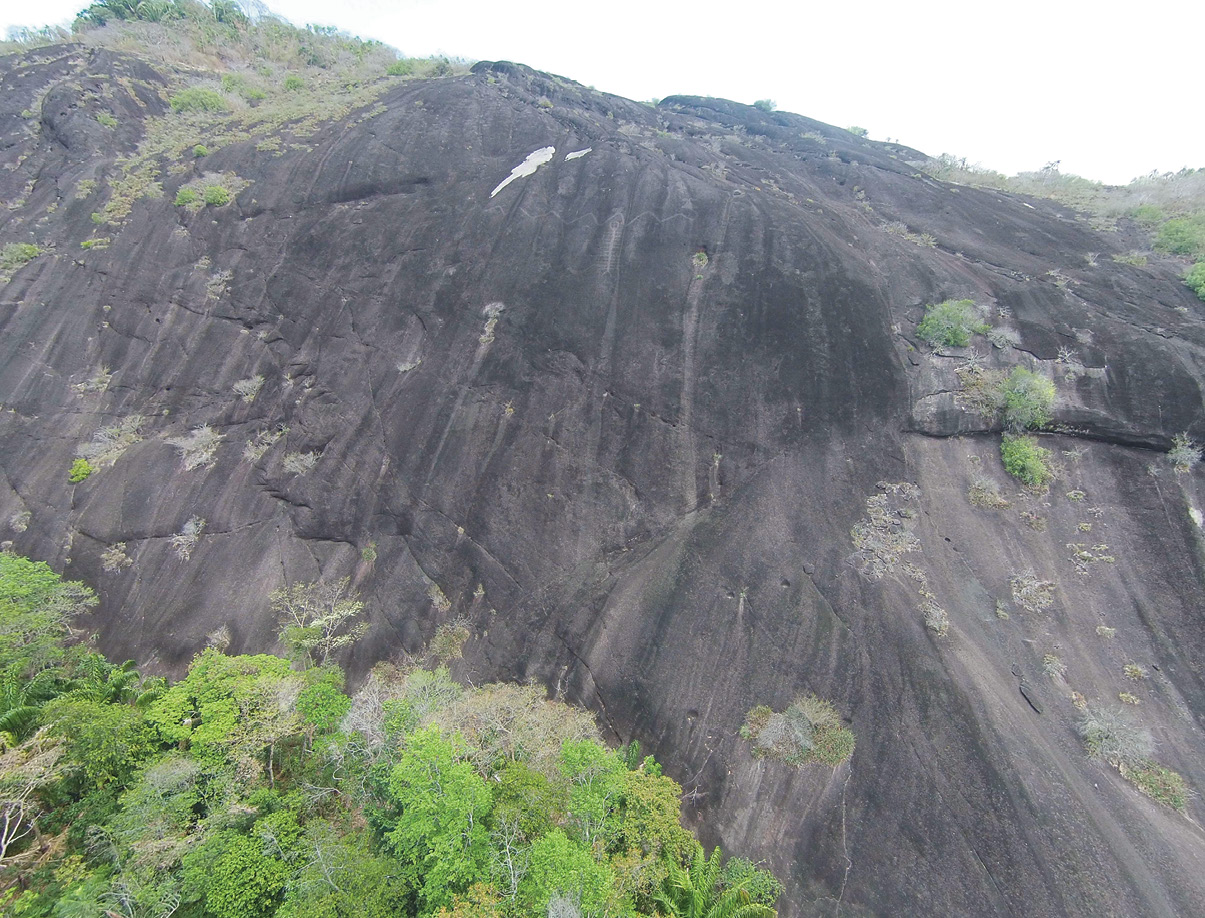 Above & below: The site of Cerro Pintado is home to an enormous 40m-long snake engraving, accompanied by several other motifs. Images: Dr Philip Riris
Signposts or signals?
Given their size, location, and contents, it is believed that the monumental rock-art panels may have acted as territorial markers of some sort, but Philip stresses that there are two sides to this coin. These vast engravings could be warning signs, intended to alert visitors to the existence of a boundary or territory. However, they could also be signalling identity in a more inclusive way, for example, saying, ‘We are the people who know about the snake, if you are, too: welcome in’. And of course, both interpretations could easily be true, depending on who you were.
The archaeology of the Middle Orinoco indicates that this area was a vector of intense contact and exchange well into prehistory. This is the last point where the Orinoco is navigable: whether travellers sailed in a Spanish galleon or a canoe, when they came to the Atures Rapids they would have had to leave the river and go around over land, making the area before the rapids a natural stopping-off point in the landscape. Although a comprehensive understanding of the region’s enigmatic rock art is impossible, it is clear that these monumental sites – and particularly the snake motifs – were intended to signal something important related to both the cultural and the physical landscape of the Middle Orinoco.
The results of the monumental rock-art documentation to date have been published in Antiquity (https://doi.org/10.15184/aqy.2024.55) and researchers hope to return to the Middle Orinoco soon. It is expected that the next stage of research will help to relate the rock art to the archaeological record more systematically, and thus shed more light on this incredibly archaeologically rich region.
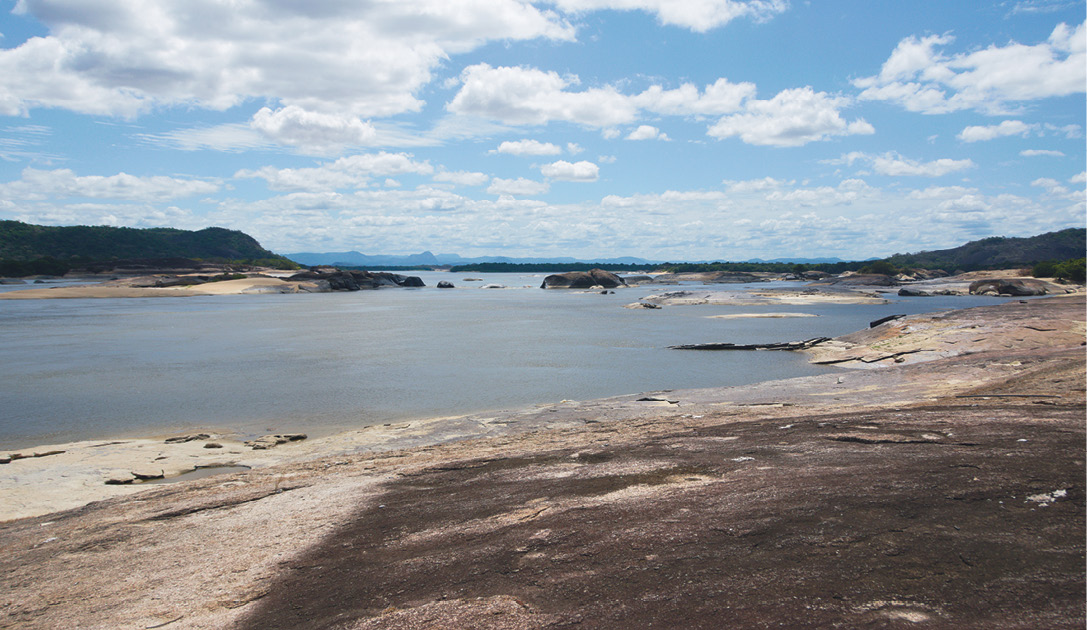 These rock-art sites appear to be closely connected to the nearby Orinoco River. Image: Dr Philip Riris
Source link : https://the-past.com/news/monumental-rock-art-in-south-america/
Author :
Publish date : 2024-07-14 07:02:35
Copyright for syndicated content belongs to the linked Source.