He added that drug traffickers are moving deeper into the rainforests of Central America due to antidrug policies, but also because clearing forests for farmland that they can sell is a means of laundering drug money. This laundering scheme and the carving-out of new smuggling routes are causing an irreversible impact on flora and fauna, according to Sesnie. “The only way to stop this is to look at the environment when you start tackling drug smuggling.”
To track which important bird landscapes are becoming exposed to what researchers call narco-deforestation, the new study used satellite imagery of deforestation in Central America, combined with modeling techniques to estimate how drug cartels are expanding their territories under pressure from antidrug policies, and then juxtaposing these data against populations of resident and migratory birds in the region. The researchers also delved into the U.S. government’s Consolidated Counterdrug Database for a better sense of how drug trafficking operates in the region.
Antidrug policies can negatively affect biodiversity and communities
According to Rodewald, antidrug policies in Central America are largely driven by or adopted from the United States. “U.S. drug policy is very supply-side focused,” she said. That puts the focus of law enforcement on intercepting the traffickers, “without considering the whole range of social processes that cause the problem. They knock it down, and the problem pops up elsewhere.”
“Narcos aren’t the problem,” said study co-author Kendra McSweeney, a geographer at Ohio State University. “Our argument is that drug policy creates narcos and keeps them moving around.”
The way authorities in the U.S. are trying to crack down on drug smuggling in Central America, historically considered their “backyard,” is counterproductive, she told Mongabay, adding that the “war on drugs” has been a disaster.
“Stop putting billions of dollars in supply-side efforts to stop the flow of drugs. They make the problem worse. Stop eradicating plantations. Stop trying to intercept the boats. Stop funding the military. Stand down,” McSweeney said. “Basically, stop having U.S. policy in Central America.”
According to her, the long-standing U.S. model of trying to keep drugs from entering communities is having a heavy impact on the region. “Use the money to invest in things that keep Central Americans at home. Instead of giving money to the military, give it to civil society. To protect forests, to invest in education.”
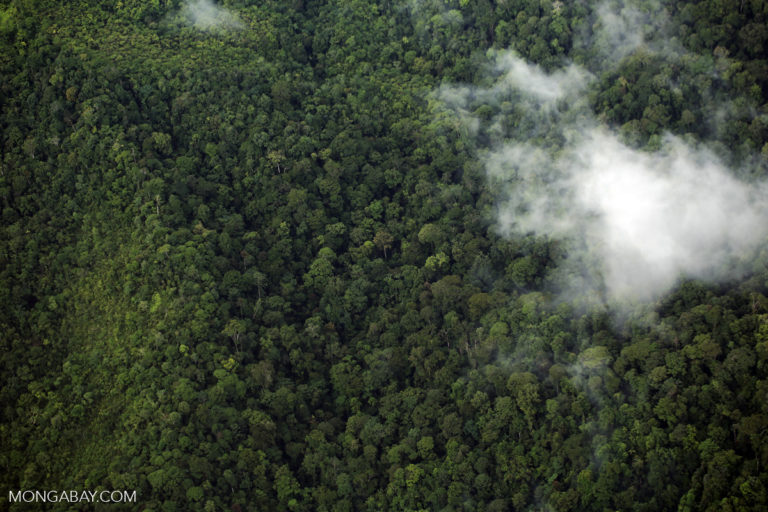 Antidrug policies can push narco-trafficking into more remote forest areas, many of which represent important bird landscapes, experts warn. Image by Rhett A. Butler/Mongabay.
“We have spoken at U.N. General Assembly, at three offices of U.N. drug policy,” McSweeney said. “I’ve given presentations to the military, to drugs agencies. I’ve spoken with pretty much everyone in the State Department. They never disagree, they are actually very responsive. But they seem to think that continuing to fight the war of drugs as they have done in the last 50 years will magically change things. Yet, they lack imagination for alternatives.”
The study also points to the links between drug trafficking, deforestation and the loss of Indigenous habitat in Central America.
“When smugglers enter an area, they build roads, airstrips and fields,” Rodewald said. “We are also really trying to emphasize in this study that, by working with local communities and governments, forests and communities can be better protected.”
Citations:
Rodewald, A. D., Lello-Smith, A., Magliocca, N. R., McSweeney, K., Strimas-Mackey, M., Sesnie, S. E., & Nielsen, E. A. (2024). Intersection of narco trafficking, enforcement and bird conservation in the Americas. Nature Sustainability, 7(7), 855-859. doi:10.1038/s41893-024-01365-z
Sesnie, S. E., Tellman, B., Wrathall, D., McSweeney, K., Nielsen, E., Benessaiah, K., … Rey, L. (2017). A spatio-temporal analysis of forest loss related to cocaine trafficking in Central America. Environmental Research Letters, 12(5), 054015. doi:10.1088/1748-9326/aa6fff
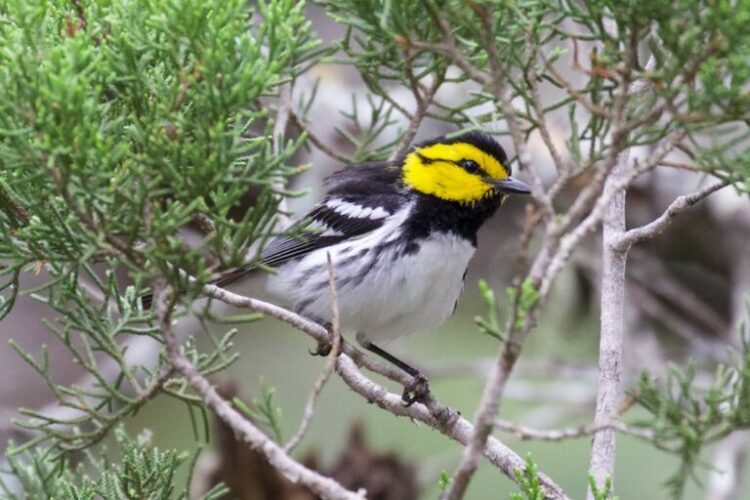
Banner image: A golden-cheeked warbler. Image via Wikimedia Commons.
FEEDBACK: Use this form to send a message to the author of this post. If you want to post a public comment, you can do that at the bottom of the page.

Source link : http://www.bing.com/news/apiclick.aspx?ref=FexRss&aid=&tid=66d74a0cf7c148c3b7131e33f2ed87d4&url=https%3A%2F%2Fnews.mongabay.com%2F2024%2F09%2Ffailed-u-s-war-on-drugs-endangers-central-american-bird-habitats-study-warns%2F&c=11583682048266566685&mkt=en-us
Author :
Publish date : 2024-09-02 13:00:00
Copyright for syndicated content belongs to the linked Source.