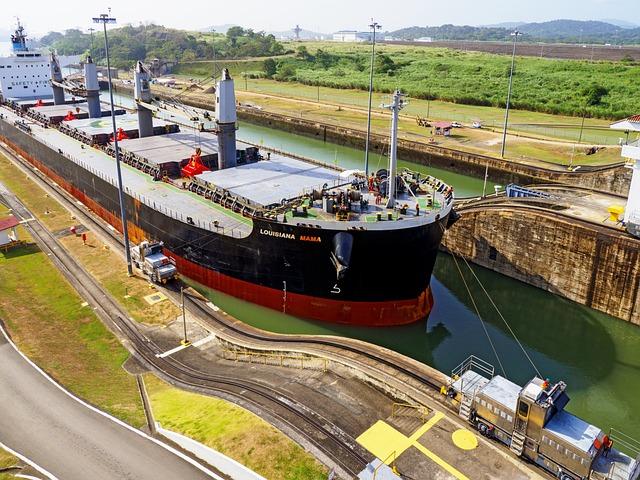
As China continues to expand its influence in Latin America, the United States is recalibrating its foreign policy to counter what it perceives as a growing threat. At the forefront of this new strategy is Panama, a critical player due to its strategic location and key economic partnerships. With the Panama Canal serving as a vital artery for global trade, the U.S. is keenly aware of China’s burgeoning investment in infrastructure and its deepening ties across the region. This article delves into the multifaceted approach the U.S. is adopting to bolster its presence in Latin America, examining the implications for Panama and the broader geopolitics at play. As the dynamics of power shift, the stakes are high-not only for Panama but for the future of U.S.-China relations in the Global South.
Panama’s Strategic Role in U.S. Efforts to Curb Chinese Influence in Latin America
In recent months, Panama has emerged as a pivotal player in the U.S. strategy aimed at countering Chinese influence across Latin America. The Central American nation, strategically located along the Panama Canal, serves not only as a critical maritime artery but also as a strategic launchpad for U.S. diplomatic and economic initiatives in the region. With China actively expanding its footprint through investments and partnerships in countries such as Ecuador and Argentina, the U.S. recognizes Panama’s potential to foster a more favorable geopolitical landscape. As a result, the Biden administration has intensified engagement with Panama, promoting bilateral cooperation that focuses on issues such as trade, security, and investment in infrastructure projects that are less reliant on Chinese participation.
Key aspects of the U.S. approach involve:
- Strengthening diplomatic ties: High-level meetings have been conducted between U.S. officials and Panamanian leaders to reinforce commitment to shared democratic values.
- Expanding economic collaboration: The U.S. is leveraging trade agreements and financial assistance to enhance Panama’s economic resilience against Chinese investments.
- Regional partnerships: The U.S. is fostering cooperation between Panama and other Central American nations, seeking to create a united front against external influences.
| Aspect | U.S. Strategy | Outlet for Panama |
|---|---|---|
| Diplomacy | Strengthening bilateral relations | Increased foreign support |
| Economics | Trade agreements & investments | Infrastructure development |
| Security | Collaboration on anti-drug efforts | Enhanced regional stability |
Evaluating the Economic Implications of U.S.-Panama Relations in the Face of Chinese Inroads
The growing economic relationship between the United States and Panama is increasingly framed against the backdrop of China’s expanding presence in the region. As Panama has solidified its role as a crucial logistical hub-thanks in part to the Panama Canal-its strategic importance to the U.S. has only been magnified. In recent months, U.S. investments have surged, aiming to counterbalance China’s influence, particularly in sectors such as infrastructure, technology, and energy. This renewed partnership underscores U.S. interests in ensuring a competitive presence while supporting Panama’s economic diversification efforts. The fate of these relations hinges on the successful navigation of several pivotal areas:
- Trade Agreements: Amendments to existing trade deals to promote American exports.
- Investment in Infrastructure: U.S. funding for critical projects to strengthen economic ties.
- Technological Partnerships: Collaborations between tech firms to foster innovation and security.
Moreover, Panama’s existing relationships with China pose both risks and opportunities for U.S. strategy in the region. Chinese investments, which have been heavily focused on infrastructure and energy, are now a significant aspect of Panama’s economic landscape. Evaluating the balance between American influence and Chinese projects necessitates close scrutiny of investment flows and their long-term impacts. The following table illustrates the comparative stakes involved:
| Investment Type | U.S. Investment | Chinese Investment |
|---|---|---|
| Infrastructure | 30% of total projects | 40% of total projects |
| Technology | 20% of total projects | 15% of total projects |
| Energy | 25% of total projects | 30% of total projects |
These figures illustrate the competitive landscape in which both nations operate. The outcome of this strategic competition will not only shape the economic future of Panama but also the broader geopolitical dynamics of Latin America in the coming years.
Recommendations for a Sustainable Partnership Between the U.S. and Latin America Amidst Global Competition
To foster a resilient and sustainable partnership between the United States and Latin America in the face of intensifying global competition, it is essential to prioritize collaborative initiatives that promote economic stability and social development. Key approaches could include:
- Enhancing Trade Relations: Streamlining trade agreements that offer mutual benefits and reduce barriers can invigorate local economies.
- Investment in Infrastructure: Joint ventures in infrastructure projects not only bolster U.S. interests but also improve the living standards of Latin American communities.
- Fostering Innovation: Collaborating on technology transfer and innovation initiatives can build local capacities and create new industries.
Moreover, it’s vital to address critical issues that matter to regional populations, ensuring that U.S. engagement is not seen merely as a counterbalance to China, but as a genuine partnership. This can be accomplished through:
- Cultural Exchange Programs: Increasing people-to-people connections fosters understanding and reduces distrust.
- Support for Democratic Governance: Assisting in strengthening democratic institutions will promote stability and trust in U.S. motivations.
- Environmental Initiatives: Joint commitments to sustainability and climate resilience can help mitigate the effects of global competition on vulnerable environments.
| Collaboration Area | U.S. Role | Benefit to Latin America |
|---|---|---|
| Trade Enhancement | Facilitate access to U.S. markets | Boosts local economies |
| Infrastructure Investment | Funding and expertise | Improves living conditions |
| Technology Transfer | Support for local innovation | Creates new economic opportunities |
Closing Remarks
As the geopolitical landscape continues to shift in response to China’s expanding influence in Latin America, Panama stands at the forefront of a crucial U.S. initiative aimed at fortifying partnerships in the region. The strategic allure of Panama as a logistic and trade hub, accentuated by its historic canal, underscores its pivotal role in U.S. efforts to counterbalance Chinese presence.
This evolving dynamic not only reflects the broader contest for influence but also raises important considerations for the future of U.S.-Latin American relations. As policymakers navigate the complexities of this new strategy, they must balance economic interests with diplomatic engagement, all while ensuring that regional countries retain agency over their own development trajectories.
With Panama serving as a bellwether, the outcome of these international interactions could redefine alliances and economic partnerships for years to come. As we continue to monitor these developments, the implications for both the United States and Latin America remain profound, promising a period of intense negotiation and strategic recalibration in a region poised for transformation.