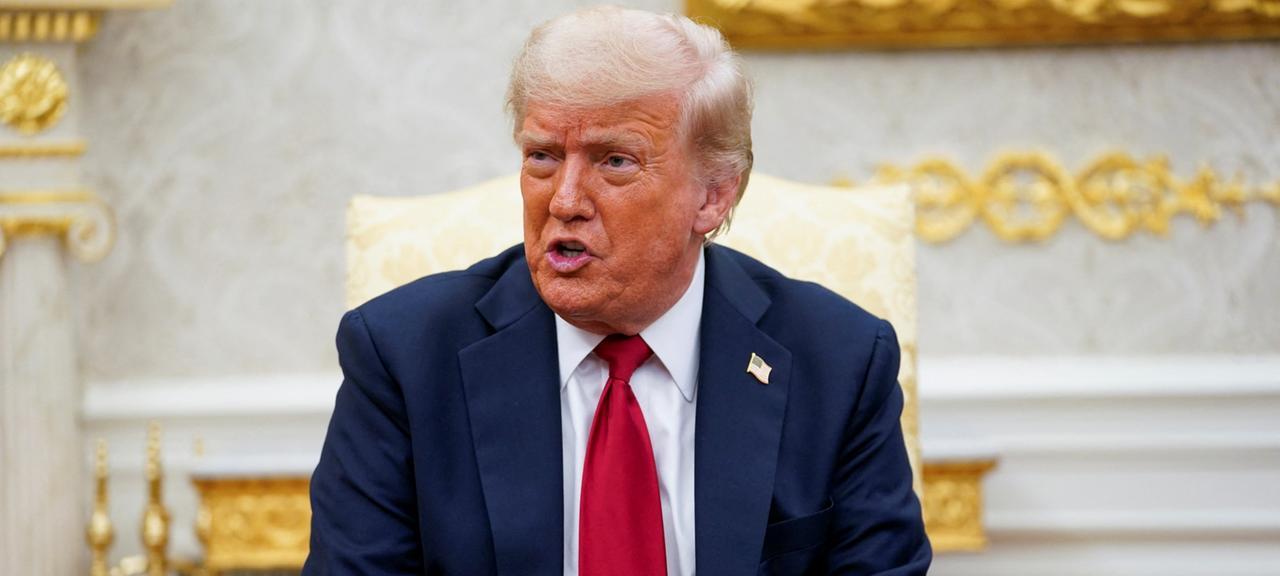
In a controversial press conference that has sparked widespread debate, former President Donald Trump proposed the creation of a “Gulf of America,” a bold vision that includes the potential seizure of the Panama Canal. During the event, Trump outlined his unorthodox approach to U.S. infrastructure and foreign policy, suggesting the creation of a new trade route that he claims would enhance America’s economic position in global commerce. The remarks, reminiscent of his often polarizing rhetoric, raise significant questions about international relations, sovereignty, and the future of trade in a rapidly changing geopolitical landscape. As reactions pour in from both political allies and adversaries, the implications of Trump’s statements could reverberate through Washington and beyond, igniting discussions about the United States’ role in global trade and territorial integrity.
Trump Proposes Gulf of America Concept to Strengthen U.S. Economic Influence
In a bold statement during a recent press conference, the former president unveiled his ambitious “Gulf of America” initiative, a strategic vision aimed at expanding the United States’ economic reach throughout the Americas. Highlighting the importance of the Panama Canal, Trump proposed a comprehensive plan that would not only enhance trade routes but also fortify economic ties with neighboring nations. The initiative seeks to create a new economic corridor that leverages America’s unique geographical advantage while promoting mutual growth and job creation.
Key components of the initiative include:
- Infrastructure Investment: Proposals for upgrading ports and shipping lanes to bolster trade efficiency.
- Trade Agreements: Negotiating favorable terms with Central and South American countries to enhance bilateral trade.
- Energy Partnerships: Establishing collaborative frameworks for energy production and distribution across the region.
- Security Cooperation: Strengthening security measures to protect economic interests and ensure stability in the Gulf region.
Furthermore, Trump emphasized the potential to reshape the global economy, urging Congress to support his vision for increased American influence. By reclaiming control over critical maritime routes, the U.S. could assert itself as a leader in both trade and security in the Western Hemisphere, pushing back against emerging rivals. The initiative invites discussion among policymakers and stakeholders on how to effectively implement these changes for long-lasting impact.
Examining the Implications of Seizing the Panama Canal on Global Trade Dynamics
In the wake of recent remarks by Trump regarding the controversial idea of seizing control of the Panama Canal, experts are raising flags about the potential repercussions for global trade dynamics. The Panama Canal has long been a critical artery for international maritime commerce, facilitating the transit of approximately 5% of global trade. Should the U.S. government move forward with such a plan, we could witness significant shifts in shipping routes, as this strategic waterway not only connects the Atlantic and Pacific Oceans but also serves as a pivotal link for goods traveling between Asia and the Americas. Countries heavily reliant on these routes may find themselves reconsidering their logistical strategies, potentially leading to an increase in shipping costs and transit times.
The implications extend beyond mere economic adjustments, as an attempt to seize the canal could ignite geopolitical tensions, particularly with nations that view the waterway as part of their sovereignty. Key stakeholders, including shipping companies and affected nations, would likely respond with a mix of diplomatic maneuvering and trade negotiations. Among the areas of concern are:
- Increased military presence: Potential escalations in naval operations in the region.
- Economic sanctions: Possible retaliatory measures from other countries, hampering U.S. trade interests.
- Changes in maritime law: A re-evaluation of international agreements surrounding maritime navigation.
To better understand the gravity of such a proposition, consider the following table detailing current shipping transit costs compared to projected costs if the Panama Canal were to be seized.
| Route | Current Transit Cost | Projected Cost Post-Seizure |
|---|---|---|
| East Coast to West Coast USA | $3,000 | $5,500 |
| Asia to East Coast USA | $8,000 | $12,000 |
| Asia to West Coast USA | $7,500 | $10,000 |
Strategic Recommendations for U.S. Policy Makers in Response to Trump’s Vision
The recent proposal from Donald Trump regarding the establishment of a “Gulf of America,” coupled with the controversial suggestion to seize control of the Panama Canal, presents a complex landscape for U.S. policymakers. In light of these assertions, it is crucial to consider the potential geopolitical ramifications. Policymakers should prioritize diplomacy and collaboration with Central American nations, emphasizing multilateral agreements that respect sovereignty while promoting economic partnerships. Engagement with international bodies such as the United Nations and regional organizations can help mitigate tensions that arise from unilateral actions, ensuring that U.S. interests do not alienate critical allies.
Moreover, addressing domestic economic implications is paramount. Policymakers ought to focus on how such ambitious initiatives might disrupt trade routes and relationships. Initiatives that enhance trade efficiency and infrastructure development can counterbalance the proposed vision’s disruption. Key considerations include:
- Investment in Infrastructure: Enhancing coastal and port facilities within the U.S. to accommodate potential shifts in trade dynamics.
- Trade Agreements: Revisiting existing trade agreements to ensure they remain beneficial despite changed circumstances.
- Environmental Impact Assessments: Conducting thorough assessments on how new infrastructural projects might affect local ecosystems.
Key Takeaways
In conclusion, former President Donald Trump’s recent remarks regarding the creation of a “Gulf of America” and the contentious notion of seizing control of the Panama Canal have reignited debate over U.S. foreign policy and national interests in the region. While some supporters hail these ideas as bold strategies to assert America’s influence in Latin America, critics express concern over the implications for international relations and sovereignty. As discussions surrounding these proposals continue to unfold, the impact on both domestic and global political landscapes remains to be seen. Stakeholders from various sectors will undoubtedly be watching closely as this story develops, reflecting the ongoing complexities of American engagement in the Western Hemisphere.