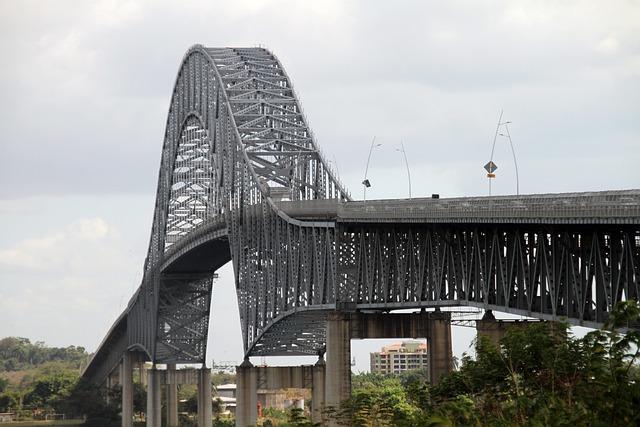
Trump’s Panama Canal Policy: Impact on Chinese Presence in Latin America
In a world where geopolitical tensions play out across continents, few regions have seen their strategic significance rise as sharply as Latin America. Central to this shift is the Panama Canal, a vital maritime artery that facilitates global trade and influences international power dynamics. As President Donald Trump enacted policies aimed at reshaping U.S. influence in the region, his administration’s stance on the Panama Canal emerged as a pivotal point of contention-especially in its implications for Chinese engagement in Latin America. This article explores the intricate web of Trump’s Canal policy, analyzing how it has potentially altered the balance of power in the region, provided opportunities for Chinese investments, and sparked a re-evaluation of U.S. strategies in response to the growing influence of Beijing. As China continues to expand its footprint in Latin America, the ramifications of U.S. policy decisions regarding the Canal will prove critical in defining the future of this dynamic relationship.
Assessing Trump’s Panama Canal Strategy and Its Influence on Chinese Investments in Latin America
The strategic implications of Trump’s Panama Canal policy extend far beyond mere infrastructural management; they illuminate the shifting landscape of Chinese investments in Latin America. By emphasizing American influence over this pivotal maritime artery, the Trump administration aimed to counteract the growing presence of China in the region, which has been characterized by hefty investments in infrastructure, energy, and other critical sectors. Despite American efforts, China’s Belt and Road Initiative (BRI) has made significant inroads, leading to competitive dynamics that challenge traditional power balances.
Key aspects of these developments include:
- Infrastructural Investment: China’s financing of ports and railways directly influences trade routes and economic dependencies.
- Diplomatic Engagement: Increased Chinese diplomatic ties in the region serve to bolster its investments and soften local governments’ resistance to foreign influence.
- Economic Partnerships: China has fostered economic partnerships with countries in Latin America that are significant beneficiaries of BRI initiatives.
To contextualize the contrasting approaches of the U.S. and China in the region, the following table highlights key initiatives and their anticipated impacts:
| Initiative | Key Players | Anticipated Impact |
|---|---|---|
| Trump’s Canal Policy | U.S., Panama | Strengthened U.S. regional influence |
| Belt and Road Initiative | China, Latin American countries | Increased Chinese economic clout |
Evaluating the Shifts in Geopolitical Leverage in the Region
The dynamics of geopolitical influence in Latin America have undergone significant transformation in recent years, particularly in the context of U.S. foreign policy shifts under the Trump administration. One of the more consequential strategies was the reevaluation of the Panama Canal, a strategic asset that bolsters U.S. leverage in the region. Trump’s stance focused on diminishing Chinese presence, which has been a growing concern for U.S. policymakers. The emphasis on reinforcing traditional alliances and fostering economic cooperation among regional partners has reshaped the geopolitical map.
The implications of this policy go beyond mere military posturing; they involve a multifaceted approach to *countering* Chinese initiatives, particularly the Belt and Road Initiative. Key factors include:
- Investment in Infrastructure: The U.S. aims to promote competitive investments in critical infrastructure projects that would otherwise fall under Chinese control.
- Strengthening Trade Agreements: Enhanced trade agreements enhance mutual benefits for Latin American countries and the U.S., steering economic momentum away from Chinese dependencies.
- Fostering Regional Alliances: Building strategic coalitions with traditional allies aims to create a united front against external influences.
| Strategy | Impact on Geopolitical Leverage |
|---|---|
| Infrastructure Investment | Reduces reliance on Chinese funding |
| Trade Agreements | Boosts regional economies and U.S. presence |
| Regional Coalitions | Enhances collective bargaining power |
Strategic Recommendations for U.S. Engagement in Latin America to Counter Chinese Expansion
In order to effectively counter Chinese influence in Latin America, U.S. engagement must focus on strengthening regional partnerships and enhancing economic ties. This can be achieved through a comprehensive strategy that includes:
- Investment in Infrastructure: The U.S. should prioritize investments in critical infrastructure projects that would enhance economic connectivity and competitiveness within Latin America.
- Trade Agreements: Revitalizing trade partnerships through updated agreements that prioritize fair trade practices and reduce dependency on Chinese goods.
- Support for Democratic Institutions: Emphasizing support for governance and civil society initiatives that bolster democracy, making it harder for authoritarian influences to take root.
Additionally, enhancing security cooperation will be vital in addressing concerns over sovereignty and territorial integrity. This could include:
- Joint Military Exercises: Increasing the frequency and scale of joint military exercises with regional allies to improve interoperability and address common security threats.
- Counter-narcotics Operations: Strengthening collaboration in counter-narcotics operations to combat drug trafficking, which undermines state authority and drives instability.
- Cybersecurity Initiatives: Investing in cybersecurity capacity building to protect critical infrastructure from both state and non-state actors looking to exploit vulnerabilities.
| Strategy | Description |
|---|---|
| Infrastructure Investment | Focus on transportation, energy, and digital networks to enhance competitiveness. |
| Trade Revitalization | Update trade agreements to ensure fair practices and promote economic growth. |
| Security Cooperation | Joint efforts in military and law enforcement to safeguard regional stability. |
To Wrap It Up
In conclusion, Trump’s Panama Canal policy has significantly reshaped the geopolitical landscape of Latin America, creating ripples that extend far beyond its borders. By tightening control over this critical waterway, the former administration aimed to curb Chinese influence, which has been steadily growing in the region through investment and trade initiatives. As countries like Panama navigate the delicate balance between pursuing economic opportunities with China and maintaining strong ties with the United States, the implications for regional stability and security will continue to unfold.
Experts suggest that the long-term effects of these policy decisions will resonate in the political and economic arenas for years to come, influencing the strategies of both domestic and foreign actors in Latin America. As the new U.S. administration looks to reestablish its presence in the region, the legacy of Trump’s policies on the Panama Canal will serve as a critical reminder of the strategic importance of Latin America in the broader context of global power dynamics. With the potential for escalating tensions and competition, stakeholders on all sides will need to carefully consider their next moves in this increasingly complex chess game.