Credit: Unsplash
Â
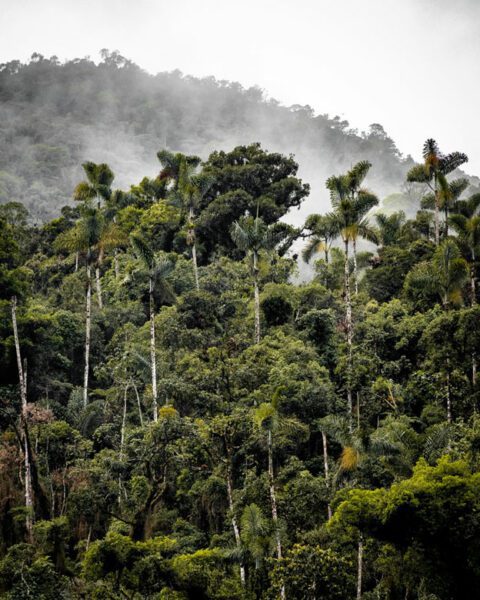
According to FAO, the Amazon is home to the largest expanse of tropical rain forest remaining on Earth. About twice the size of India, these forests play a vital role in regulating the global climate and providing other services, like water purification and carbon absorption.
Â
An estimated 33 million people inhabit the Amazon and about 420 indigenous communities live directly off of its resources for their water and food needs, as well as their livelihoods. These livelihoods and lifestyles are intrinsically linked to the preservation of the forests and to the conservation of its biodiversity. The Amazon holds more than half of the terrestrial species of animals, plants and insects.
SANTIAGO, Chile, Oct 10 2024 (IPS) – The Amazon is at a critical juncture. Despite its abundant biodiversity, cultural richness, and immeasurable environmental value, it faces serious threats that endanger its future and the communities that depend on it.
High levels of poverty, inequality, and environmental challenges compromise the progress of its inhabitants and their ability to access safe and nutritious food.
This vast territory, spanning Bolivia, Brazil, Colombia, Ecuador, Guyana, Peru, Suriname, and Venezuela, is not only a source of natural resources but also home to 50 million people and over 400 Indigenous peoples and various traditional communities.
Solutions to the challenges of the Amazon must not only come from outside but, fundamentally, must arise from the very heart of the communities themselves. They possess the local knowledge and the strength to propose actions toward a sustainable future.
This is where the concept of the Amazonian bioeconomy becomes relevant. It aims to sustainably and inclusively harness the region’s natural resources, benefiting local populations. Although it is a promising approach, the path ahead presents several challenges.
Climate risks, deforestation, and inequalities exacerbate the difficulties of establishing an economic model that works for both people and nature.
We cannot allow business models to continue that sacrifice biodiversity and natural resources, inevitably leading to an irreversible collapse. Therefore, it is crucial to promote mechanisms that enable sustainable economic development, improve food access, increase incomes, create jobs, and raise living standards.
The “Amazon Dialogues� event, organized by FAO and the Government of Brazil a year ago in Belém, opened the door for multiple sectors—academia, civil society, public sector, private sector, and Indigenous peoples—to discuss how to address this challenge.
As a result, eight countries signed the Belém Declaration, with 113 objectives to advance sustainable development in the region. The conclusion was clear: bioeconomy can be a fundamental pillar but requires a comprehensive and multisectoral approach.
FAO, along with the Amazon Cooperation Treaty Organization (ACTO), continues to work to ensure food and nutritional security, reduce poverty, and strengthen sustainable value chains in the region through actions aimed at improving productivity, generating public goods, and promoting bioeconomy, providing prospects for a better future.
Through the Hand-in-Hand Initiative, FAO is driving an investment program with three components: strengthening public goods and policy formulation, ensuring access to digital services and connectivity, and developing sustainable value chains, especially in water basin management and fishery resources.
The Amazonian bioeconomy is not just an economic model; it is an opportunity to reinforce our relationship with nature, recognizing the Amazon as a heritage we must protect and value.
Moving forward on this path requires an intersectoral approach involving communities, governments, the private and financial sectors, and academia.
We must remain active in forums and dialogue spaces, such as the 2024 World Investment Forum, to be held from October 15 to 17 in Rome, Italy, where countries will present their investment programs to financial, public, and private entities interested in supporting the development of various value chains.
This is a collective effort. Together, we can achieve an inclusive transformation of the Amazon biome, protecting its biodiversity and creating more efficient, inclusive, resilient, and sustainable agri-food systems, leaving no one behind.
Mario Lubetkin is FAO Assistant Director-General and Regional Representative for Latin America and the Caribbean.
IPS UN Bureau
Â
Â
Source link : http://www.bing.com/news/apiclick.aspx?ref=FexRss&aid=&tid=67077ddd914e4392b97e61ad6a6a2243&url=https%3A%2F%2Fwww.ipsnews.net%2F2024%2F10%2Famazonian-bioeconomy-essential-path-sustainable-development%2F&c=17223040529704326067&mkt=en-us
Author :
Publish date : 2024-10-09 13:01:00
Copyright for syndicated content belongs to the linked Source.