In 2022, Malaysian logging company Palmera Hout allegedly started building a 42.7-kilometer (26.5-mile) road through Saamaka territory without conducting a complete prior consultation, a process in which the company meets with residents to discuss how the project would impact their lives.
Residents petitioned the government to halt construction of a bridge over the Suriname River connected to the road project. Although they were successful, the company and other loggers are now allegedly using a ferry to bring in construction materials and carry out timber.
Palmera Hout couldn’t be reached for a request for comment. The Ministry of Spatial Planning and the Environment didn’t reply to Mongabay’s request.
“That was an [area] our ancestors kept safe as a pristine forest,” Jabini said, “where we could enter any time to collect what we needed to survive for cultural reasons and many other things. And now they grant permissions to this multinational company and, in six months, they build an illegal road.”
Last year saw Saamaka communities increase their efforts to organize and combat development plans. They started sharing images and messages over WhatsApp with community leaders, which sparked a meeting of more than 500 people to discuss potential legal actions and fundraising.
This week, the Association of Saamaka Communities submitted a petition to President Chandrikapersad Santokhi asking that all logging activities along the road be stopped. It also asked for a consultation process and a social and environmental impact study of the road.
The petition reiterated the need for collective land ownership rights so that the Saamaka have the autonomy to sustainably manage the forest. It also called on the international community for support in their fight to win their territorial rights.
In its report, the ILC said it was vital that the Saamaka receive international support, noting that increased pressure from human rights and land advocacy groups could help hold the Surinamese government accountable for environmental commitments to conserve the rainforest, such as those made in the Paris Agreement and Leaders’ Pledge for Nature.
“We want to keep our biodiversity, our forests and show that we can keep contributing to the world with healthy air and our carbon,” Jabini said, “and make sure that we keep our status as one of the greenest countries with a carbon negative status.”
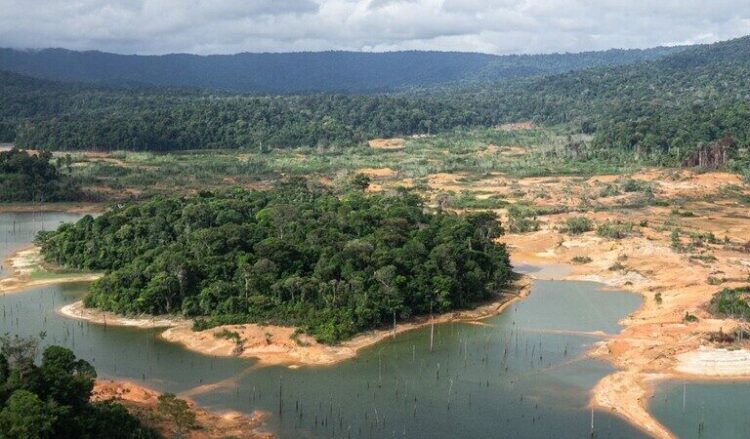
Banner image: The impacts of gold mining on the rainforest in Suriname. Photo by Bram Ebus/ILC.
See related from this reporter:
Landmark ruling in Suriname grants protections to local and Indigenous communities — for now
FEEDBACK: Use this form to send a message to the author of this post. If you want to post a public comment, you can do that at the bottom of the page.
Activism, Conservation, Deforestation, Environment, Environmental Law, Environmental Politics, Forests, Gold Mining, Governance, Indigenous Peoples, Indigenous Rights, Logging, Mining, Pollution, Protected Areas, Rainforests, Threats To Rainforests
South America, Suriname
Source link : https://news.mongabay.com/2024/07/as-logging-booms-in-suriname-forest-communities-race-to-win-land-rights/
Author :
Publish date : 2024-07-04 13:07:25
Copyright for syndicated content belongs to the linked Source.