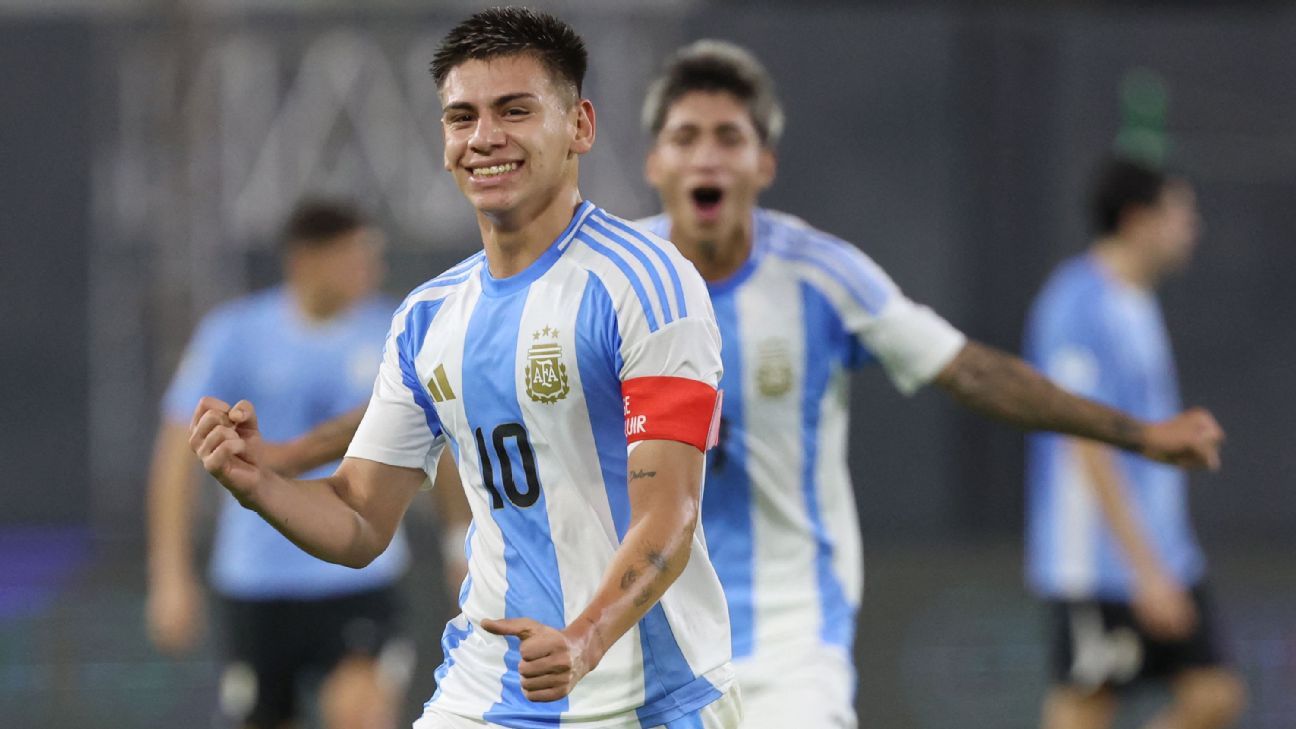
An electric figure, he is nicknamed “El Diablito’ (The Little Devil, which is a homage to one-time BolÃvia star Marco Etcheverry) and he impresses with the breadth of his talent. He is a short-space dribbler who can also see the early pass and is full of ideas and inspiration at pace.
It would be no surprise to see City’s new boy as the sorcerer’s apprentice alongside Messi in the 2026 World Cup.
Why does it matter?
However, more than any results achieved at the level, the primary objective of the U20 tournament is to produce players for the future of the senior side.
This might seem obvious. But it took a fair while for this way of thinking to permeate the planet. Take, for example, the final of last year’s European Championship. Both coaches — Spain’s Luis de la Fuente and England’s Gareth Southgate — had come through the youth structure of their country. And this was reflected in the team selection.
With England, for example, the sole historical criteria for selection had always been performances in top-flight football. Under Southgate, this changed. Those who had done well with the national team at youth level could be fast-tracked to the senior side, just as happened to Messi all those years ago. This systematic use of the U20 side was pioneered and perfected in South America.
STREAM ESPN FC DAILY ON ESPN+
Dan Thomas is joined by Craig Burley, Shaka Hislop and others to bring you the latest highlights and debate the biggest storylines. Stream on ESPN+ (U.S. only).
The key moment was 30 years ago, when José Pékerman took charge of Argentina’s youth setup. He came in with a comprehensive project. He would not merely receive youngsters from the clubs and take them to international tournaments, but he would use the national team structure to identify players and develop them, on and off the field.
Argentina won the U20 World Cup in 1995, 1997, 2001, 2005 and 2007. More importantly, from Juan Roman Riquelme through to Messi and Sergio Agüero, they kept producing players for the senior side.
Uruguay took it even further when Óscar Tabárez took over as coach in 2006. He had thought long and hard about the effects of the global market on such a small nation. It would inevitably mean that good Uruguayan players would move abroad at an ever earlier age. The solution, then, was to secure the long-term through the U20s.
Wherever they were in the world, they would always be Uruguayans. Back in 2006, it was generally assumed that Uruguay’s days as a footballing power were long gone. They have since reclaimed their place at the top table — based largely upon fine work at U20 level. Luis Suárez and Edinson Cavani came through the U20 tournament in 2007, and Uruguay are now the reigning world champions at that level.
The rest of the continent has been inspired to do something similar. Back in 2017, Venezuela went all the way to the final of the U20 World Cup and there is still a hope that this generation will carry the team through to its senior World Cup debut in North America next year. Ecuador were South American champions in 2019, finished third in that year’s World Cup and several players from that team were on senior duty in Qatar in 2022.
And imagine that you are the coach of Paraguay. The senior squad might be spread all over Europe, the Americas, and maybe even Asia. How do you compare performances in such different leagues when the time comes to select the squad? The answer: if in doubt, use displays with the U20s as a reference.
Source link : http://www.bing.com/news/apiclick.aspx?ref=FexRss&aid=&tid=67b62dcc04a84bf38a8fcbd4fd4bd8f8&url=https%3A%2F%2Fwww.espn.com%2Fsoccer%2Fstory%2F_%2Fid%2F43704697%2Fthe-messi-blueprint-why-south-america-u20s-crucial&c=5090906767353750336&mkt=en-us
Author :
Publish date : 2025-02-19 04:55:00
Copyright for syndicated content belongs to the linked Source.