
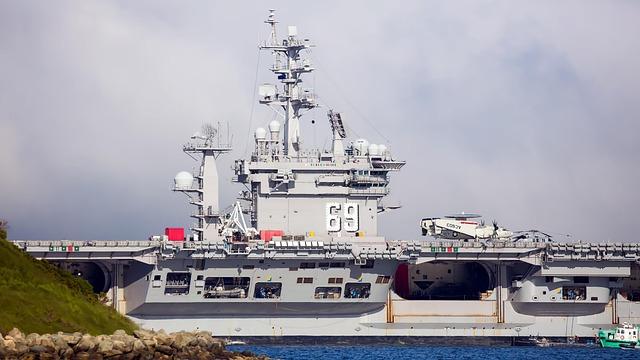
A Narrow Strait, a Widening Rift: U.S. Warships, Trinidad’s Turn, and Venezuela’s Fury in the Caribbean
In the heart of the Caribbean, a geopolitical storm is brewing as the tension between the United States and Venezuela escalates, with the strategic waters surrounding Trinidad and Tobago becoming a focal point of contention. Recent maneuvers by U.S. warships in the region have prompted a sharp reaction from Caracas, igniting concerns over sovereignty, regional stability, and the potential for conflict in an area already fraught with economic and political challenges. As Trinidad navigates its own diplomatic waters-aiming for neutrality while balancing its relationships with both Washington and Caracas-the implications of these developments extend far beyond the Caribbean shores. This article delves into the complex interplay of military presence, national interests, and the growing rift that threatens to redefine alliances in an increasingly polarized region.
U.S. Naval Presence in the Caribbean: Strategic Implications and Regional Reactions
The recent deployment of U.S. naval forces in the Caribbean has sparked significant debate regarding its strategic implications for regional security and political stability. The presence of warships, part of a wider strategy to project power in response to perceived threats, has led to increased tensions, notably with neighboring Venezuela. Observers note that this U.S. initiative is not merely a military maneuver but is also aimed at reinforcing alliances with Caribbean nations, enhancing maritime security, and interdicting illicit activities. Key motivations behind the deployment include:
- Anti-drug trafficking efforts: Collaborating with local governments to tackle the flow of narcotics through the Caribbean.
- Countering influence from adversarial nations: Aimed at mitigating the growing economic and military ties between Venezuela and nations like Russia and China.
- Supporting humanitarian missions: Providing assistance to local communities affected by natural disasters.
Reactions to the bolstered naval presence are mixed, showcasing a complex landscape of regional geopolitics. Trinidad and Tobago, situated strategically close to Venezuela, finds itself in a delicate position, balancing its relations with Washington against the backdrop of its own socio-economic ties with Caracas. While some local leaders support the U.S. presence as a measure to ensure stability and security, others express concern over escalating tensions and potential military confrontations. The table below summarises reactions from regional players:
| Country | Reaction |
|---|---|
| Trinidad and Tobago | Support with caution, modernization of coast guard. |
| Venezuela | Fierce condemnation of U.S. actions, calls for regional solidarity. |
| Cuba | Critique of U.S. military posturing, emphasis on sovereignty. |
| Guyana | Reaffirms commitment to U.S. partnerships, security cooperation. |
Trinidad and Tobago’s Role Amidst Increasing Tensions: Navigating Diplomatic Waters
As the geopolitical landscape of the Caribbean becomes increasingly fraught, Trinidad and Tobago finds itself in a delicate position. The nation is navigating a complex web of diplomatic relationships, especially with the U.S. military’s intensified presence in the region. The arrival of U.S. warships has raised eyebrows in Venezuela, prompting a call for vigilance among Caribbean nations. This mobilization is perceived not only as a protective measure for U.S. interests but also as a potential catalyst for heightened tensions. In this fraught atmosphere, Trinidad and Tobago must maintain a balancing act between adherence to its own policies and monitoring the reactions of its neighbors.
To effectively manage these rising tensions, Trinidad and Tobago could consider several strategic approaches:
- Engagement with Regional Partners: Strengthening ties with CARICOM and other regional entities to ensure a collective stance against external pressures.
- Diplomatic Outreach: Actively engaging in dialogue with both the United States and Venezuela to clarify intentions and mitigate misunderstandings.
- Economic Diversification: Fostering economic resilience through diversification of trade partnerships to reduce dependency on any single foreign power.
In the face of these challenges, Trinidad and Tobago’s proactive measures could serve as a model for other nations in the region, showcasing the importance of diplomacy in times of uncertainty.
Understanding Venezuela’s Response: Analyzing the Impact on Regional Stability and Security
The recent deployment of U.S. warships in the Caribbean has intensified existing tensions between Venezuela and its neighbors, particularly in light of Trinidad and Tobago’s newfound alignment with U.S. interests. This shift is significant as it marks a potential turning point in the geopolitical landscape of the region. The Venezuelan government, led by President Nicolás Maduro, has characterized this military presence as an act of aggression, calling it a direct threat to national sovereignty. This framing has resonated with a segment of the Venezuelan populace, evoking a historical narrative of foreign intervention and anti-imperialism. In response, Venezuela has ramped up its military readiness and conducted military exercises, signaling its resolve to confront what it sees as encroachment on its territory and influence.
Furthermore, the ramifications of these developments extend beyond Venezuela’s borders, raising concerns about regional stability and security. As nations in the Caribbean grapple with the implications of Trinidad’s pivot, there is increased dialogue surrounding military cooperation and intelligence sharing in the face of perceived threats. The following factors highlight the potential impacts on regional dynamics:
- Increased Militarization: Countries may feel compelled to enhance their military capabilities in response to U.S. activities.
- Political Alliances: Shifting relationships may lead to unexpected partnerships or heightened tensions between old allies.
- Economic Consequences: Trade and investment initiatives could suffer as regional powers focus on military preparedness over economic collaboration.
To illustrate the varying responses from neighboring countries toward this new tension, the following table summarizes their positions:
| Country | Response to U.S. Warships | Geopolitical Stance |
|---|---|---|
| Venezuela | Condemnation and military readiness | Anti-U.S. interventionist |
| Trinidad and Tobago | Support for U.S. presence | Aligned with U.S. interests |
| Cuba | Support for Venezuela | Opposition to U.S. presence |
| Colombia | Concerns over security dynamics | Neutral observer |
This increasingly complex scenario underlines the potential for a broader confrontation if tensions are not diplomatically managed . The presence of U.S. warships in the Caribbean not only escalates military posturing but also revives historical grievances among nations that have experienced incursions or interventions in the past.
It’s crucial for regional leaders to engage in diplomatic efforts to de-escalate these tensions and prevent a conflict that could destabilize the Caribbean and further affect global markets, particularly in energy and trade. Multilateral dialogue involving organizations such as the Caribbean Community (CARICOM) or the Organization of American States (OAS) could provide platforms for negotiation and conflict resolution.
Moreover, the involvement of external powers, such as the U.S. and possibly Russia or China in the context of geopolitical rivalries, adds an extra layer of complexity. As countries make their strategic choices, the shift in regional alliances could lead to a new Cold War scenario in the Caribbean, where nations are forced to choose sides amid mounting pressures.
The ramifications of these developments call for cautious and informed approaches to foreign policy and military engagement in the region. Continuous monitoring of the situation, alongside proactive diplomacy, will be essential in steering the Caribbean towards a peaceful resolution and sustainable security framework.
The Conclusion
In summary, the escalating presence of U.S. warships in the Caribbean, particularly off the coast of Trinidad and Tobago, marks a significant turning point in regional geopolitics. Amidst this military maneuvering, Trinidad’s strategic realignment raises questions about its diplomatic relations and potential fallout with neighboring Venezuela, which remains increasingly agitated by perceived incursions into its territorial waters. As tensions rise and alliances shift, the Caribbean finds itself at a crossroads that could redefine not only regional security dynamics but also the balance of power in Latin America. As the situation continues to develop, stakeholders and observers alike will be closely monitoring the implications of these military deployments, Trinidad’s decisions, and Venezuela’s increasingly vociferous objections. The unfolding events in this narrow strait could indeed widen the rift, prompting a recalibration of policies and alliances in a region where stability hangs precariously in the balance.









