Such a story, plus along with other tales related to highland barley, sheep, naked carp, angelica, and noodles, underscores how “food production and culinary practices intersected with transformations in the family, village communities, and human–non-human relations over the watershed moments of the last three centuries,” says Chaney, who is a member of the college’s Program in Asian Studies.
“Telling the local history of the mountainous northwest, from its fields to its hearths, offers new perspectives on contestations over the meanings of modernity. What people grow and what people eat reveal the tensions at the heart of contemporary China.”
 Associate Professor of Digital and Computational Studies and History Anelise Hanson Shrout has received a Phillips Fellowship for 2025–2026. (Courtesy Anelise Hanson Shrout)
Anelise Hanson Shrout
Shrout will use her expertise in the digital humanities to better understand the history of U.S. immigrants who were incarcerated in the “Bellevue Establishment,” the collective name for New York City’s public health institutions in the 19th century.
She will compile her research into a three-component project entitled “Bellevue: Medicine, Immigration and Incarceration.”
“Bellevue was a place for people who ‘misfit’ elite New Yorkers’ expectations,” explains Shrout, such as the sick, mentally ill, poor, and new to America. “People born outside of the U.S. were sent to Bellevue, often against their will, by the thousands. In New York City’s foundational public hospital, immigration status was literally rendered into illness.”
She plans to partner with the New York Department of Records and Information Services to develop a publicly accessible digital archive that serves as an educational resource on inmates’ lives at Bellevue. In addition, Shrout will develop an open-access toolkit to help researchers use and analyze information from the archive.
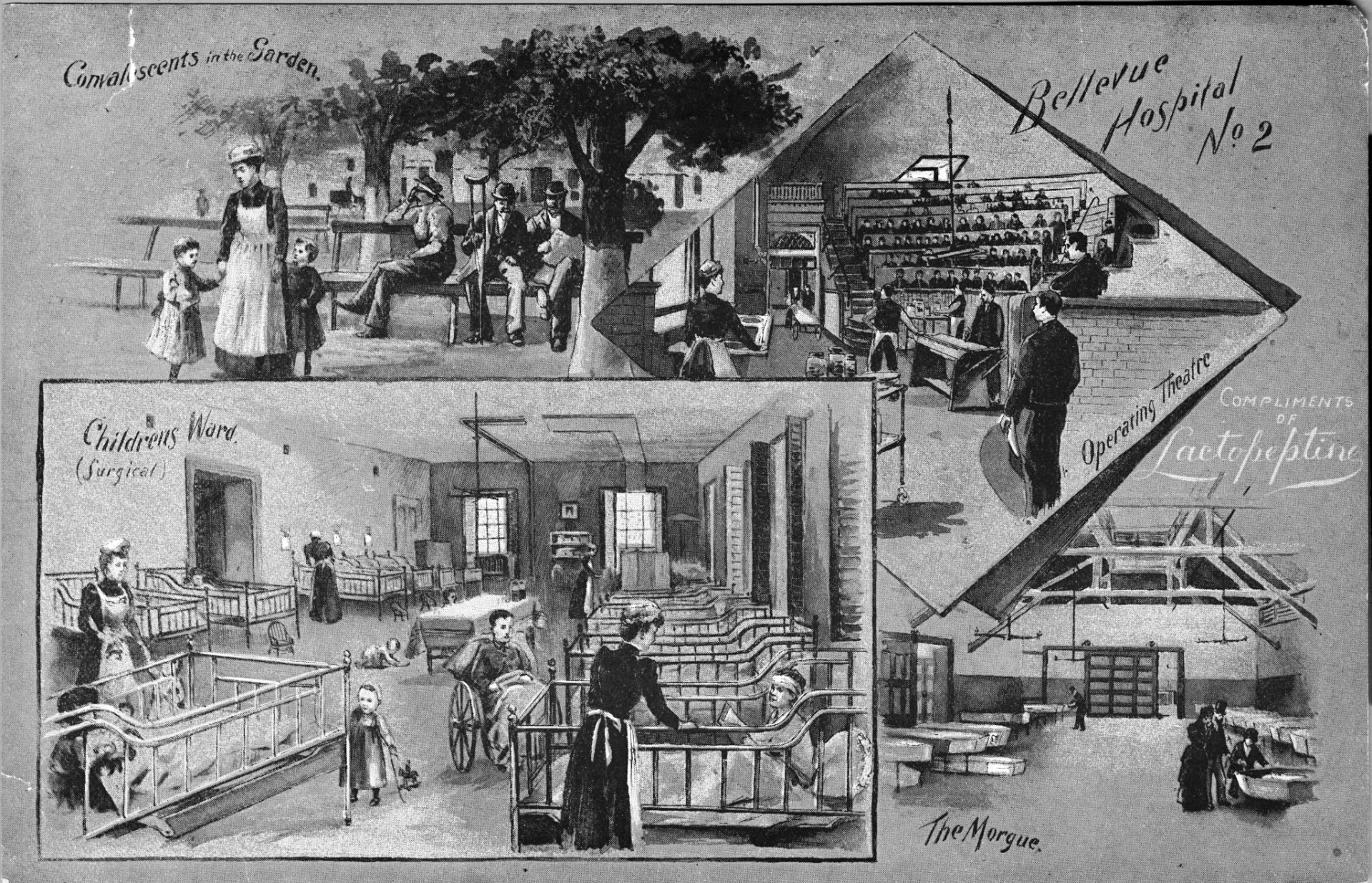 This advertisement for the digestive supplement Lactopeptine shows places at Bellevue Hospital, circa 1889. From lower left, the children’s surgical ward, convalescing patients outdoors, the operating theater, and the morgue. (Departments of Public Charities and Hospitals Photographs / New York City Municipal Library and Archives)
She will also write a monograph, presenting information about historical incarcerations, and explaining how incarcerated immigrants shaped medical, carceral, and immigration control systems in the U.S.
For Shrout, who is a member of the college’s Program in American Studies, the project “continues my interest in how archives and data produced by people in dominant positions tell the stories of people denied access to social and political power.”
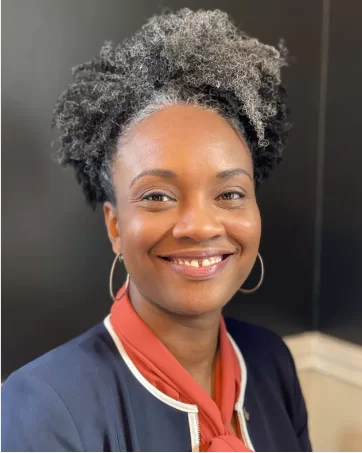 Associate Professor of Sociology Marcelle Medford has received a Phillips Fellowship for 2025–26. (Courtesy of Marcelle Medford)
Marcelle Medford
Medford, an expert in Black immigrants’ understanding of their own ethnically-specific identities in the U.S., will complete a book manuscript exploring how Caribbean immigrants to the U.S. have tried to recreate a sense of cultural belonging by drawing on two powerful expressions of Caribbean identity: reggae and cricket.
To study the culture of cricket, Medford will attend matches at historic Queen’s Park Oval in Port of Spain, Trinidad and Tobago, an iconic venue and one of the largest (capacity 18,000) cricket stadiums in the Caribbean. She will also analyze archival attendance records, starting from the decade prior to Trinidad’s 1962 independence.
“My working hypothesis is that Caribbean immigrants are struggling to replenish cricket culture in the U.S. because it has waned in popularity and political significance back home,” says Medford, who is a member of the college’s Program in Africana.
 Cricket fans enjoy a match at historic Queen’s Park Oval in Port of Spain, Trinidad, in 2007. (Trinidad Guardian / CC BY-NC-ND 2.0)
To study the intersection of reggae and immigrant identity, Medford will visit the Bob Marley Museum in Kingston, Jamaica and attend the annual Bob Marley week in February 2026 and the Annual Bob Marley Lecture at the Institute for Caribbean Studies at the University of West Indies in Mona, Jamaica.
“Reggae is now part and parcel of Jamaica’s lucrative tourist industry,” says Medford. But prior to Marley’s ascendancy, the Jamaican government had banned some reggae music from the radio. “My research is concerned with how the state embrace of a once-shunned subculture shapes the nationalist sensibilities of immigrants from the region.”
Three Bates professors were awarded Phillips Fellowships for 2024–25.
Associate Professor of Biology Andrew Mountcastle, whose area of study is wing collisions between insects and flowers, is working on an audio-visual sensor capable of capturing audio data of pollinators visiting flowers.
Associate Professor of History Patrick Otim is in Uganda, conducting original research on the complex history of every-day survivors of the Lord’s Resistance Army insurgency.
Associate Professor of Africana Sue Houchins, who passed away in August at age 80, had begun her Phillips Fellowship project analyzing Black diasporic LGBTQ+ literature over roughly the last century and writing the first chapters of a scholarly monograph on queer Black literatures.
Source link : http://www.bing.com/news/apiclick.aspx?ref=FexRss&aid=&tid=672e8ddc47cf47a8bcad6eaa34c9480a&url=https%3A%2F%2Fwww.bates.edu%2Fnews%2F2024%2F11%2F08%2Fthree-bates-professors-earn-phillips-fellowships%2F&c=4929802339719253388&mkt=en-us
Author :
Publish date : 2024-11-08 09:14:00
Copyright for syndicated content belongs to the linked Source.