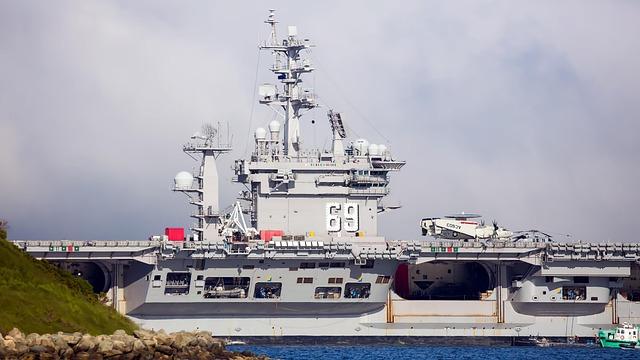
In a strategic move underscoring rising tensions in the Caribbean, a U.S. warship has docked in Trinidad and Tobago, signaling a heightened military presence in the region. This development comes amid ongoing concerns over Venezuela’s political instability and economic struggles, which have drawn the attention of the U.S. and its allies. The arrival of the USS Fort Lauderdale, a transport dock ship, not only reaffirms America’s commitment to regional security but also places additional pressure on the Venezuelan government, which has faced criticism for its handling of the ongoing humanitarian crisis. As diplomatic relations continue to evolve, the implications of this military positioning could have significant repercussions for both regional stability and global geopolitical dynamics.
US Naval Presence in the Caribbean Enhances Regional Security Dynamics
The recent docking of a US warship in Trinidad and Tobago marks a significant escalation in American military engagement in the Caribbean, reinforcing a commitment to safeguarding regional security. This influx of naval presence is set against a backdrop of heightened tensions regarding Venezuela’s ongoing political and economic crises. Observers note that such deployments serve not only to deter potential aggression but also to reassure democratic allies in the region. The presence of US forces can be understood as a calculated response to the growing influence of adversarial powers in Latin America and the Caribbean.
Alongside military objectives, the ship’s visit symbolizes a broader strategy focused on enhancing maritime cooperation. Key benefits of this increased naval presence include:
- Strengthened regional alliances: Facilitating joint exercises and training with Caribbean nations.
- Enhanced intelligence sharing: Improving capabilities to monitor illegal activities, including trafficking and smuggling.
- Support for humanitarian efforts: Offering assistance in disaster response and maritime safety.
Table 1 below outlines the strategic objectives behind the US naval operations:
| Objective | Description |
|---|---|
| Deterrence | Discouraging hostile actions from regional adversaries. |
| Engagement | Fostering collaboration with local naval forces. |
| Stability | Contributing to peace and security in the region. |
Implications of Military Posturing on Venezuela’s Political Landscape
The recent docking of a US warship in Trinidad and Tobago has intensified the scrutiny of Venezuela’s already fragile political landscape. Military posturing by the United States serves multiple purposes: it potentially deters further actions from the Venezuelan regime, reassures allies in the region, and signals a commitment to uphold regional security. As tensions rise, the implications for domestic politics in Venezuela can be profound. Key players within Venezuela’s government may leverage this external threat to consolidate power, framing their rule as essential for national sovereignty against perceived foreign aggression.
Moreover, the presence of US military assets near Venezuela may influence opposition dynamics within the country. As various factions vie for legitimacy and support, the perception of external backing can shape their strategies and alliances significantly. In a polarized environment, the opposition may attempt to harness discontent stemming from a militarized US presence to galvanize dissent, prompting a reconsideration of nationalistic narratives. The unfolding scenario raises questions about regional alliances, security cooperation, and the extent to which external military presence can yield long-term shifts in political authority.
Strategic Recommendations for Trinidad and Tobago Amid Heightened Tensions
In light of the recent docking of a US warship in Trinidad and Tobago, the government must consider various strategic avenues to navigate this heightened geopolitical tension. Engaging in diplomatic dialogue with regional partners could strengthen Trinidad and Tobago’s position as a peace broker in South America. Increased collaboration with CARICOM nations may also serve to bolster collective security measures, preparing the region for any potential fallout from Venezuelan unrest. Additionally, enhancing intelligence-sharing networks will be crucial to stay ahead of evolving threats, ensuring that Trinidad and Tobago is equipped for rapid response if necessary.
Furthermore, economic diversification should be prioritized to reduce dependency on any single country, especially given the potential for conflict to disrupt trade routes. The promotion of sectors such as tourism, technology, and renewable energy can create a more resilient economy. Establishing trade agreements with non-adjacent nations may also prove beneficial. The following strategic measures could be implemented:
- Strengthen bilateral relations: Engage with nations like Brazil, Colombia, and the United States to create a robust support network.
- Enhance military preparedness: Invest in local defense capabilities to ensure national security without external reliance.
- Community engagement: Foster public awareness campaigns about the implications of regional tensions to prepare citizens and leaders alike.
In Retrospect
In summary, the arrival of the US warship in Trinidad and Tobago underscores the growing strategic tensions in the Caribbean as the United States increases its presence in the region. This maneuver is not only a show of support for its regional allies but also serves as a clear signal to Venezuela amidst ongoing political and economic turmoil. As the geopolitical landscape continues to evolve, the implications of such military deployments will be closely monitored by analysts and policymakers alike. The situation remains fluid, and developments in the coming days will undoubtedly play a crucial role in shaping the future of US-Latin American relations.