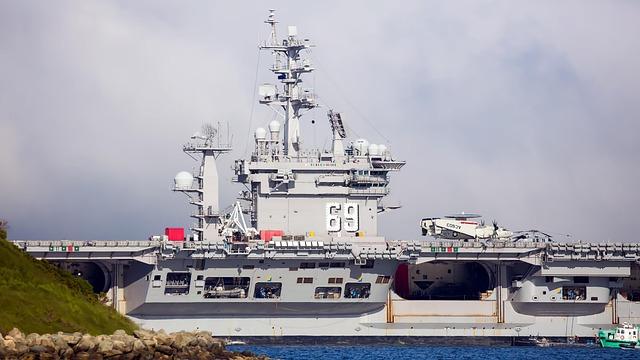
In a significant development in Caribbean geopolitics, a U.S. warship has docked in Trinidad and Tobago, marking a strategic maneuver that intensifies pressure on neighboring Venezuela. The arrival of the USS Fort Lauderdale, a transport dock vessel, is seen as part of a broader initiative by the United States to bolster its presence in the region amidst ongoing tensions with the Venezuelan government. This engagement not only underscores America’s commitment to regional stability but also raises questions about the evolving dynamics of international relationships in an area long influenced by political strife and economic challenges. As both countries navigate the complexities of this situation, the implications for local populations and wider hemispheric security are becoming increasingly critical.
US Naval Presence in the Caribbean Escalates Regional Tensions
The recent docking of the US warship in Trinidad and Tobago has heightened existing anxieties in the Caribbean, particularly regarding Venezuela’s political landscape. The increase in naval presence is perceived as a strategic move by the United States to assert its influence in the region and counter the growing ties between Caracas and its allies. This military deployment underscores a broader aim to safeguard democratic norms and counter perceived authoritarianism, leading to escalating tensions between the US and Venezuela. Analysts suggest that this maneuver might also signal Washington’s commitment to maintaining stability in neighboring countries that could be affected by political shifts in Venezuela.
Local reactions to the US naval presence are mixed, with many regional leaders expressing concern about the implications for national sovereignty. Key points of contention include:
- Increased Militarization: The presence of foreign military assets may alter the security dynamics within the Caribbean.
- Economic Ramifications: Tensions could disrupt trade and tourism, which are vital for local economies.
- Regional Alliances: Countries may feel pressured to align with either the US or Venezuela, potentially fracturing long-standing relationships.
| Country | Position |
|---|---|
| Trinidad and Tobago | Ambivalent |
| Venezuela | Concerned |
| Cuba | Supportive |
| United States | Proactive |
Trinidad and Tobago’s Strategic Role in South American Security Dynamics
Trinidad and Tobago is increasingly positioned as a critical player in the shifting security landscape of South America. The recent docking of a US warship at its ports highlights the strategic significance of this twin-island nation not only to regional stability but also in relation to its powerful neighbor, Venezuela. Dubbed a move to strengthen alliances, the port call serves to underscore the escalating tensions surrounding the Venezuelan crisis, affecting trade routes, migratory patterns, and the broader geopolitical climate in South America. This positioning reflects a growing trend toward American engagement in the Caribbean, which may lead to further military and economic partnerships.
As the geopolitical landscape continues to evolve, several factors delineate Trinidad and Tobago’s security role:
- Proximity to Venezuela: With just a short maritime distance separating the islands from Venezuelan shores, Trinidad and Tobago provides a strategic vantage point for monitoring activities across the border.
- Security Partnerships: The presence of US naval forces enhances collaborative efforts in counter-narcotics operations, maritime security, and humanitarian assistance.
- Regional Influence: As a member of CARICOM, Trinidad and Tobago can facilitate dialogue among Caribbean nations, promoting political stability and conflict resolution.
To further illustrate Trinidad and Tobago’s role in South American security dynamics, the table below summarizes recent security developments that reflect these trends:
| Date | Event | Significance |
|---|---|---|
| October 2023 | US Warship Docking | Enhances military cooperation and signals US commitment to regional security. |
| September 2023 | Joint Military Exercises | Strengthened defense capabilities and strategic partnerships. |
| August 2023 | Increased Drug Seizures | Demonstrates effective counter-narcotics collaboration with US forces. |
Implications for Venezuelan Stability and Recommendations for Diplomatic Engagement
The arrival of a US warship in Trinidad and Tobago underscores the increasing geopolitical tensions surrounding Venezuela, exacerbating the already fragile stability within the region. The strategic positioning of American military assets close to Venezuela has significant implications for both domestic and international perceptions of the Maduro regime. This military presence could escalate the already volatile situation, prompting a potential backlash from Venezuelan leadership, which may leverage anti-American sentiment to rally nationalistic support. Moreover, heightened military visibility can lead to an arms race in the region, forcing neighboring countries to reconsider their security policies and alliances, thereby altering the diplomatic landscape in Latin America.
To foster a more peaceful resolution to the ongoing crisis in Venezuela, diplomatic engagement must be prioritized over military posturing. Key recommendations for effective diplomacy include:
- Strengthening multilateral dialogues involving regional stakeholders and organizations such as the Union of South American Nations (UNASUR).
- Promoting humanitarian aid and development assistance to address the dire needs of the Venezuelan population without compromising sovereignty.
- Encouraging inclusive political dialogue that encompasses a wide range of opposition groups and civil society actors, ensuring a more representative governance framework.
- Utilizing backchannel communications to reduce tensions and build trust between hostile parties.
By employing these strategies, the US and its allies can work towards a more stable Venezuela, ultimately benefiting the entire Caribbean region.
In Summary
In conclusion, the arrival of the US warship in Trinidad and Tobago signifies a notable shift in the geopolitical dynamics of the Caribbean, particularly in light of ongoing tensions with Venezuela. This strategic military presence not only underscores the United States’ commitment to its regional allies but also raises questions about the implications for Venezuelan sovereignty and stability. As the situation unfolds, the international community will be closely monitoring both the responses from Caracas and the broader ramifications for diplomatic relations in Latin America. The intricate balance of power in the region continues to evolve, reflecting the complexities of modern global politics.