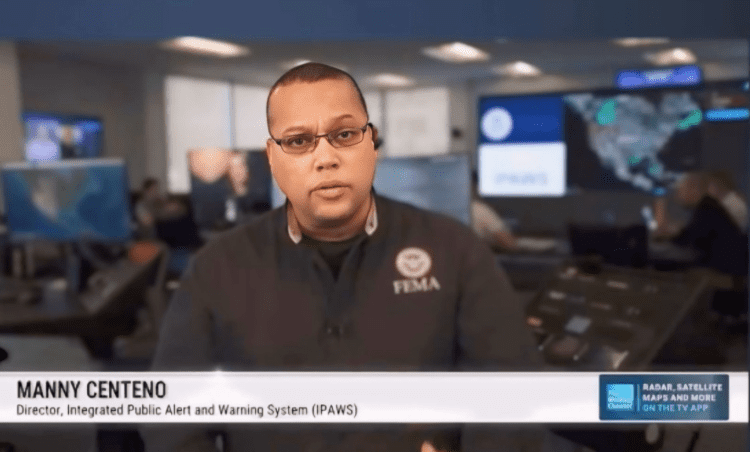
RW: What more can you and FEMA do to combat the negative view of AM radio, reflected in the automotive industry’s decision to eliminate AM radios from certain vehicles?
Centeno: IPAWS is committed to addressing equity in alerting — not only by continuing to adopt technological advancement, such as an expansion into satellite technology, streaming media providers, smart home technology and other possible communications methods, but we also want to preserve the importance of emergency communications with the public using pathways such as free AM/FM radio.
Millions of Americans listen to AM radio every day, especially in rural America, tribal communities and major cities. AM radio plays an essential role in our nation’s emergency communication infrastructure. Its ability to transmit signals over long distances, wide accessibility and superior resiliency have made it an invaluable tool for disseminating critical information during various emergency situations.
Multiple natural disasters have highlighted that there is no substitute for AM radio. When other forms of communication have failed in the past, broadcast radio has remained operational.
AM radio also serves as a vital platform for connecting diverse communities across the U.S. For example, according to the National Association of Broadcasters, many of the nearly 4,500 AM stations across the U.S., 16% or approximately 735 stations serve niche or minority audiences, often delivering content in languages other than English. In rural America, where reliable cellular or broadband access can be scarce, AM radio is an essential lifeline.
Radio serves as the backbone of the Emergency Alert System. There are 77 NPWS PEPs across the country, the vast majority of which are AM stations. These are designated radio stations whose combined signals cover 90% of the American population and have a direct connection to FEMA and the National Weather Service.
Once a designated NPWS PEP station receives an emergency alert, it broadcasts the message to other connected radio and television stations. This means that when the EAS is properly maintained and operated, emergency messages are relayed from one station to another, ensuring the rapid and efficient dissemination of critical information without use of the internet. It is not uncommon for the internet to fail during significant emergencies. NPWS PEP stations are constructed to operate even under the most extreme conditions.
With all of this in mind, I am committed to demonstrating the value of all communications tools or pathways during a disaster, particularly the most resilient ones like AM radio. IPAWS is constantly scanning the marketplace to identify innovative ways to reach the public during an emergency.
RW: Does the ZoneCasting FM geotargeting system from GeoBroadcast Solutions, which recently gained FCC approval, pose any benefits or challenges for EAS?
Centeno: IPAWS is always monitoring and testing new alerting technologies. We work in partnership with other federal agencies who also conduct their own research into emerging innovative tools. We look forward to updates from the FCC on promising innovations that will make our nation’s alerting technology more resilient.
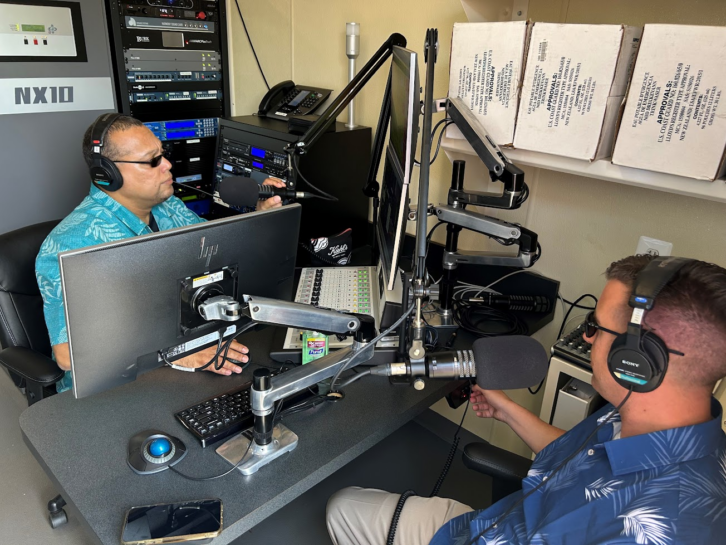 Centeno, third from left, attended a traditional cultural blessing of the PEP resiliency upgrades at KHKA in 2023. From left: Kahu Kordell Kekoa, who performed the blessing; Duane Kurisu, chairman of aio Media Group; Manny Centeno; and Antwane Johnson, then the director of FEMA’s Integrated Public Alert and Warning System.
RW: What is the future of IPAWS?
Centeno: We at IPAWS see opportunities for incremental growth and identifying opportunities to share lifesaving information while working with our broadcasting partners and other stakeholders. We continue to embrace new technologies, but we cannot do it alone.
The IPAWS program was founded on cooperation between federal, state, tribal and territorial partners. The “I” stands for integrated, because through the integration of diverse alerting pathways, FEMA was able to create the world’s leading alerting ecosystem. It is through that continued integration of many perspectives and partnerships that the program and this nation’s emergency communications with the public will continue to elevate, evolve and ultimately save lives. The broadcast community continues to be an extremely important partner with FEMA now and in the future.
FEMA and IPAWS are dedicated to evolving alongside emerging technology, through incorporation and integration with HD Radio, ATSC 3.0, smart technologies, satellites and others. We’re considering building new partnerships with technology developers, satellite service providers, the automobile industry and more.
Radio broadcasters provide an invaluable service to the community by providing continuing emergency information to the public in times of crisis. This requires hard work, planning and preparation that takes place on days like today. I thank our broadcast partners for their continued support of IPAWS and the emergency alert system to keep our communities safe.
RW: What is your take on NAB’s assertion that IPAWS “fully endorses” the NAB proposal on software-based EAS? Particularly in light of an alternative solution already presented by major broadcast manufacturers. Does FEMA actually endorse such things?
Centeno: IPAWS has met with the NAB standards committee and discussed the possibility of software-based EAS solutions. Any proposed software solution that is fully compliant with all applicable requirements for both over-the-air monitoring and monitoring IPAWS per FCC rules may be worthy of consideration.
The IPAWS mission is to disseminate public emergency alerts through various communication pathways in a timely manner. IPAWS does not endorse any specific product but enthusiastically welcomes discussion about innovative solutions that can enhance the timely and effective distribution of alerts to the public.
[Sign Up for Radio World’s SmartBrief Newsletter]
Source link : http://www.bing.com/news/apiclick.aspx?ref=FexRss&aid=&tid=66fabd38e50a4cef9e86389bec23d838&url=https%3A%2F%2Fwww.radioworld.com%2Fnews-and-business%2Fnews-makers%2Fcentenos-passion-for-public-warning-comes-full-circle&c=580347192554078131&mkt=en-us
Author :
Publish date : 2024-09-29 13:00:00
Copyright for syndicated content belongs to the linked Source.