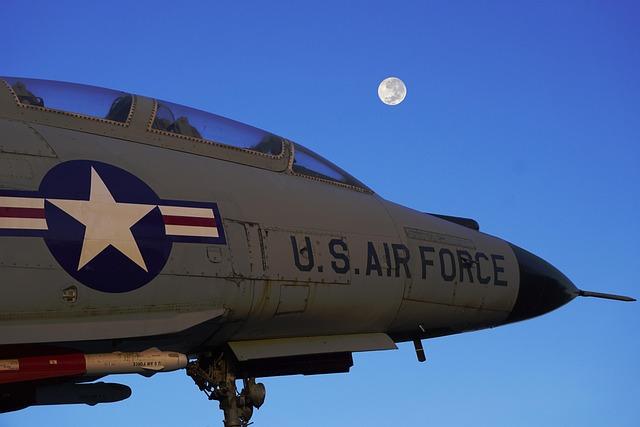
In a significant display of military readiness, U.S. fighter jets were deployed to escort a pair of Russian military aircraft out of Alaska’s air defense identification zone (ADIZ) on Tuesday, underscoring rising tensions in the region. This incident, confirmed by NORAD officials, highlights the ongoing strategic rivalry between the United States and Russia, particularly in a geopolitical landscape where aerial incursions have become increasingly common. As military activities intensify, analysts will be closely monitoring the implications for U.S.-Russia relations and the broader dynamics of North American security. The encounter raises questions about airspace sovereignty, national defense, and the potential for miscalculation in a region marked by both military presence and diplomatic fragility.
US Jets Respond to Russian Incursions in Alaskan Airspace
In a display of military readiness, U.S. fighter jets were dispatched to intercept and escort Russian military aircraft that entered Alaska’s air defense identification zone (ADIZ). The incident highlighted ongoing tensions between the United States and Russia, particularly in regions where airspace overlaps. According to military sources, the aircraft involved were believed to be strategic bombers, raising concerns about their intentions in a highly sensitive area. The quick response from U.S. forces underscores the nation’s commitment to safeguarding its airspace and maintaining regional stability.
The recent incursions are not isolated events, as Russian aircraft have increasingly ventured into the vicinity of Alaskan airspace over the past few years. Factors contributing to these missions may include military signaling, testing U.S. readiness, or showcasing Russia’s strategic capabilities. Observers note that while such activities are not unfounded in the context of international relations, they create an atmosphere of uncertainty and prompt a heightened state of alert among American defense forces. The continual monitoring and rapid interception by U.S. jets exemplify the intricate balance of power in the Arctic region and the broader implications for national security.
Analysis of Geopolitical Tensions in the Arctic Region
The recent incident involving US jets escorting Russian military aircraft out of Alaska’s air defense zone underscores the growing complexities in the Arctic region. Tensions are on the rise as nations vying for influence over this resource-rich and strategically pivotal area continue to engage in military posturing. The increased frequency of military flights and patrols is indicative of a shifting geopolitical landscape, where Arctic sovereignty and territorial claims are increasingly under scrutiny. Analysts suggest that the Arctic is evolving into a new battleground for great power competition, driven by a race for untapped natural resources and emerging shipping routes.
Key factors contributing to the escalation of tensions in the Arctic include:
- Climate change: Melting ice caps are opening new maritime routes and making resources more accessible.
- Military modernization: Both the US and Russia are enhancing their military capabilities in the region, which heightens the risk of encounters.
- Geopolitical interests: Nations like China are looking to expand their footprint in the Arctic, complicating traditional power dynamics.
| Country | Military Presence | Strategic Interests |
|---|---|---|
| United States | Increased fighter jet patrols | Defend airspace, control shipping lanes |
| Russia | Reinforcement of Arctic bases | Maintain influence, resource extraction |
| China | Naval exercises in contested waters | Access to trade routes, economic interests |
Strategic Recommendations for Strengthening US Air Defense Capabilities
In light of recent encounters between US jets and Russian military aircraft within Alaska’s air defense zone, a comprehensive approach for enhancing air defense capabilities is imperative. The United States must prioritize investment in advanced surveillance technologies to ensure real-time tracking of aerial threats. This includes:
- Upgrading Radar Systems: Modernizing existing radar technology to improve detection ranges and capabilities against stealth aircraft.
- Enhancing Interoperability: Collaborating with NATO allies to integrate air defense systems, allowing for coordinated responses to incursions.
- Development of Autonomous Systems: Investing in unmanned aerial vehicles (UAVs) to extend monitoring capabilities and reduce the risk to human pilots.
Additionally, strategic partnerships and diplomacy play crucial roles in regional air security. Continuous dialogue with Arctic nations regarding airspace management and threat perception can mitigate misunderstandings that lead to escalation. Key recommendations include:
| Recommendation | Objective |
|---|---|
| Regional Security Forums | Fostering discussions among Arctic nations on shared security challenges. |
| Joint Training Exercises | Conducting drills to improve readiness and interoperability among allied forces. |
| Exchange Programs | Facilitating knowledge-sharing and best practices in air defense strategies. |
In Retrospect
In summary, the recent encounter between U.S. jets and Russian military aircraft in Alaska’s air defense zone underscores the ongoing tensions between the two nations, reflective of broader geopolitical dynamics. As military activity in the Arctic region intensifies, both nations continue to assert their presence, raising questions about airspace security and international relations. The incident serves as a reminder of the strategic importance of the North and the delicate balance that must be maintained to prevent misunderstandings or miscalculations in a time of heightened alert. As developments unfold, the world watches closely, mindful of the implications for regional peace and stability.