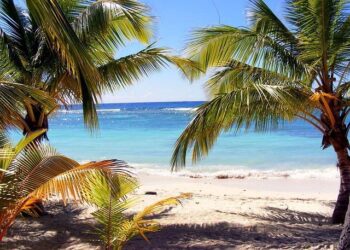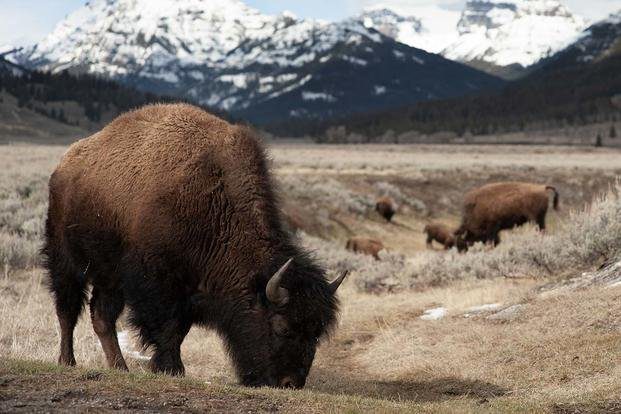
The geyser “Old Faithful” erupting at night. (National Geographic/Jake Hewitt)
Yellowstone didn’t need Kevin Costner to make a name for itself. Stretching across portions of Montana, Wyoming and Idaho, visitors can easily see why it became America’s first national park (and maybe the first national park ever). It sits on a supervolcano that would disrupt the entire world climate if it erupted and, as such, has a lot of incredible geothermal features and unique wildlife that have been killing disrespectful tourists for generations. What more could you ask for?
Katmai National Park
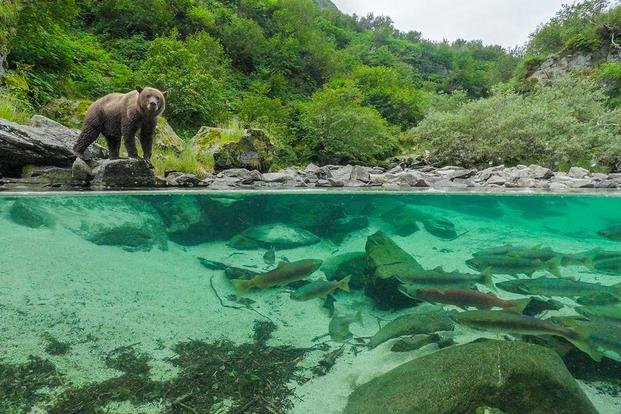
A brown bear looking at migrating salmon. (National Geographic/Dawson Dunning)
Speaking of otherworldly locales and massive volcanoes, Alaska’s Katmai National Park is home to the most active volcanoes of any national park in America. To give you an idea of just how alien the natural landscape can get, the Apollo program’s astronauts trained in Katmai’s Valley of Ten Thousand Smokes before landing on the moon.
There’s no need to worry about getting caught in an eruption, as the volcanoes give plenty of earthquake warning before they go off. What you should be aware of is that Katmai has the world’s largest concentration of brown bears. The closest you’ll want to get is the park’s annual Fat Bear Week, which features a “fattest of them all” competition among the bears.
Everglades National Park
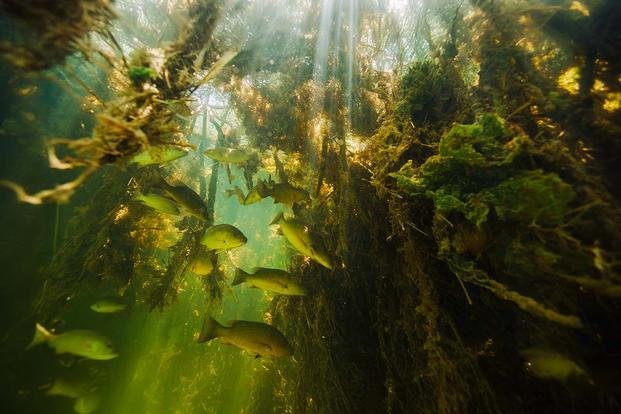
The mangrove tree nursery serves as a crucial sanctuary for small fish, providing them with hiding spots to evade predators and a reliable source of food. (National Geographic/Tom Fitz)
VIsitors might be surprised to find out that Everglades, sitting just outside Miami, is one of the most important wetlands in the world and is also home to dolphins, along with panthers, manatees, American alligators, crocodiles and an astonishing array of other biodiverse creatures. But get in there while you still can: Rising sea levels from climate change and invasive species are wreaking havoc.
If you want to help rid the park of its most destructive invader, Florida’s Fish and Wildlife Conservation Commission hosts an annual competition to see who can capture the most Burmese pythons. It attracts woodsmen from around the country!
Olympic National Park
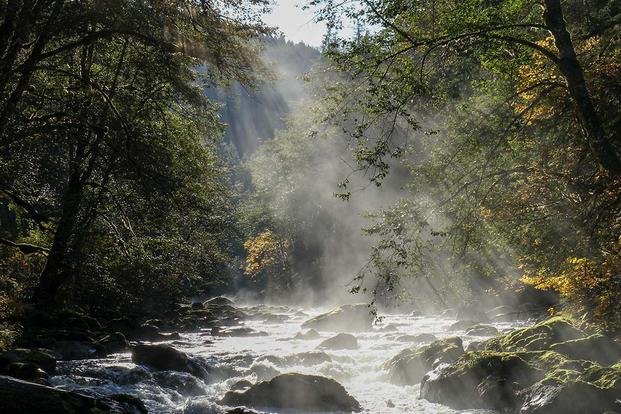
Mist rises on a river in the temperate rainforest. (National Geographic/Jesse Wippert)
One million acres of Washington state’s Olympic Peninsula are protected by Olympic National Park, a sprawling area of rain-soaked backcountry that features forests, glacier-capped peaks, tidepools and thermal hot springs. Humans have inhabited the lands for thousands of years, as evidence of humans fighting Mastodons were unearthed here in 1977. Hiking and fishing are fair game here, but unlike most other parks, Olympic features a ski resort, complete with a lift for skiers, snowboarders and tubers alike.
Keep Up With the Best in Military Entertainment
Whether you’re looking for news and entertainment, thinking of joining the military or keeping up with military life and benefits, Military.com has you covered. Subscribe to the Military.com newsletter to have military news, updates and resources delivered straight to your inbox.
Story Continues
Source link : http://www.bing.com/news/apiclick.aspx?ref=FexRss&aid=&tid=66db2243ef554063b335f97536e46f1a&url=https%3A%2F%2Fwww.military.com%2Foff-duty%2Ftelevision%2F2024%2F09%2F06%2Fnat-geos-national-parks-usa-must-watch-veterans-free-national-parks-access.html&c=7244862746645172721&mkt=en-us
Author :
Publish date : 2024-09-06 04:23:00
Copyright for syndicated content belongs to the linked Source.