Arizona’s Minimum Wage: A High Mark or a Hardship?
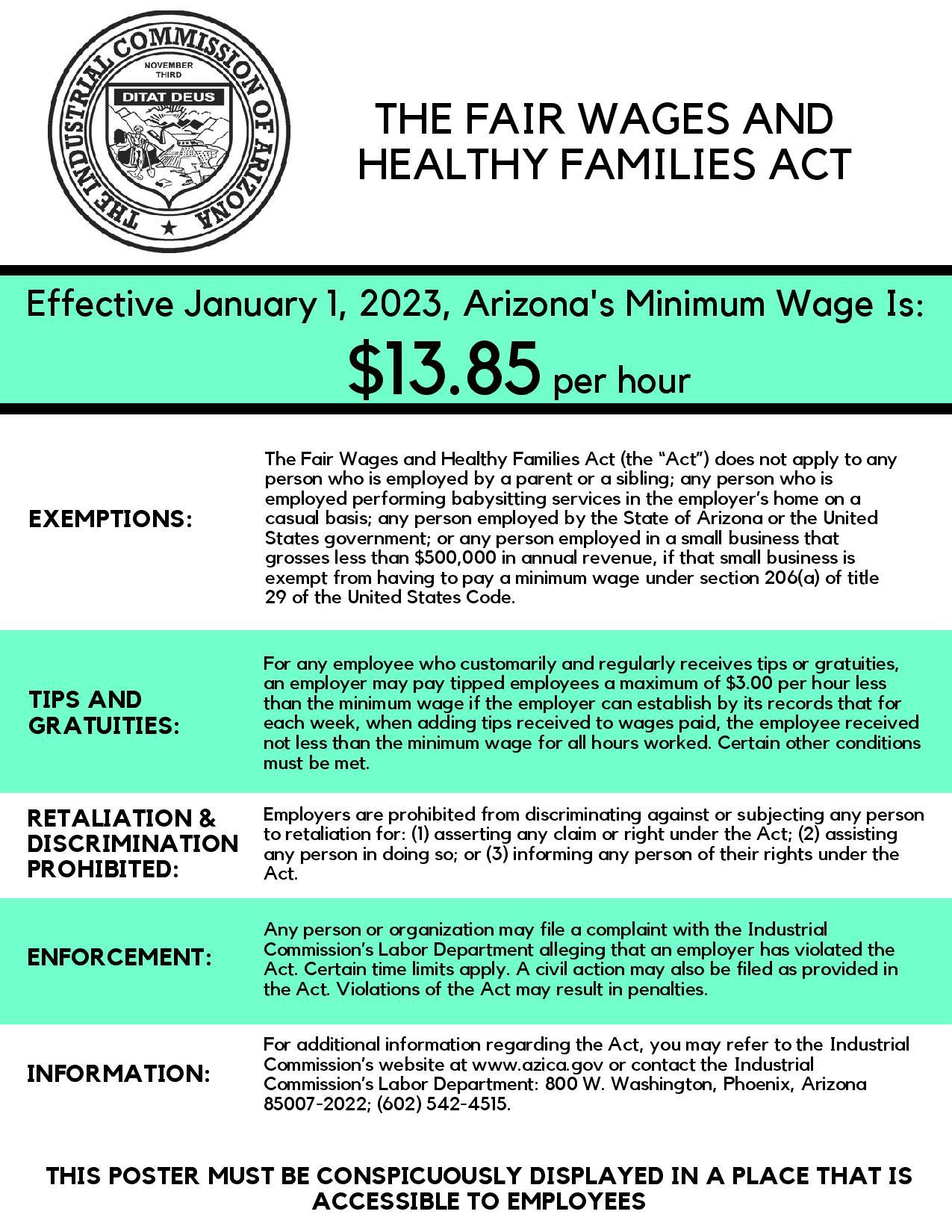
As the sun rises over the Copper State, Arizona boasts one of the highest minimum wage rates in the nation, reflecting a progressive stance on labor rights and economic growth. With the state’s minimum wage set at $13.85 per hour, advocates hail this figure as a substantial stride toward improving the living standards of working families across Arizona. However, as inflationary pressures mount and the cost of living continues to rise, many Arizonans are left questioning whether this wage is truly sufficient to cover the essentials of modern life. This article delves into the implications of Arizona’s robust minimum wage, examining the real impact it has on workers, families, and the economy, and exploring whether it is a beacon of hope or merely a stepping stone in the ongoing struggle for financial stability.
Arizona’s Minimum Wage Landscape: A Comparative Analysis with National Standards
As of 2023, Arizona’s minimum wage stands at $13.85 per hour, which positions the state among the highest in the nation. While this figure represents a significant increase over the past decade, the query on whether it suffices to meet the rising cost of living remains a pivotal discussion. Arizona’s wage laws have been influenced by factors such as local economic conditions and voter-driven initiatives, which reflect a commitment to ensuring a fair income for workers. However, with inflation and the cost of basic necessities climbing, many employees are still struggling to make ends meet.
A comparative analysis reveals that while Arizona’s wage is generous relative to many states, several areas face higher living costs that challenge its adequacy. For instance, metropolitan hubs like Phoenix and Tucson have seen housing prices skyrocket, often outpacing wage growth. In contrast to national averages, many workers argue that the minimum wage should be indexed to inflation or local cost factors for a genuine safety net. To illustrate this disparity, consider the following table showcasing minimum wage rates across various states:
| State | Minimum Wage (2023) |
|---|---|
| Washington | $15.74 |
| California | $15.50 |
| New York | $15.00 |
| Arizona | $13.85 |
| Texas | $7.25 |
Evaluating the Cost of Living: Is Arizona’s Minimum Wage Keeping Up?
While Arizona boasts one of the highest minimum wages in the United States, there are significant concerns regarding whether it aligns with the rising cost of living across the state. Recent data highlights inflationary pressures that have further escalated prices for essential needs, including housing, transportation, and groceries. According to reports, over the past year, the price of basic commodities has surged, leading many workers to question the adequacy of their earnings. A recent survey pointed out that nearly 70% of residents believe that the minimum wage should be increased to better reflect these changing economic conditions.
In order to better assess whether the current minimum wage is truly sufficient, it’s crucial to examine specific factors contributing to the financial strain on households in Arizona. Key considerations include:
- Housing Affordability: Arizona’s housing market has seen significant price increases, with median home prices rising sharply.
- Healthcare Costs: Rising medical expenses, fueled by insurance inflation, heavily impact disposable income.
- Education and Childcare: The cost of childcare has soared, placing additional burdens on working families.
To provide a clearer picture, the table below illustrates a comparison of Arizona’s minimum wage against the estimated living wage required to sustain a household:
| Category | Current Minimum Wage | Estimated Living Wage |
|---|---|---|
| Single Adult | $13.85 | $17.00 |
| Family of Four | $13.85 | $34.00 |
Strategic Recommendations for Sustainable Wage Growth in Arizona
To foster a trajectory of sustainable wage growth in Arizona, stakeholders across the spectrum-government, businesses, and labor organizations-must collaborate strategically. Investing in workforce development programs can ensure that local workers have the skills necessary for the state’s evolving job market. Additionally, promoting small businesses through tax incentives can help create more job opportunities while allowing for sustainable wage increases without disproportionately affecting operating costs. Establishing a dialogue between employers and employees will also be integral in understanding the needs of both parties, facilitating a more adaptable wage framework aligned with Arizona’s economic landscape.
Moreover, incorporating regional economic assessments can offer insights into the diverse cost-of-living challenges faced by different communities within Arizona. For instance, an analysis may reveal that while the minimum wage is relatively high, the corresponding living expenses in urban areas like Phoenix could necessitate higher wages compared to rural regions. A focus on building tiered wage systems or regional adjustments can address these disparities. In addition, transparent public policy initiatives could be formulated to ensure accountability and support for wage growth initiatives, which would help in generating public trust and compliance among employers.
To Conclude
As Arizona navigates the complexities of its high minimum wage-one of the highest in the nation-questions remain about its sufficiency in addressing the rising costs of living and supporting the state’s diverse workforce. While the increased wage may provide some relief, it is clear that many Arizona residents still face challenges in making ends meet. Policymakers, advocates, and businesses will need to engage in meaningful dialogue to ensure that every worker can achieve financial stability. As discussions continue, the focus must remain on finding viable solutions that promote both economic growth and the well-being of all Arizonans. The outcomes of these conversations will not only shape the future of the state’s labor market but also determine the quality of life for its residents. Only time will tell if Arizona’s high minimum wage is a step in the right direction or merely a temporary fix in an evolving economic landscape.