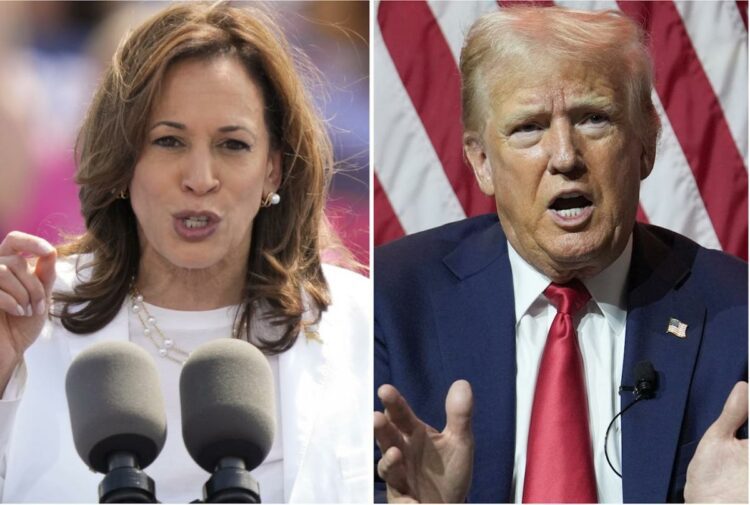
If sexism depressed individuals’ support for Biden’s candidacy, does that mean Harris faces no additional penalty in terms of lost support for her candidacy? Hardly.
Hostile sexism, as we measured it, costs Harris votes.
While sexism mattered in January, it mattered more in August once Harris had taken over the Democratic ticket.
In a head-to-head matchup between Harris and Trump, 89% of those in the lowest third on the sexism scale – meaning those who disagreed most with the statements measuring hostile sexism – support Harris compared with 11% for Trump. On the other hand, only 18% of those scoring highest on sexism support Harris, versus 82% for Trump.
When we take into account other considerations that influence whether individuals prefer Harris or Trump, our findings are even more striking. The least sexist respondents have a 92% chance of saying they will vote for Harris. But the most sexist respondents have only a 4% chance of supporting her.
What this means is that, while sexist attitudes influenced individuals’ presidential preferences when Biden was the Democratic presidential nominee, they have a greater effect now that Harris is the Democratic candidate.
Without sexism
Since Harris seems to be narrowly leading Trump in the polls, why should we care about the influence of hostile sexism in the election?
To answer this question, imagine a world in which hostile sexism doesn’t influence attitudes toward presidential candidates who are women. Our findings imply that, in such a world, Harris’ lead over Trump might be larger. Put simply, hostile sexism is helping to make the election closer than it would otherwise be.
Sexism has long played a powerful role in influencing Americans’ voting behavior and attitudes toward political issues. This is especially so today, given the high political importance of gender-related issues such as abortion, contraception and LGBTQ+ rights.
Our analysis shows that people with negative attitudes toward women are much less likely to support Harris for president. Whether the Harris campaign can successfully navigate this reality is still to be determined.
This article is republished from The Conversation, a nonprofit, independent news organization bringing you facts and trustworthy analysis to help you make sense of our complex world. It was written by: Adam Eichen, UMass Amherst; Jesse Rhodes, UMass Amherst, and Tatishe Nteta, UMass Amherst
Read more:
Jesse Rhodes receives funding from the National Science Foundation, the Spencer Foundation, and Demos.
Adam Eichen and Tatishe Nteta do not work for, consult, own shares in or receive funding from any company or organization that would benefit from this article, and have disclosed no relevant affiliations beyond their academic appointment.
Source link : http://www.bing.com/news/apiclick.aspx?ref=FexRss&aid=&tid=66bf76aa28b240b4bd6d692f91c3cf94&url=https%3A%2F%2Fwww.yahoo.com%2Fnews%2Fus-voters-ready-woman-president-132751953.html&c=12988736330988751720&mkt=en-us
Author :
Publish date : 2024-08-16 02:27:00
Copyright for syndicated content belongs to the linked Source.