
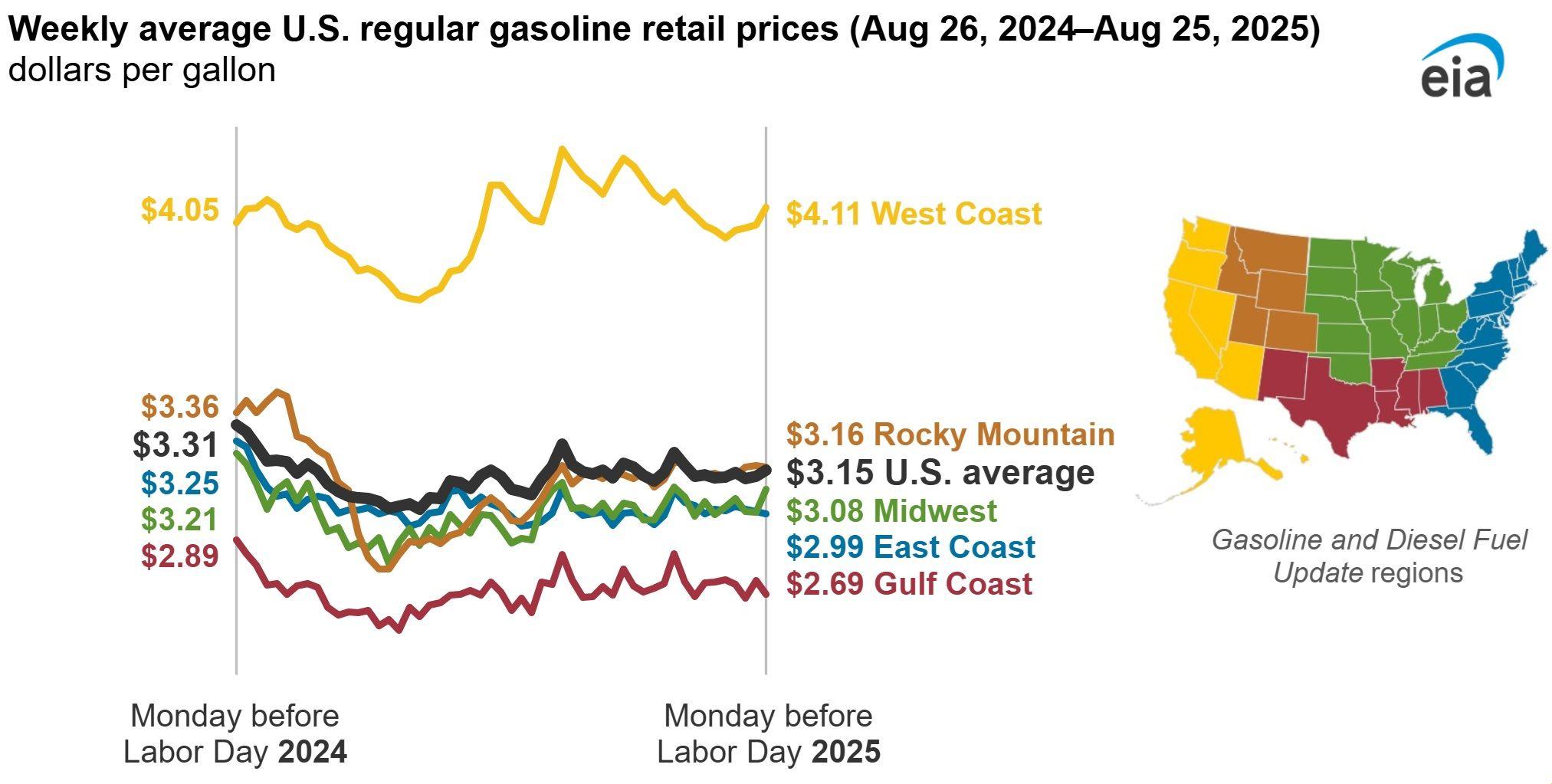
In a year marked by fluctuating energy markets and evolving consumer behaviors, gasoline retail prices in the United States have emerged as a critical indicator of economic health and regional variation. As we delve into the projections for 2025, State-by-State analyses reveal not just the expected costs at the pump but also the factors driving these changes-from crude oil prices and supply chain dynamics to state-specific regulations and taxation policies. Statista’s latest data offers a comprehensive overview of how gasoline prices are anticipated to differ across states, highlighting trends that may impact consumers, policymakers, and the broader economy. This article explores the nuances behind the numbers, providing insights into what drivers can expect as they fill up in the coming year.
Gasoline Retail Prices in 2025: A State-by-State Breakdown of Trends and Variations
In 2025, gasoline retail prices across the United States exhibited notable differences that underline the complex factors influencing market dynamics at the state level. Among the states, California continued to lead with the highest prices, driven by a combination of stringent environmental regulations and taxation policies. Meanwhile, states like Texas and Oklahoma enjoyed some of the lowest prices, largely due to lower fuel taxes and proximity to refineries. The average prices variation can be attributed to diverse elements including regional supply and demand, transport costs, and state policies on fuel production and distribution.
As illustrated in the following table, the disparities in gasoline retail prices paint a vivid picture of the economic landscape in each state. Prices reflect not only local costs but also broader trends affected by global oil prices, refining capacities, and seasonal changes in demand. Key insights from the data include:
| State | Average Price per Gallon ($) |
|---|---|
| California | $4.75 |
| Texas | $3.25 |
| New York | $4.20 |
| Florida | $3.80 |
| Oklahoma | $3.10 |
Overall, the regional price discrepancies were illustrative of larger economic conditions and varied regulatory environments. Observers noted that fluctuations in crude oil prices, alongside geopolitical tensions and natural disasters, played a crucial role in shaping retail prices. Additionally, with the ongoing push for renewable energy and alternative fuels, future trends may shift as more states adopt policies aimed at reducing dependency on traditional gasoline, further influencing retail price structures.
Understanding the Factors Influencing Gas Prices Across the U.S
Gas prices across the United States are shaped by a myriad of factors that can vary significantly from one region to another. Among the primary influencers are crude oil prices, which are dictated by global supply and demand dynamics. Factors such as geopolitical stability, production cuts by OPEC, and changes in energy policies greatly impact these prices. Additionally, local market conditions play a crucial role, including the distance from refineries, the level of competition among gas stations, and any state-specific taxes imposed on fuel. Furthermore, seasonal fluctuations cannot be ignored; demand typically spikes during summer travel seasons, which can lead to increased prices at the pump.
State-specific regulations also contribute to the disparity in gasoline prices across the U.S. Different states have varying environmental standards that require the use of specific formulations of gasoline, particularly during certain times of the year. This often results in higher costs in states that impose stringent regulations. Additionally, transportation costs can further exacerbate price differences. Geographic barriers and infrastructure constraints often affect the cost to transport fuel, meaning states far from the Gulf Coast may see higher prices relative to their coastal counterparts. Below is a simplified table illustrating the average gasoline prices in select states for 2025:
| State | Average Gas Price ($) |
|---|---|
| California | $5.80 |
| Texas | $3.20 |
| New York | $4.50 |
| Florida | $3.70 |
| Illinois | $4.00 |
Recommendations for Consumers and Policymakers Amidst Fluctuating Gas Prices
As gas prices continue to oscillate significantly, both consumers and policymakers must adopt strategies to mitigate the impact of these fluctuations. For consumers, it is imperative to remain vigilant and proactive in managing fuel expenses. Consider the following measures:
- Monitor Fuel Prices: Utilize apps and websites to track local gas prices in real-time, enabling informed decisions on when and where to fill up.
- Adopt Fuel-Efficient Driving Habits: Maintain moderate speeds, minimize idling, and ensure your vehicle is well-maintained to optimize fuel consumption.
- Explore Alternative Fuels: Investigate options like electric vehicles or hybrids that may offer long-term savings and environmental benefits.
Policymakers, on the other hand, play a crucial role in stabilizing gas prices and protecting consumers. To address the volatility in the market, they should consider the following actions:
- Enhance Energy Regulations: Implement regulations aimed at preventing price gouging and promoting transparency in fuel pricing.
- Invest in Infrastructure: Support infrastructure development for alternative energy sources, making them more accessible and appealing to consumers.
- Encourage Public Transportation: Promote initiatives that enhance public transportation services, reducing reliance on personal vehicles and overall demand for gasoline.
| State | Average Gas Price (2025) |
|---|---|
| California | $4.25 |
| Texas | $3.50 |
| New York | $4.10 |
| Florida | $3.80 |
The Conclusion
As we look ahead to 2025, the landscape of gasoline retail prices across the United States is poised for significant evolution, shaped by a confluence of economic factors, state policies, and market dynamics. Our analysis, powered by insights from Statista, highlights the vast disparities in fuel costs from one state to another, showcasing the intricate relationship between regional economies and energy pricing.
As consumers prepare to navigate these fluctuations, understanding the underlying trends and potential shifts in legislation will be crucial. Keeping an eye on energy policies, alternative fuel technologies, and economic indicators will provide valuable context as we move toward the future.
Stay informed and engaged as we continue to monitor how these developments unfold, ensuring that you’re equipped with the knowledge to make sound decisions in a changing fuel landscape. Whether you’re a consumer, policymaker, or industry stakeholder, the evolving narrative of gasoline prices in 2025 will undoubtedly shape our daily lives and the broader economy.









