
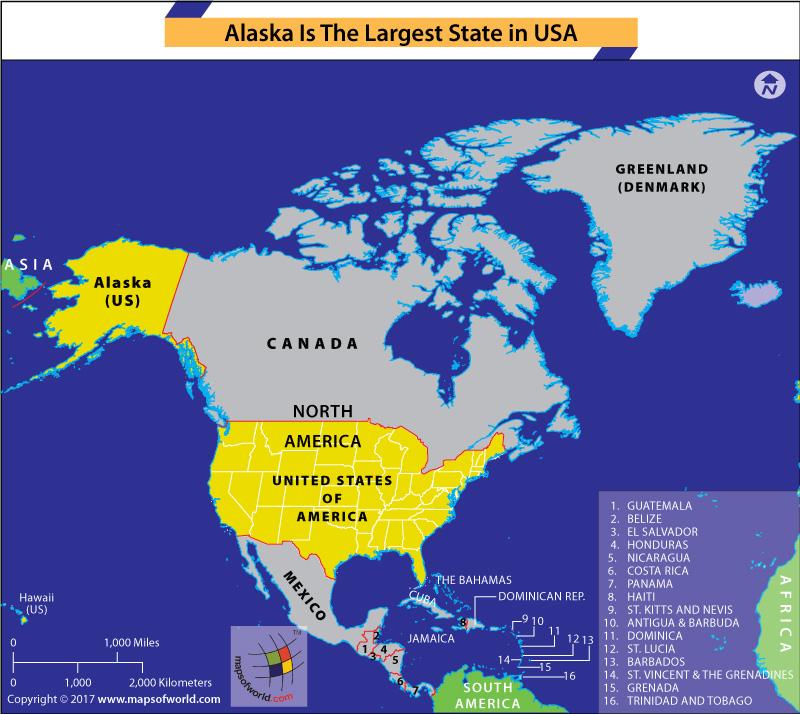
What is the Biggest State in the U.S.? A Comprehensive Ranking of States by Land Area
In the vast expanse of the United States, geography plays a pivotal role in defining not only the landscape but also the character of each state. Among these, the question of which state claims the title of the largest by land area is one that often piques curiosity. With a diverse tapestry of terrains ranging from expansive deserts to lush forests, understanding the dimensions of each state is crucial for both residents and policymakers alike. In this article, we delve into the rankings of all 50 states, from the sprawling wilderness of Alaska to the compact footprint of Rhode Island. Join us as we explore the geographical giants of the nation and the unique attributes that come with their vast territories.
Exploring the Vastness of America’s Largest State: An In-Depth Look at Alaska’s Unique Geographical Features
Alaska, often underappreciated in discussions of the 50 states, is a geographer’s dream, boasting an incredible array of unique features that distinguish it from the rest of the United States. Stretching over 663,300 square miles, it is larger than Texas, California, and Montana combined. This immense state is home to remarkable geographical contrasts, from towering mountain ranges to expansive tundras and picturesque coastlines. The Alaska Range is where you’ll find Denali, North America’s highest peak, rising dramatically to 20,310 feet. Meanwhile, the vast interior encompasses numerous lakes and rivers, like the legendary Yukon River, which flows more than 1,980 miles, providing essential resources for both wildlife and indigenous cultures.
The diverse ecosystems found within Alaska’s borders range from the lush coastal rainforests of the Southeast to the stark beauty of the Arctic tundra. Alaska has over 3 million lakes and more than 12,000 rivers that not only define its landscape but also support an astounding variety of wildlife. The state is renowned for its national parks such as Denali National Park, where visitors can witness grizzly bears, moose, and wolves in their natural habitats. Another jewel of Alaska is the Inside Passage, a coastal route dotted with islands, glaciers, and stunning fjords, making it a popular destination for cruises and adventure tourism. Beyond the physical beauty, these sites underscore Alaska’s critical role in biodiversity and environmental conservation efforts across the nation.
| Geographical Feature | Description |
|---|---|
| Denali | Highest peak in North America at 20,310 feet. |
| Yukon River | One of the longest rivers in North America, measuring 1,980 miles. |
| Inside Passage | Coastal route known for its stunning fjords and islands. |
| Glaciers | Home to over 100,000 glaciers, including the famous Exit Glacier. |
Comparative Analysis of State Sizes: Understanding the Land Area Rankings from Alaska to Rhode Island
The vastness of the United States is highlighted in a comparative analysis of state sizes, with Alaska reigning supreme as the largest state by land area, significantly dwarfing others. With a staggering 663,300 square miles, Alaska is not just the largest state; it is bigger than the combined total of the next three largest states: Texas, California, and Montana. Here’s a quick overview of major players in the land area arena:
- Alaska: 663,300 sq mi
- Texas: 268,600 sq mi
- California: 163,700 sq mi
- Montana: 147,000 sq mi
- New Mexico: 121,600 sq mi
In stark contrast, Rhode Island occupies the final spot on the list, measuring just 1,034 square miles. This significant difference underscores how the geographical diversity of the U.S. can lead to stark size disparities among its states. The table below provides a summary highlighting the extremes of the land area rankings:
| State | Land Area (sq mi) |
|---|---|
| Rhode Island | 1,034 |
| Alaska | 663,300 |
Such variations not only shape the demographics and economies of these states, but they also influence cultural identities and regional policies. As we traverse from the sprawling landscapes of Alaska to the quaint corners of Rhode Island, it becomes evident that land area plays a crucial role in defining the American experience.
Implications of Size: How the Scale of Each State Affects Economy, Environment, and Culture Across the Nation
The size of each state in the U.S. carries significant implications for its economic landscape, environmental policies, and cultural identity. Larger states like Alaska and Texas possess abundant natural resources, leading to robust economic activities centered around industries such as oil, mining, and agriculture. Notably, Texas has leveraged its vast land for vast ranching operations and renewable energy projects, enhancing its economic output while reshaping its local culture to reflect a blend of traditional and progressive values. In contrast, smaller states may face limitations in resource availability but often capitalize on niche markets and tourism, which can foster a rich cultural identity built on local heritage and a tight-knit community ethos.
The environmental impact of state size is equally pronounced. Larger states contend with varying ecosystems, necessitating comprehensive policies that address regional challenges, such as wildlife conservation and climate adaptation. For instance, California, known for its extensive coastline and diverse landscapes, faces unique pressures from urbanization and environmental degradation, prompting innovative sustainability initiatives. Smaller states, while perhaps less affected by industrial pollution, can still face environmental challenges that require targeted action. This dynamic interplay between size and environmental policy showcases how the geographical footprint of a state shapes not only its economic but also its ecological and cultural narratives.
| State | Size (sq miles) | Key Economic Sector |
|---|---|---|
| Alaska | 663,300 | Oil & Gas |
| Texas | 268,600 | Agriculture |
| California | 163,700 | Technology & Tourism |
| New York | 54,556 | Finance |
Final Thoughts
In conclusion, the examination of the United States by land area unveils not only a geographical hierarchy but also a tapestry of cultural and ecological diversity. Alaska, with its vast expanse, reigns as the largest state, dwarfing Texas, the second-largest, by a staggering margin. This ranking serves as a reminder of the immense scale of the American landscape, where vast wilderness, sprawling deserts, and mountainous terrains intersect. As we continue to explore the vastness of each state, understanding their sizes contributes to a greater appreciation of the unique attributes they each bring to the nation. For readers looking to delve deeper into the geography of the United States, the complete rankings provide essential insights into how land shapes the identity and character of these states.











