
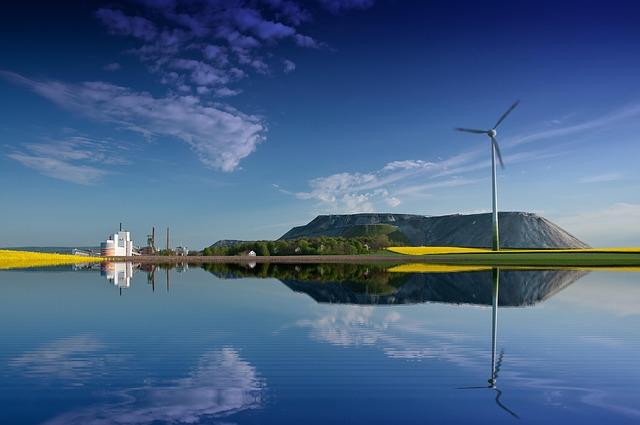
The United States is experiencing a renewed interest in uranium mining and exploration, driven by the growing demand for nuclear power as a clean energy source amid climate concerns. The World Nuclear Association highlights that America possesses significant uranium resources, yet domestic production remains limited. With geopolitical tensions and an emphasis on energy independence, both government and industry stakeholders are recalibrating their strategies to revitalize the nation’s uranium sector. This article delves into the current state of uranium mining in the U.S., examines the regulatory landscape, and explores the implications of technological advancements and market dynamics in shaping the future of the industry. As the global energy landscape shifts, the spotlight is once again on the potential of U.S. uranium to play a crucial role in meeting both national and international energy needs.
U.S. Uranium Mining Landscape: Current Trends and Future Prospects
The U.S. uranium mining sector is experiencing a renewed focus, driven by various geopolitical, environmental, and economic factors. In recent years, the urgency for energy independence has led to a revival in domestic exploration and production initiatives. Companies are increasingly investing in advanced mining technologies and sustainable practices to enhance efficiency while minimizing environmental impact. Key trends include:
- Increased government support for domestic uranium production
- Emergence of new mining projects in states like Wyoming and Texas
- Growing interest in in-situ recovery (ISR) methods
- Collaborations between public and private sectors to ensure secure uranium supply chains
As uranium prices remain volatile, the future of U.S. uranium mining hinges on balancing economic viability with regulatory frameworks. The potential for nuclear energy to play a crucial role in the transition to clean power adds further complexity to the landscape. Future prospects can be summarized as follows:
| Prospects | Details |
|---|---|
| Expansion of ISR | Increased adoption of in-situ recovery techniques to boost efficiency. |
| Regulatory Influences | Ongoing changes in regulations that may either promote or hinder mining activities. |
| Investment Opportunities | Rising investments from both venture capital and government funding to stimulate growth. |
Exploration Initiatives Driving Domestic Production and Security
The revival of uranium mining in the United States is gaining momentum as part of a broader strategy to boost domestic production and enhance national security. Various government initiatives are fueling this resurgence, primarily aimed at decreasing reliance on foreign uranium imports. The growing recognition of the need for a stable supply chain has led to significant investments in exploration technologies and mining capabilities. Industry leaders are collaborating with regulatory bodies to streamline permitting processes and promote advancements in sustainable mining practices that minimize environmental impact while ensuring robust production rates.
Moreover, the commitment to strengthening the domestic uranium supply chain has sparked interest in numerous exploration projects across the nation. These initiatives not only focus on traditional mining methods but also embrace innovative approaches such as in-situ recovery and advanced geophysical exploration techniques. Key elements of this movement include:
- Increased funding for research and development: Supporting the development of new extraction technologies.
- Partnerships with local communities: Ensuring that mining activities benefit regional economies.
- Enhanced regulatory frameworks: Aligning environmental protections with mining operations.
- Education and workforce development: Preparing skilled labor for the new jobs created in the uranium sector.
As the landscape of uranium mining evolves, strategic cooperation among stakeholders will be essential to realizing the potential of these exploration initiatives. The push for domestic production is not only a matter of economic interest; it also plays a critical role in national energy security, ensuring that the United States can effectively invest in and maintain its nuclear energy infrastructure.
Policy Recommendations for Strengthening U.S. Uranium Industry Competitiveness
To enhance the competitive edge of the U.S. uranium industry, it is crucial to adopt a multifaceted policy approach. First, federal investment in research and development should prioritize advanced mining technologies and environmentally sustainable practices. By allocating resources to innovative techniques, the industry can improve efficiency and reduce operational costs. Additionally, incentivizing private sector collaboration can foster breakthroughs that benefit both the environment and productivity. Federal funding for training programs aimed at equipping the workforce with advanced skills is equally important, ensuring that the industry has access to skilled labor necessary for modernization.
Furthermore, establishing a strategic uranium reserve would incentivize domestic production and stabilize market prices, reducing the dependence on foreign sources. Supporting regulatory measures that streamline the permitting process is essential to encourage investment in new exploration and mining projects. Trade policies that protect domestic producers and discourage unfair competition from foreign imports can bolster the industry’s resilience. Ultimately, fostering a collaborative environment between government, industry stakeholders, and academia will create a robust framework for revitalizing the U.S. uranium sector.
Key Takeaways
In conclusion, the landscape of uranium mining and exploration in the United States is evolving amid a backdrop of increasing global demand for nuclear energy. As the country seeks to bolster its energy independence and reduce carbon emissions, the role of domestic uranium production could become increasingly pivotal. With advancements in extraction technologies and a renewed focus on regulatory frameworks, the U.S. uranium sector stands poised for potential growth.
However, challenges remain, including environmental concerns and economic factors that could influence the viability of new projects. As the World Nuclear Association highlights, a balanced approach that prioritizes safety, sustainability, and innovation will be essential as the U.S. navigates its future in uranium mining. As the world transitions to greener energy solutions, the implications of these developments will resonate beyond national borders, reinforcing the interconnected nature of energy security and climate policy on a global scale.
The path forward is fraught with complexities, but with strategic planning and investment, the U.S. can not only enhance its nuclear capabilities but also contribute to a sustainable energy future. As we continue to monitor these developments, one thing remains clear: the next chapter in U.S. uranium mining and exploration is just beginning.











