GO DEEPER
Explained: Germany’s 50+1 ownership model, the benefits and the problems
The stipulation enshrines supporters as stakeholders in the game, thereby protecting the atmosphere, the regionality and the low ticket prices that have all become distinctive Bundesliga characteristics. However, because the regulation also discourages the kind of wholesale investment seen in England, the DFL and its members are pushed towards alternate solutions in pursuit of competitive parity — and when those solutions are perceived to come at the cost of fan influence, the response can be fierce.
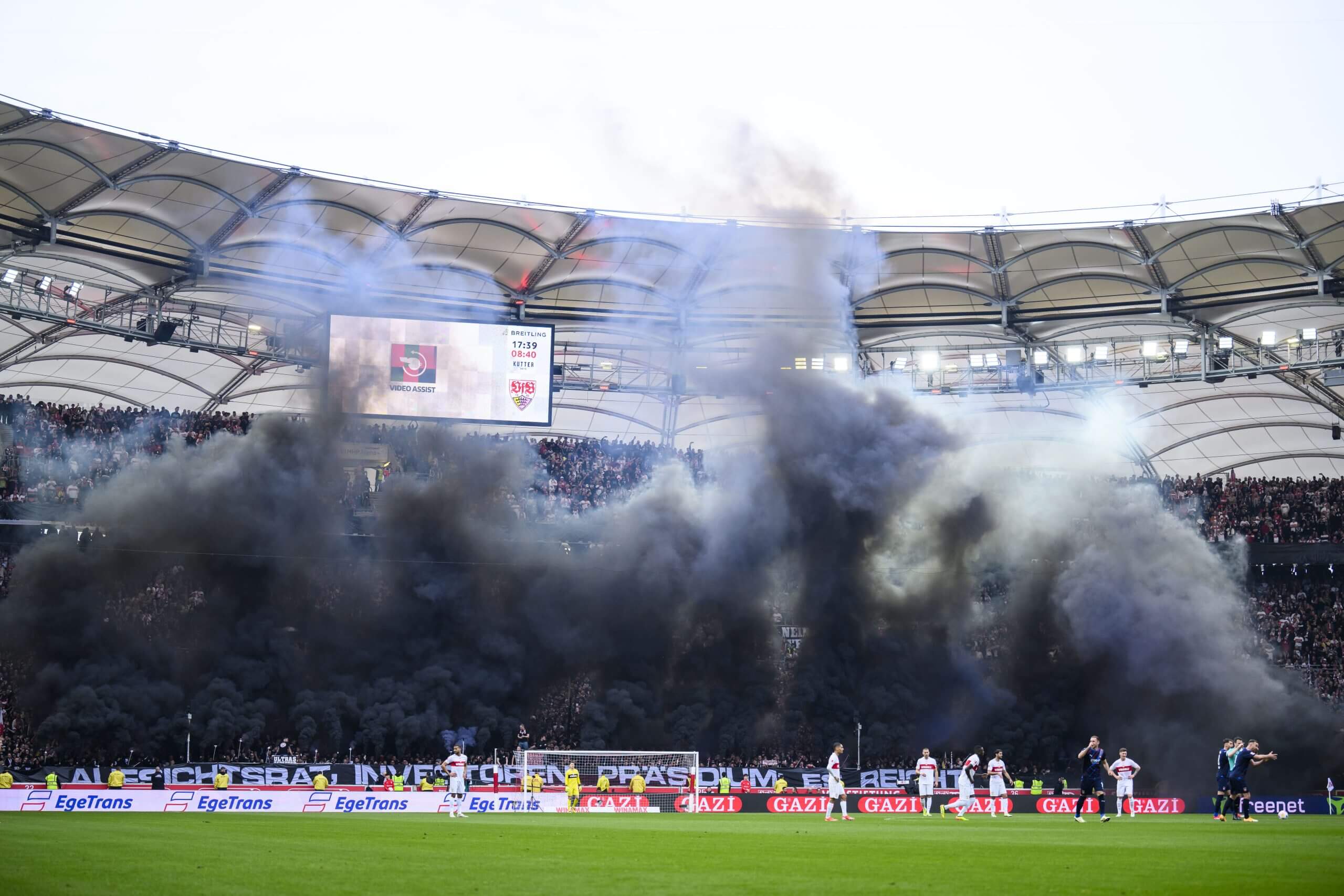
Protests over the CVC deal at Stuttgart in March this year (Photo by Tom Weller/picture alliance via Getty Images)
Last season offered a pertinent example.
In December, the DFL’s 36 member clubs voted to sell eight per cent of future broadcasting rights for 20 years to CVC, a private equity firm, in exchange for €1billion (£840million; $1.1bn). The revenue from the deal would have been used by the league and clubs for infrastructural improvements, the development of digital marketing assets and the funding of overseas tours aimed at — again — growing overseas income.
But the fans rebelled against it, disrupting games by throwing tennis balls onto pitches and sustaining weeks of well-organised (and sometimes imaginative) protest. The CVC deal, to them, was representative of the over-commercialisation of the sport, and seen as a threat to their own agency. With a private equity firm as a partner for the next few decades, whose interests would be prioritised? Who would lead the important conversations?
For many supporters in Germany, the Premier League is a terrifying prospect. The sky-high ticket prices and rampant commercialism are one issue. The commodification of the sport is another. The great fear, though, is the lack of influence supporters in England have on clubs — and how little recourse they have against bad owners. A disgruntled Premier League supporter can only shout into the void. An unhappy member of a Bundesliga club can actually vote for change.
The DFL’s agreement with Relevent is not the same as the investor deal. Nothing is being sold off or traded away. It will not provoke a reaction anything like as intense — and nor should it.
But German fans will be aware of the global conversation about the staging of domestic league games in other countries and the recently-settled court case between Relevent and FIFA, football’s worldwide governing body. In 2019, Relevent sued FIFA over the organisation’s rules preventing the staging of official games outside a particular league’s home territory.
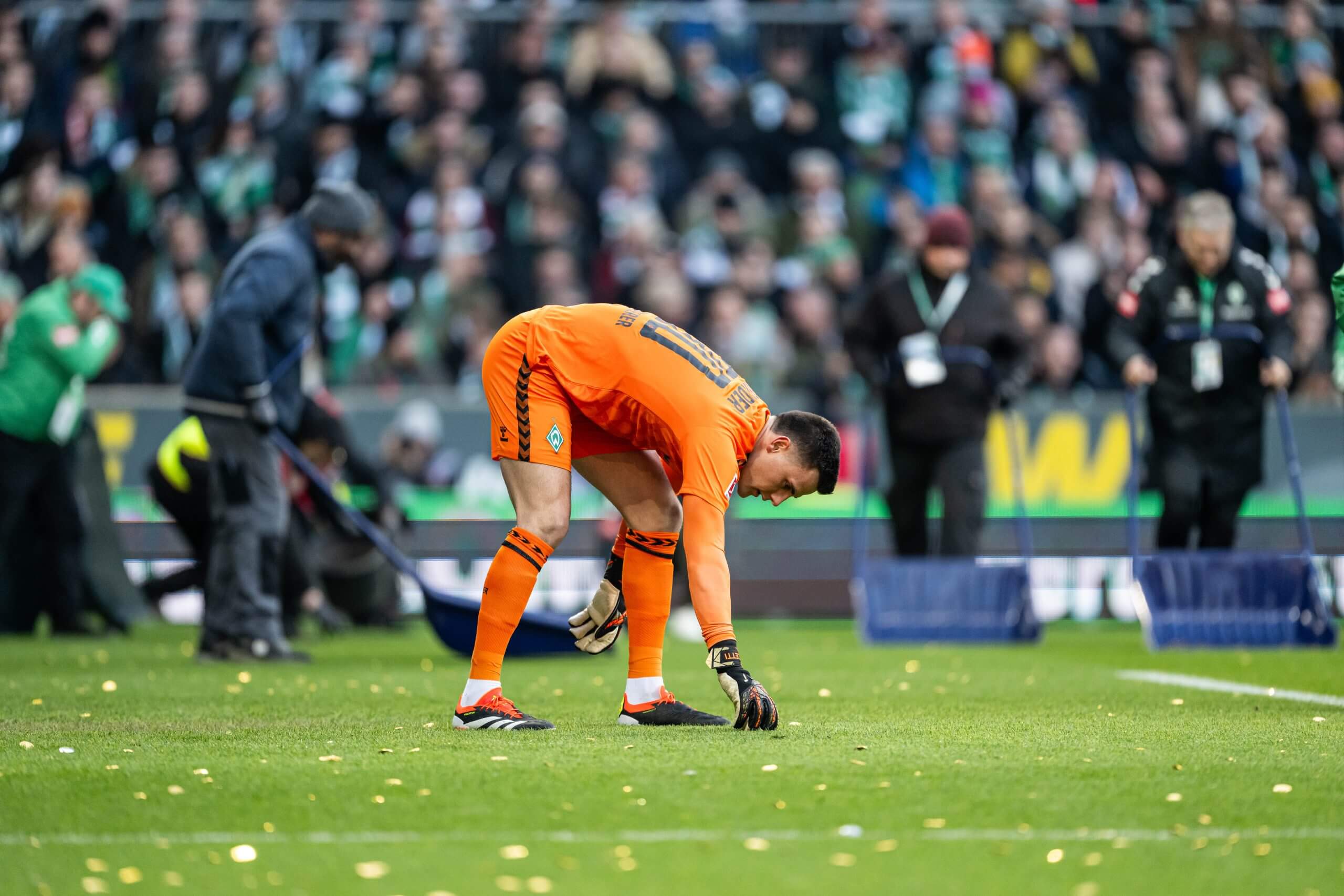
Bremen goalkeeper Michael Zetterer collects chocolate gold coins thrown onto the pitch in January (Marvin Ibo Guengoer – GES Sportfoto/Getty Images)
FIFA has since been dropped from the lawsuit after saying it is prepared to review its policies, opening the door to the possibility of domestic football fixtures being played abroad. Relevent and La Liga have already said they want to bring a competitive game to the U.S. as soon as possible.

GO DEEPER
Breaking America with Kylian Mbappe and Co: Why La Liga wants to play in the U.S.
On a Zoom call with The Athletic’s Adam Crafton this week, Steffen Merkel, the DFL’s co-chief executive was asked about the possibility of German football following suit.
“I respect the La Liga approach but it would be more difficult in Germany,” Merkel said. “While I see the benefits from a marketing point of view, our focus must be on things that are realistic. And that’s my perspective at the moment — not competitive games, but rather bringing more clubs to the U.S. consistently before a season and focusing on this in the first step.”
Politically, it would be almost impossible to stage a regular-season Bundesliga game outside Germany. It could not happen without a DFL vote and, because club officials are accountable to supporters, any club voting to take games away from their home region would plunge into civil war.
Christian Seifert, the DFL’s previous chief executive, promised that matches overseas would “never, ever” happen, speaking at a 2018 event in Frankfurt.
Peer Naubert is Bundesliga International’s chief marketing officer and in 2023, he reaffirmed that all league games would stay in Germany.
“The Bundesliga and Bundesliga 2 (the German league’s second tier) games and matchdays are so deeply rooted into our societies that it would be very hard — and harsh — to take any of them out into different markets,” Naubert told The Athletic. “There have always been discussions about the Super Cup and that might be something where this ‘never, ever’ doesn’t count as much.”
Fernando Carro, chief executive of reigning Bundesliga champions Bayer Leverkusen, is in favour of exporting the Super Cup — Germany’s pre-season equivalent of English football’s Community Shield. “It would be an option to hold it in the U.S. or another country,” Carro told ESPN during a club event in New York last week. “We have to try new things. This could be an example of that.”
Supporters will naturally wonder what else that might entail. As Merkel says, this is a “first step”. Today, a pre-season tournament. Tomorrow, the Super Cup. The day after, what?
That sounds like a conclusion drawn from a benign remark — an alarmist response, even — but German football is usually pre-emptive with its protests and attentive to any dominos that might fall.
So, there might not be tennis balls on the pitch this weekend, but the DFL can expect to be reminded that those on the terraces are always watching.
(Top photo: Bernd Thissen/picture alliance via Getty Images)
Source link : http://www.bing.com/news/apiclick.aspx?ref=FexRss&aid=&tid=66ed8a2fa47c40abad423875d63365a6&url=https%3A%2F%2Fwww.nytimes.com%2Fathletic%2F5781892%2F2024%2F09%2F20%2Fgerman-bundesliga-relevent-controversy-united-states%2F&c=5901929100695460008&mkt=en-us
Author :
Publish date : 2024-09-20 02:57:00
Copyright for syndicated content belongs to the linked Source.