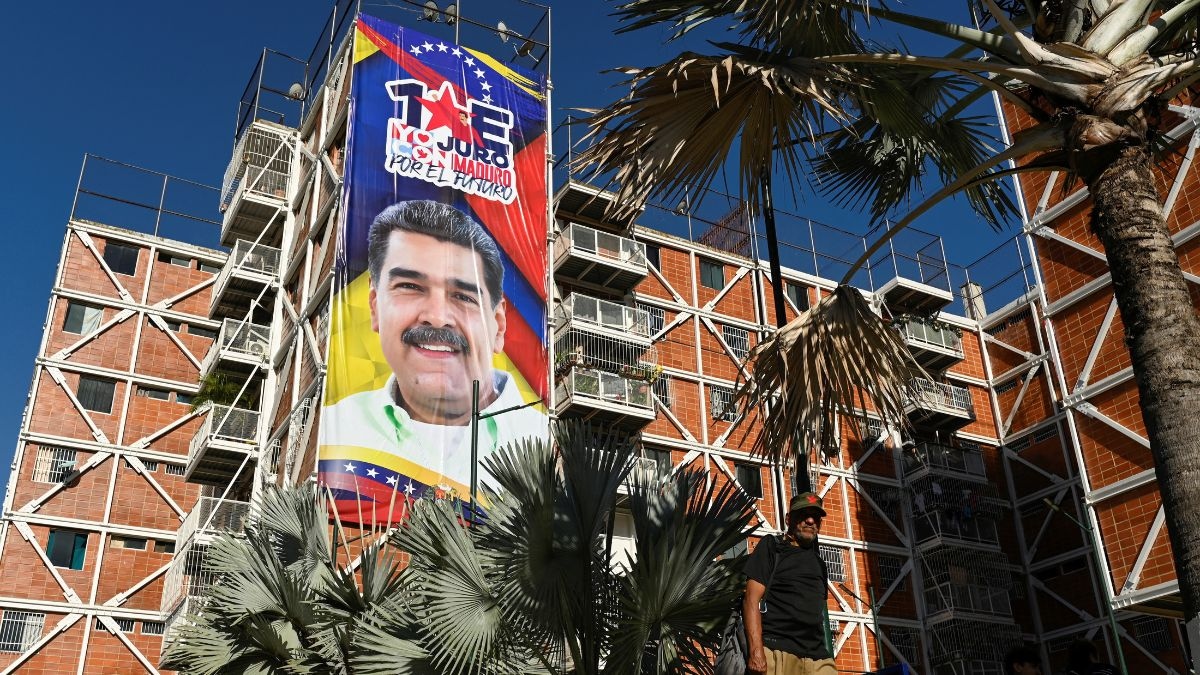
“Maduro is not going to leave on his own, we must make him leave with the strength of a population that never gives up,” Machado said in a social media video. “Go outside, shout, fight. It is time to stand firm, and make them understand that this is as far as they go. That this is over.”
Machado, who has been hiding for months at an undisclosed location to avoid arrest, told supporters she “will be with” them Thursday.
Meanwhile, González remains away from Venezuela and opposition leaders who often accompanied him and Machado to campaign rallies were jailed after the election.
Who will attend the swearing-in ceremony?
Members of the National Assembly, ministers and Maduro’s close allies within Venezuela are expected to attend.
The government’s centralised public information office did not immediately respond to a request from The Associated Press for a list of the heads of state who have confirmed their attendance.
But the list could be in the single digits since the country’s post-election crisis has further isolated Maduro.
Maduro has faced criticism for the election’s lack of transparency from dozens of countries, including neighbouring Colombia and Brazil, whose leaders had been friendly toward him in practically all other matters. They even attempted to broker a peacemaking deal between his government and the opposition after the July vote. Neither country’s president will attend Friday’s ceremony and will instead send representatives.
Maduro’s last inauguration, in 2019, was attended by Cuba’s President Miguel Diaz-Canel and then-Bolivian President Evo Morales.
What is expected of Maduro’s next term?
The food shortages and four-digit inflation that characterised most of Maduro’s 11-year presidency are gone, but the country’s protracted crisis has no end in sight.
These days, the average Venezuelan must cope with a monthly minimum wage of less than $2, soaring food prices, irregular fuel supply and a substandard public education system. But at the same time, a lucky few with ties to Maduro and his allies benefit from jobs and contracts that allow them to afford imported toilet paper that costs $70, import and sell vehicles, open made-for-Instagram restaurants, and offer luxury tourism experiences.
Venezuelan President Nicolas Maduro at the start of the Bolivarian Alliance for the Peoples of Our America (ALBA) Summit. AP/File Photo
That inequality is precisely the kind that was supposed to disappear under the policies that Maduro’s mentor and predecessor, the late President Hugo Chávez, described as socialism for the 21st century. It is expected to widen as the government continues to wrestle with an oil-dependent economy crippled by limited crude production, corruption, mismanagement, economic sanctions, firmly restricted credit access and a lack of private investment.
Ahead of the election, voters across the country repeatedly said they or their loved ones would emigrate if Maduro remained in power. Under his watch, more than 7.7 million Venezuelans have already left their homeland in search of better living conditions.
Source link : http://www.bing.com/news/apiclick.aspx?ref=FexRss&aid=&tid=6780c53f30d04904902614663f3d0caf&url=https%3A%2F%2Fwww.firstpost.com%2Fexplainers%2Ftension-in-venezuela-nicolas-maduro-inauguration-13851378.html&c=12285251539417790684&mkt=en-us
Author :
Publish date : 2025-01-08 23:42:00
Copyright for syndicated content belongs to the linked Source.