

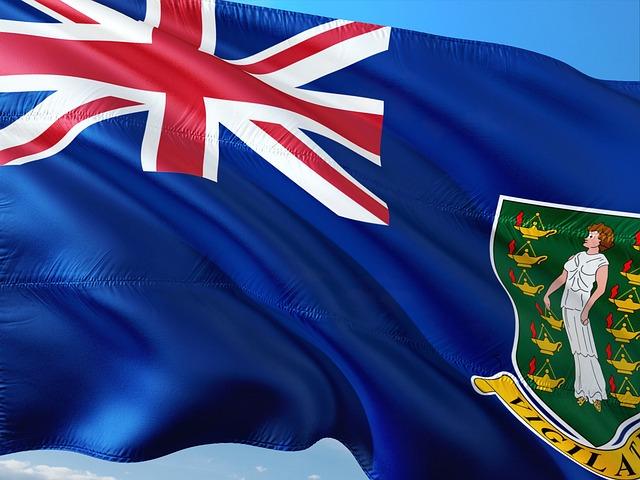
The British Virgin Islands: A Forbidden City – Exposing the Shadows of Offshore Finance
In an era where transparency is increasingly crucial to restoring public trust, the British Virgin Islands (BVI) stand as a paradoxical haven for wealth and privacy. Often dubbed a “forbidden city” in the realm of global finance, this British Overseas Territory has long attracted scrutiny for its role in facilitating offshore tax avoidance and fostering anonymity for powerful individuals and corporations. In a groundbreaking investigation by the International Consortium of Investigative Journalists (ICIJ), a trove of leaked documents sheds light on the complex network of financial maneuvering that characterizes the BVI, offering a rare glimpse into how elite actors exploit these opaque systems to safeguard their assets from public oversight. As governments worldwide intensify their efforts to combat financial secrecy and ensure accountability, this exposé highlights not only the intricacies of the BVI’s operations but also the urgent need for reform in the global financial landscape.
The Shadow Economy of the British Virgin Islands and Its Global Implications
The British Virgin Islands (BVI), often dubbed a financial sanctuary, serve as a quintessential example of the shadow economy thriving in offshore jurisdictions. This expanse of islands operates as a hub for international business, facilitating the establishment of shell companies and trusts that allow individuals and corporations to evade taxes and obscure their financial transactions. This environment is bolstered by lax regulations, which fosters an ecosystem where financial secrecy reigns. As capital flows freely, the repercussions are felt worldwide, contributing to the depletion of tax revenues for governments while enabling illicit activities such as money laundering, tax evasion, and fraud.
The implications of this system extend far beyond the azure waters of the Caribbean. Countries grappling with economic stability often find themselves at a disadvantage, as the outflow of revenue due to hidden assets directly impacts their social services and development initiatives. Consider the following factors that illustrate the global impact of the BVI’s shadow economy:
- Tax Evasion: The BVI enables individuals to shield personal fortunes, reducing accountability to their home countries.
- Money Laundering: The anonymity provided allows for the movement of illicit funds with little scrutiny.
- Global Trade Imbalance: Investments channeled through the BVI can skew national data on foreign direct investment, misrepresenting economic conditions.
| Aspect | Impact |
|---|---|
| Revenue Loss | Estimated trillions globally lost to tax avoidance strategies. |
| Investment Disparity | Variability in accurately assessing global investment flows. |
| Social Consequences | Reduced funding for public services worldwide. |
Unveiling the Secrets: How Offshore Financial Systems Facilitate Corruption
The British Virgin Islands (BVI), often perceived as a sunny paradise, conceals a labyrinth of financial anonymity that serves as a haven for individuals and corporations seeking to obscure their wealth. Offshore financial systems in the BVI enable a series of practices that contribute significantly to global corruption. Here, the use of shell companies is prevalent, allowing for the easy transfer of vast sums of money without revealing the true owners or the origins of the funds. This veil of secrecy facilitates not only tax evasion but also money laundering, enabling questionable financial dealings to go unchecked. Moreover, the regulatory environment is notably lax, creating a fertile ground for illicit activities that thrive under the radar of law enforcement agencies across the globe.
Examples of the ways in which offshore entities contribute to corruption can be categorized as follows:
- Concealment of Assets: Individuals can create complex ownership structures that render assets almost impossible to trace.
- Facilitation of Bribes: Corrupt officials use these systems to receive and launder bribes, often leading to destabilization of governance in their home countries.
- Tax Evasion: Companies exploit loopholes to avoid their tax responsibilities, depriving governments of critical revenue.
| Activity | Impact |
|---|---|
| Shell Companies | Obscure ownership and facilitate illicit transactions. |
| Money Laundering | Enable dirty money to enter the legitimate economy. |
| Tax Avoidance | Undermine public financial health, affecting services. |
Reform Recommendations for Greater Transparency in International Tax Havens
To dismantle the veil of secrecy that envelops international tax havens like the British Virgin Islands, a series of robust policy reforms are essential. First and foremost, governments must implement mandatory disclosure laws requiring corporations and trusts to reveal their ultimate beneficial owners. This transparency measure would enable law enforcement agencies and the public to trace the origins of wealth and hold entities accountable for tax evasion and money laundering. Additionally, enhanced cooperation among countries on sharing tax information will facilitate a more efficient way to combat cross-border financial crimes. This cooperation must also extend to the enforcement of existing tax laws, ensuring that individuals and corporations cannot exploit software loopholes or legal ambiguities to avoid scrutiny.
Moreover, international standards developed by organizations such as the Financial Action Task Force (FATF) should be vigorously adopted, extending their mandates to cover a wider spectrum of financial practices within these jurisdictions. Key recommendations may include:
- Establishing a global registry of beneficial ownership
- Imposing tougher penalties for non-compliance with tax laws
- Reassessing the role of offshore financial centers in global trade
These proposals not only aim to enhance accountability but also to foster a culture of compliance that discourages illicit financial activities. By instigating these reforms, policymakers can transform tax havens from secretive enclaves into transparent entities that contribute fairly to the global economy.
In Conclusion
As we conclude our exploration of the British Virgin Islands as a “forbidden city,” the findings presented by the International Consortium of Investigative Journalists (ICIJ) illuminate the complex web of financial secrecy and regulatory leniency that has attracted global attention. The revelations highlight not only the allure of the territory as a tax haven but also the urgent calls for reform and transparency in offshore finance. As stakeholders from diverse sectors grapple with the implications of these findings, the conversation surrounding financial accountability and ethical governance will undoubtedly continue to evolve. The future of the British Virgin Islands, amid mounting scrutiny and changing international norms, remains to be seen. With the stakes higher than ever, the need for a collaborative approach to address the challenges of financial secrecy has never been more critical. The story of the British Virgin Islands serves as a reminder that behind every financial transaction lies a narrative that demands our attention-and our action.

