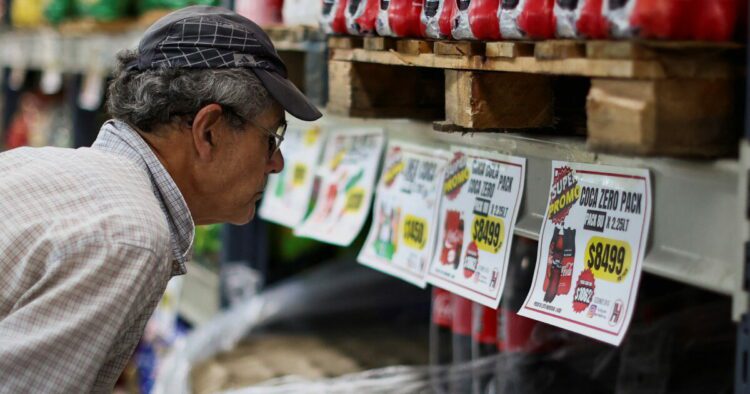
Two years later, Chile pioneered black, octagonal warning labels on UPFs high in salt, sugar, or fat. Laws on versions of this system have now been introduced in 30 countries across Latin America and adopted in 11, typically in combination with a set of policies restricting their promotion and sale. Ultra-processed products “cannot be advertised, and they cannot be present in schools, and they can’t be purchased with public money”, says Fabio da Silva Gomes, a nutrition advisor at the World Health Organization, having a “huge effect on the diets and the food systems of these countries.”
Colombia went further this year by introducing a broad tax on ultra-processed foods, starting at 10% immediately and rising to 20% in 2025 – a global first which will be watched closely by the industry as well as policymakers worldwide.
Snakes and ladders.
The experience of Latin American countries in rolling out these policies offers several lessons on best practices, as well as pitfalls to avoid – chief among them navigating Big Food’s efforts to “weaken, delay, and impede these policies to keep their market as deregulated or weakly regulated as possible,” according to Gomes.
“Industry interference is huge in every political space,” public health professor Ana Paula Martins told Novara Media, and includes contact “directly with decision-makers”. Martins said that industry bodies such as the Brazilian Association of the Food Industry (Abia), the Brazilian Association of the Beverage Industry (Abir) and the Brazilian Association of Animal Protein (ABPA) have directly lobbied the country’s national congress against taxes on UPFs and urged the Brazilian Agency for Health Surveillance against approving front-of-packaging warning labels in 2019.
The best current system for regulating UPFs can be found in Argentina, where large warnings must be at the top and front of packages and cannot be accompanied by any health claims (such as “contains vitamins”). In Brazil, industry lobbying has meant that stop sign-like octagons were replaced by much less effective magnifying glasses that suggest additional information rather than offer warnings, and which can be located on the back of products rather than on the front. In Chile, manufacturers have discretion over placing labels at the bottom of packages. In Uruguay, the industry succeeded at raising the threshold for requiring warnings by 20% for sodium, 30% for sugars, 45% for saturated fats, and 50% for total fats. They also lobbied to substitute octagonal labels with traffic lights there, and successfully amended regulation in this direction in Ecuador.
“Having a very strong civil society and academia without conflicts of interest providing data for the government is essential,” added Martins, echoing Chris van Tulleken’s call to “disentangle all the charities that influence policy from the companies that make the food that is harming us.”
Another “very important barrier” to the success of anti-UPF measures, Martins said, comes from an older generation of academics “used to considering nutrients rather than processing”. Critics of the concept will sometimes point out that “ultra-processed food” is a capacious category, encompassing some products – like wholemeal sliced bread – associated with better health outcomes.
Moreover, it can be hard to categorise some margin cases among the thousands of industrial products on offer. At a recent World Heart Summit, King’s College nutritionist Dr Tom Sanders dismissed “airy fairy ultra-processed foods”, preferring to restrict foods high in salt, fat and sugar, especially crisps and confectionaries.
In at least one regard, the debate over language is unnecessary. Almost everyone agrees that the nutrients targeted by warning labels (salt, sugar, fat) cause harm, and – precisely because of ambiguities over categorisation – they are formulated without reference to the Nova processing framework. Yet when the thresholds for nutrient warnings are not watered down by industry lobbying, according to Fabio Gomes, they capture over 95% of ultra-processed foods.
Early days.
It’s too soon to tell whether the Latin American policy set will be enough to halt the rise in adult obesity, much less reverse it. Advocates point to the long lag time before regulations around tobacco cut lung cancer cases.
Still, other countries are beginning to take note. From 2026, Canadian products will feature “high in” warning labels, which are also being considered in the United States and multiple African and east Asian countries. France, Belgium, Portugal, Finland and Israel’s nutritional guidelines now recommend avoiding or reducing UPF consumption. Singapore and South Korea have restricted marketing of unhealthy foods that target children.
The UK’s reliance on UPFs, which make up as much as 80% of some groups’ diets, creates additional challenges for its regulation. New taxes would need to be balanced by subsidies on healthy alternatives to avoid regressive impacts. The food industry has greater clout and investment in a system in which it supplies a majority of our calories.
Still, insiders are rattled: the former head of the UK’s Food and Drink Federation recently warned that the “coming wave of campaigning for draconian action on ultra-processed food … would strike at the very heart of the industry’s mass production model.”
NGOs, activists and academics across Latin America have shown that the case for improving public health can succeed despite intensive industry lobbying. Given that obesity overtook tobacco as the leading cause of preventable death in the UK a decade ago, and costs us £100bn a year, including £19bn paid directly by the NHS – a tenth of its budget – the price of failure could be high.
Source link : http://www.bing.com/news/apiclick.aspx?ref=FexRss&aid=&tid=670d04190d7440669c152186a30d748c&url=https%3A%2F%2Fnovaramedia.com%2F2024%2F10%2F14%2Flatin-america-is-leading-the-charge-against-ultra-processed-food%2F&c=13792846580875499726&mkt=en-us
Author :
Publish date : 2024-10-14 00:01:00
Copyright for syndicated content belongs to the linked Source.