

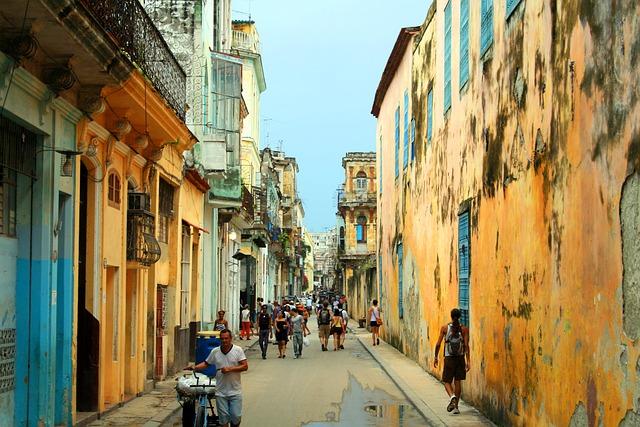
Cuba on the Brink: The State of U.S.-Cuba Relations
As the geopolitical landscape continues to shift, U.S.-Cuba relations find themselves at a crucial crossroads. More than six decades after the Cuban Revolution transformed the island into a focal point of Cold War tensions, the dynamics between the two nations are undergoing significant scrutiny. Recent developments-including policy shifts from the Biden administration, the ongoing economic hardships facing Cuba, and the international community’s evolving stance on Havana-have reinvigorated discussions about the two countries’ fraught and complex history. This article explores the current state of affairs, the implications of diplomatic efforts, and the prospects for future engagement, illuminating a relationship that remains pivotal not just for the Caribbean, but for global diplomacy as a whole.
Cuban Economic Challenges Under U.S. Sanctions and Domestic Control
The Cuban economy continues to grapple with significant challenges stemming from U.S. sanctions and a tightly controlled domestic environment. The trade embargo, which has persisted for over six decades, has severely restricted access to goods, leading to shortages of essential items such as food, medicine, and technology. In addition to the embargo, the Cuban government maintains a stringent control over the economy, limiting foreign investment and private enterprise. This has created a paradox where despite potential interest from international investors, bureaucratic hurdles and the lack of a market economy discourage meaningful economic growth.
Key factors contributing to Cuba’s economic struggles include:
- Limited Foreign Investment: Capital inflow is stymied by regulatory restrictions and the perceived risks associated with trading with Cuba.
- Lack of Infrastructure: Aging infrastructure hampers efficiency and increases operational costs for businesses.
- Human Capital Issues: Although Cuba boasts a highly educated workforce, many skilled workers are compelled to seek opportunities abroad due to low wages and limited prospects.
As Cuba navigates these complex dynamics, it faces the challenge of fostering economic resilience while maintaining political control. Recent efforts to relax certain regulations on private businesses have sparked interest among entrepreneurs, but these reforms often exist within a framework that still prioritizes state power over market forces. The interplay of U.S. sanctions, domestic policies, and global economic trends will significantly influence Cuba’s future prospects.
Paths to Improved Diplomatic Engagement and Economic Cooperation
The path to enhanced diplomatic engagement between the U.S. and Cuba hinges on a multi-faceted approach that prioritizes communication and mutual respect. Establishing strong, ongoing dialogues is essential for addressing long-standing issues and fostering trust. Key strategies may include:
- Sustained Bilateral Talks: Regular high-level meetings aimed at tackling contentious topics such as human rights, trade restrictions, and immigration policy.
- People-to-People Programs: Promoting exchanges in areas like education, culture, and sports to build connections and understanding between citizens.
- Third-Party Mediation: Involving neutral countries or organizations to facilitate discussions, especially during politically sensitive negotiations.
Economic cooperation offers significant potential to create a mutually beneficial relationship. By focusing on sectors where both nations can prosper, constructive initiatives can lead to shared outcomes. Notable sectors for collaboration include:
| Sector | Potential Benefits |
|---|---|
| Agriculture | Access to U.S. markets for Cuban products and American investment in Cuban farming techniques. |
| Tourism | Increased visitor flow from the U.S. can stimulate economic growth and infrastructure development in Cuba. |
| Healthcare | Collaborative efforts to improve public health systems and access to medications. |
Potential Impacts of U.S. Policy Shifts on the Cuban Public and Governance
The ongoing evolution of U.S. policy towards Cuba is poised to significantly shape the socio-political environment on the island. As the U.S. government considers modifications to trade restrictions and diplomatic relations, the immediate effects could resonate deeply within the Cuban public. The potential for increased economic opportunities, including expanded tourism and foreign investment, may foster a renewed sense of optimism among the populace. However, such changes could also exacerbate existing inequalities, as wealth and resources might disproportionately benefit the privileged elite, potentially igniting further discontent among the general populace. Key impacts include:
- Economic Growth: A possible opening to U.S. markets could invigorate the economy.
- Social Mobilization: Increased access to information and resources might enhance civic engagement and activism.
- Government Response: The ruling authorities may tighten controls to maintain stability amidst transformation.
Moreover, the shift in U.S. policy could influence the governance landscape in Cuba. Depending on how the Cuban government reacts, it may either embrace reform or resort to more authoritarian measures to quell dissent. In scenarios where external support leads to a more liberal economic climate, the state might face pressure to address longstanding grievances related to human rights and governance transparency. Conversely, if hardline approaches prevail, we could witness intensified repression, which may provoke both national and international backlash. Critical factors at play include:
| Potential Outcomes | Implications for Governance |
|---|---|
| Increased Engagement | More democratic reforms and dialogue. |
| Economic Liberalization | Push for accountability and governance reform. |
| Repression of Dissent | Elevated risks of civil unrest and international condemnation. |
In Conclusion
As U.S.-Cuba relations continue to evolve amidst a backdrop of political changes and economic challenges, the future remains uncertain. The recent developments outlined in this analysis highlight the complexities and contradictions that define the relationship between these two nations. As both governments navigate a path forward, the need for dialogue and understanding will be paramount in addressing longstanding issues and fostering cooperation. Whether the current truce can evolve into a more stable and constructive partnership is a question that will require careful attention from policymakers and citizens alike. With Cuba at a crossroads and the United States grappling with its strategic priorities, the stakes have never been higher for both nations and the broader region. As this story unfolds, it will be crucial to monitor how these dynamics shape the lives of millions on both sides of the Florida Straits.

